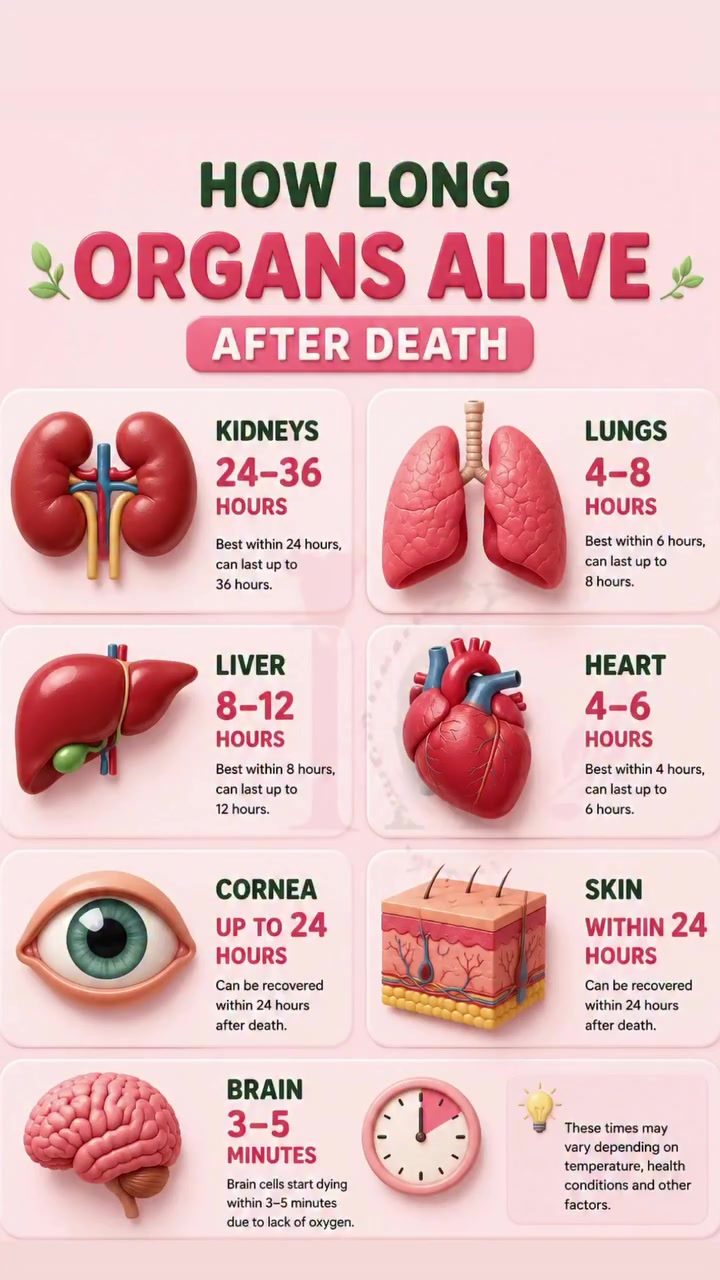
Organ Lifespan After Death
When considering organ donation, it's crucial to understand that not all organs remain viable for the same duration after death. Proper preservation can extend this time, but even with meticulous care, each organ has a unique lifespan. Here’s a detailed look at how long different organs can remain viable after death, offering valuable insights into the organ donation process.
Why This Matters
Organ donation has the power to save lives, and accurate information is essential for both donors and recipients. Understanding the viability of organs post-mortem is critical for medical professionals and potential donors, ensuring that organs are transplanted within the optimal time frame. This knowledge can facilitate more effective organ donation practices and improve the outcomes for those in need.
Factors Influencing Organ Viability
Several factors can influence how long an organ remains viable after death, including:
- Temperature: Cooling the body quickly can extend the viability of most organs.
- Health Conditions: The overall health of the donor before death plays a significant role in organ viability.
- Preservation Methods: Advanced preservation techniques can prolong the lifespan of organs.
Organs and Their Viability
Kidneys
Kidneys are among the most durable organs post-mortem, with a viability window of 24 to 36 hours when properly preserved. This extended period allows for more flexibility in transportation and transplant procedures, making kidney donation a lifeline for many patients with kidney failure.
Lungs
Lungs are more delicate and have a shorter viability window of 4 to 8 hours. The best outcomes are achieved when the lungs are transplanted within 6 hours of death. This shorter timeframe underscores the importance of quick action and efficient preservation methods.
Heart
Similar to lungs, the heart has a relatively short viability window of 4 to 6 hours. It is best to transplant the heart within 4 hours for optimal results. The heart's limited viability time makes prompt organ retrieval and transplantation critical.
Liver
The liver can remain viable for 8 to 12 hours post-mortem. It is best to transplant the liver within 8 hours, but the organ can last up to 12 hours with proper care. This provides a reasonable timeframe for retrieval and transplantation, making liver donation a viable option for many patients with liver disease.
Cornea
The cornea, which is the transparent front part of the eye, can last up to 24 hours after death. This extended viability allows for more flexibility in corneal transplants, offering hope to patients with visual impairments.
Skin
Skin tissue can remain viable for up to 24 hours post-mortem. This duration is crucial for skin grafts, which are often used in burn treatment and reconstructive surgery. Proper preservation techniques can help maintain the skin's viability, ensuring successful transplants.
Brain Cells
Brain cells are particularly vulnerable and start dying within 3 to 5 minutes without oxygen. This rapid deterioration highlights the urgent need for prompt intervention in cases of brain injury or stroke, where every second counts.
Practical Tips
Knowing the viability of different organs can help medical professionals and potential donors make informed decisions. Here are some practical tips to ensure the best outcomes:
- Prompt Action: Act quickly to preserve and transport organs, especially those with shorter viability windows like the heart and lungs.
- Proper Preservation: Use advanced preservation techniques to extend the viability of organs.
- Health Awareness: Encourage potential donors to maintain good health, as this directly impacts organ viability post-mortem.
- Education: Spread awareness about organ donation and the importance of timely transplantation.
Important Takeaways
- Different organs have varying lifespans post-mortem, ranging from a few minutes to several hours.
- Proper preservation and prompt action are crucial for successful organ transplantation.
- The health of the donor and preservation methods significantly influence organ viability.
- Understanding these factors can improve organ donation practices and save more lives.
Conclusion
The viability of organs post-mortem is a critical aspect of organ donation and transplantation. By knowing the lifespan of different organs and the factors that influence their viability, medical professionals and potential donors can make informed decisions that save lives. Whether it's a kidney, liver, or cornea, each organ has a unique timeframe that underscores the importance of timely and effective organ donation practices.
Watch the Reel
Questions readers ask
How long can a kidney remain viable after death?
Kidneys can remain viable for up to 72 hours post-mortem, given proper preservation using methods like cold storage. This is one of the longest lifespans among organs, making kidneys one of the most commonly transplanted organs.
What factors influence the lifespan of lungs after death?
The viability of lungs after death is significantly influenced by factors such as the cause of death, the health of the lungs before death, and the preservation methods used. Lungs can generally remain viable for up to 4-6 hours post-mortem with optimal conditions.
How does temperature affect organ viability after death?
Temperature plays a crucial role in organ viability. Lower temperatures, achieved through cooling or ice, can slow down cellular metabolism, extending the viability of organs, especially for organs that can remain viable for only a brief time such as the heart.
What are the best methods for preserving organs post-mortem?
The best organ preservation methods involve cooling the organs to low temperatures, typically between 0-4°C, and using specialized solutions to maintain cellular integrity. Techniques like hypothermic machine perfusion can also help extend the viability of certain organs.
How long can a heart remain viable after death?
Hearts typically have a shorter viability window post-mortem, often only remaining viable for 4-6 hours. This short duration emphasizes the importance of prompt and efficient organ retrieval and transplant procedures for recipient success.
What is the viability duration of corneas after death?
Corneas can remain viable for up to 14 days post-mortem when preserved in specialized solutions at 0-4°C. This extended viability period allows for more flexibility in the cornea donation and transplant process.
Why is it important to understand organ viability times for organ donation?
Understanding the viability times of different organs is crucial for coordinating successful transplants. It ensures that organs are transplanted within their optimal time frame, increasing the chances of a successful outcome for the recipient and making the donation process more efficient.
Recent articles
Fresh deep dives from the latest Reels we unpacked.




Comments
Be the first to comment.