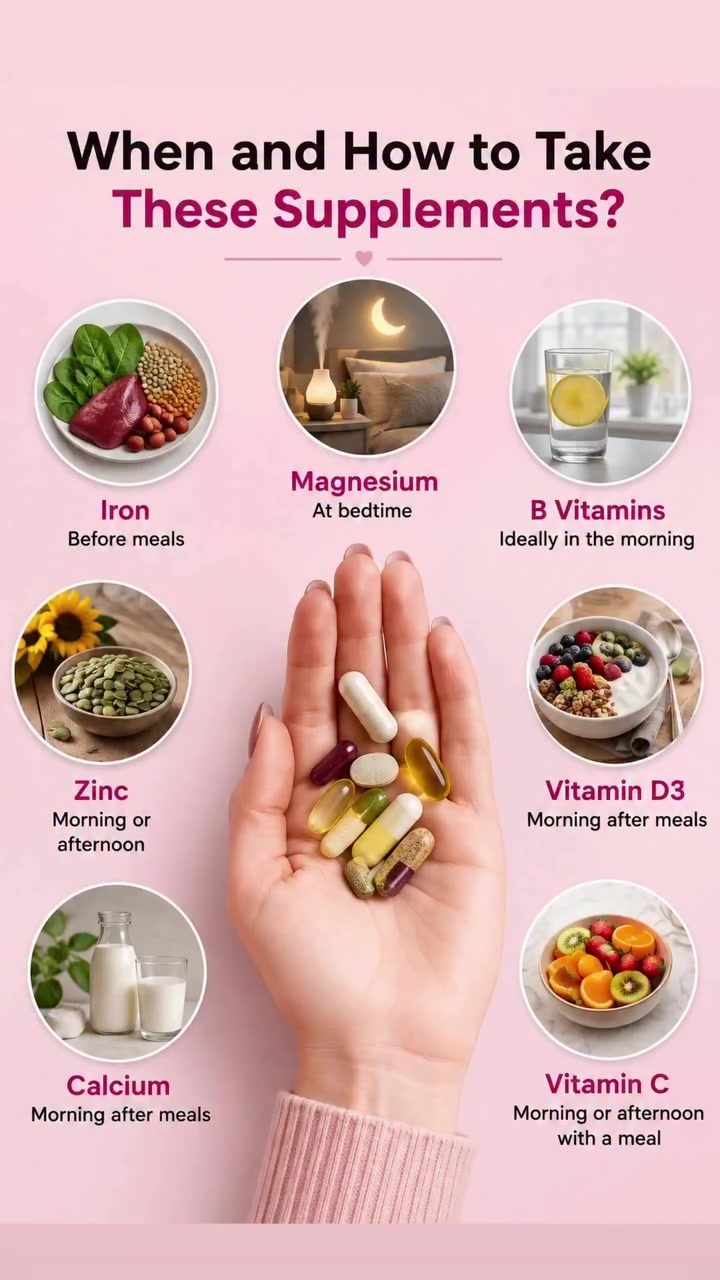
Supplement Timing
Taking vitamins and supplements at the right time can significantly enhance their effectiveness and absorption. This guide will focus on the optimal timing for key supplements, including iron, magnesium, B vitamins, zinc, Vitamin D3, calcium, and Vitamin C. Understanding when to take each can help you maximize their benefits and improve your overall health.
Why This Matters
Proper supplement timing is crucial for several reasons:
- Enhanced Absorption: Certain vitamins and minerals are better absorbed at specific times of the day or in relation to meals.
- Reduced Side Effects: Taking supplements at the right time can minimize potential side effects like stomach upset.
- Improved Effectiveness: Timing supplements correctly can enhance their intended benefits, such as supporting energy metabolism or aiding sleep.
Main Discussion
Iron
Iron is essential for producing red blood cells and preventing anemia. For optimal absorption, take iron on an empty stomach, ideally an hour before a meal. If you experience stomach discomfort, pair it with a small amount of food. Pairing iron with Vitamin C can boost its absorption. However, avoid tea, coffee, dairy, or calcium for at least two hours after taking iron, as they can inhibit absorption.
Magnesium
Magnesium is crucial for muscle and nerve function, blood sugar control, and blood pressure regulation. Taking magnesium before bedtime can support muscle relaxation and promote better sleep. Avoid high doses of magnesium, as they can cause digestive issues.
B Vitamins
B vitamins play a key role in energy metabolism and brain function. These vitamins are best taken in the morning, ideally with breakfast, to support your energy levels throughout the day.
Zinc
Zinc is important for the immune system, wound healing, and protein synthesis. To minimize stomach upset, take zinc with food. Avoid taking zinc with calcium or iron, as they can interfere with each other's absorption.
Vitamin D3
Vitamin D3 is essential for bone health and immune function. For better absorption, take Vitamin D3 after a meal containing healthy fats, as it is a fat-soluble vitamin.
Calcium
Calcium is critical for bone health and muscle function. It is best taken with meals, especially if you are taking calcium carbonate, which requires stomach acid for absorption. Split large doses of calcium into smaller amounts to enhance absorption.
Vitamin C
Vitamin C is a powerful antioxidant that supports immune function and collagen production. It can be taken in the morning or afternoon, with or without food. Vitamin C also helps improve iron absorption, making it a beneficial supplement to take alongside iron.
Practical Tips
When incorporating these supplements into your routine, consider the following tips:
- Consistency is Key: Establish a consistent routine for taking your supplements to ensure you don't miss doses.
- Track Your Progress: Keep a log of how you feel and any changes in your health to assess the effectiveness of your supplement regimen.
- Consult a Healthcare Provider: Always consult with a healthcare provider before starting any new supplement regimen, especially if you have underlying health conditions or are taking medications.
Important Takeaways
- Timing Matters: The effectiveness of many supplements depends on when and how they are taken.
- Meal Interactions: Some supplements are best taken with food, while others are better absorbed on an empty stomach.
- Pairing Supplements: Certain supplements can enhance the absorption of others, such as pairing iron with vitamin C.
Conclusion
Optimizing the timing of your supplement intake can significantly enhance their effectiveness and benefits. By following this evidence-based guide, you can ensure that you are getting the most out of your vitamins and minerals.
Watch the Reel
Questions readers ask
What is the best time to take iron supplements?
The best time to take iron supplements is typically in the morning, at least 30 minutes before eating. This is because iron is best absorbed on an empty stomach. Try taking it with a glass of orange juice to enhance absorption through vitamin C.
Should I take magnesium in the morning or at night?
Magnesium is often taken at night due to its relaxing properties. Taking it before bed can help promote better sleep. However, if you find it interferes with your sleep, you can try taking it in the morning.
When is the optimal time to take B vitamins?
B vitamins are generally best taken in the morning, as they can help boost energy levels. Taking them with your first meal of the day can also enhance absorption and reduce the chance of stomach upset.
What is the best time to take calcium and Vitamin D3?
Calcium and Vitamin D3 should be taken together, to enhance calcium absorption, which can be better absorbed in the morning, but they can be taken at any time of day, with or without food.
Does it matter if I take zinc supplements in the morning or afternoon?
Zinc supplements can be taken anytime, but taking them at least 30 minutes before meals can enhance absorption. If you experience stomach upset, try taking them with a small meal or a snack.
Does the timing of vitamin C intake matter?
Vitamin C can be taken anytime, but it should be taken before meals to help with absorption. It can be particularly beneficial to take it in the morning or afternoon.
Recent articles
Fresh deep dives from the latest Reels we unpacked.




Comments
Be the first to comment.