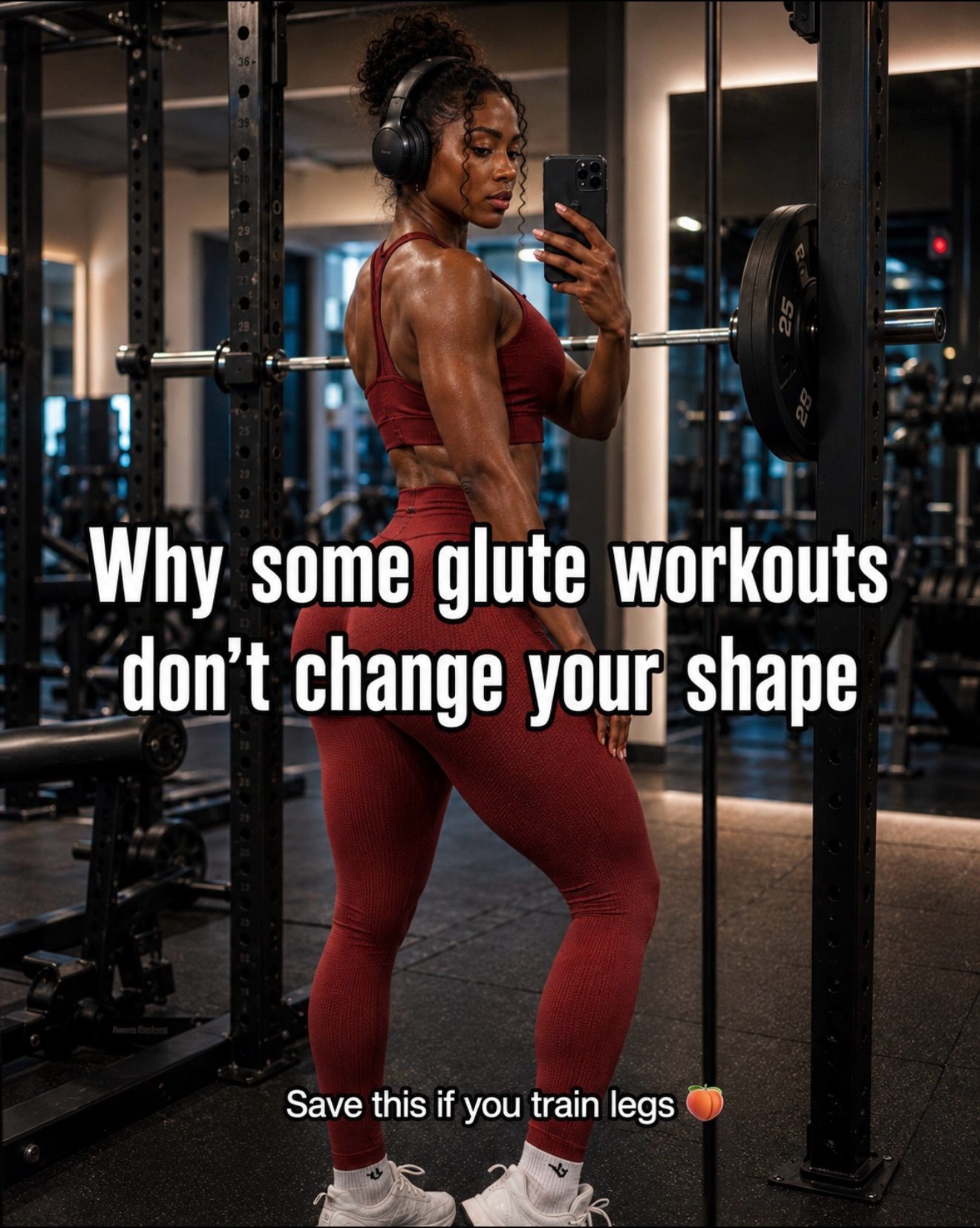
Glute Workout Tips: Targeting Different Glute Muscles
Glute workouts can be one of the most confusing aspects of fitness routines. Many people often wonder why their shape doesn't seem to change despite doing numerous booty workouts. The truth is, different glute exercises target different parts of your glutes: the gluteus maximus, gluteus medius, and gluteus minimus. Understanding these differences and choosing the right exercises can help you achieve your desired shape.
Context / Why this matters
Glute training is crucial for overall lower body strength and aesthetics. However, many workout routines overlook the importance of proper exercise selection and progressive overload. By focusing on the right exercises and building muscle, you can create a fuller, more balanced look over time.
Main discussion
Understanding Glute Muscles
There are three main muscles in the gluteal region:
- Gluteus Maximus: This is the largest muscle and is responsible for the size and roundness of your glutes.
- Gluteus Medius: This muscle is crucial for stability and the upper "shelf" of your glutes.
- Gluteus Minimus: This muscle contributes to the side fullness and supports your hips.
Common Misconceptions
One common misconception is that hip dips can be completely eliminated. Hip dips are largely determined by your bone structure and genetics. While you can't completely remove them, you can build muscle around them to create a more balanced and aesthetically pleasing look. Targeted glute exercises can help achieve this by focusing on specific areas.
Essential Glute Exercises
Here are some key exercises that can help you target and develop different parts of your glutes:
Clamshells with Resistance Bands
- Sets and Reps: 3-4 sets x 15-20 reps each side
- Target Area: Gluteus medius
- Description: This exercise helps to build strength and stability in the upper glutes and hips.
Seated Hip Abduction Machine
- Sets and Reps: 3-4 sets x 12-15 reps
- Target Area: Gluteus medius
- Description: This machine exercise focuses on the outer thighs and upper glutes, providing a stable and controlled movement.
Cable Side Leg Raise
- Sets and Reps: 3-4 sets x 12-15 reps each side
- Target Area: Gluteus medius and minimus
- Description: This exercise targets the outer thighs and glutes, adding a lateral component to your workout.
Step-Ups (Machine)
- Sets and Reps: 3-4 sets x 8-12 reps each leg
- Target Area: Gluteus maximus and quads
- Description: Step-ups are a compound movement that works the entire lower body, with a focus on the glutes and quads.
Hyperextension (Glute Focused)
- Sets and Reps: 3-4 sets x 12-15 reps
- Target Area: Gluteus maximus
- Description: This exercise targets the gluteus maximus and helps to build strength and muscle in the lower glutes.
Sumo Deadlift
- Sets and Reps: 3-5 sets x 6-10 reps
- Target Area: Gluteus maximus and hamstrings
- Description: The sumo deadlift is a compound movement that works the entire posterior chain, with a focus on the glutes and hamstrings.
The Role of Progressive Overload
Progressive overload is a key principle in muscle growth. By gradually increasing the weight, reps, or sets over time, you challenge your muscles to adapt and grow. This approach is essential for real glute growth and should be incorporated into your workout routine.
Importance of Recovery and Nutrition
While exercise selection is crucial, recovery, nutrition, and overall training structure are just as important. Ensure you're getting enough protein in your diet to support muscle repair and growth. Adequate sleep and consistent training are also essential for optimal results. Apps like Workit help track these metrics and structure your fitness journey.
Practical tips
- Set Clear Goals: Understand what you want to achieve with your glute workouts. Whether it's size, roundness, or stability, set clear, achievable goals.
- Progressive Overload: Gradually increase the intensity of your workouts to challenge your muscles and promote growth.
- Consistency: Stay consistent with your workouts and give your body time to adapt and grow.
- Nutrition and Recovery: Ensure you're eating enough protein and getting adequate rest to support muscle recovery and growth.
- Diversify Your Exercises: Including a variety of exercises that target different parts of your glutes will help achieve a more balanced and fuller look.
Important takeaways
- Different glute exercises target different parts of your glutes.
- Hip dips are largely determined by genetics, but targeted exercises can help build muscle around them.
- Focus on exercises that provide progressive overload and compound movements.
- Recovery, nutrition, and consistent training are just as important as exercise selection.
Conclusion
Glute training is a multifaceted aspect of fitness that requires a strategic approach. By understanding the different muscles in the gluteal region, choosing the right exercises, and focusing on progressive overload, recovery, and nutrition, you can achieve your desired shape and strength.
Watch the Reel
Questions readers ask
Which muscles make up the glutes and why should I care about targeting each one?
The glutes are composed of three main muscles: the gluteus maximus, gluteus medius, and gluteus minimus. Targeting each muscle is important for balanced development and to avoid overworking one muscle group. The gluteus maximus is the largest and most powerful muscle, responsible for hip extension and thigh movement. The gluteus medius and minimus stabilize the pelvis and help with hip abduction and rotation.
What is progressive overload and why is it important for glute workouts?
Progressive overload is the gradual increase of stress placed on the body during exercise training. This can be achieved by increasing weight, reps, or sets. For glute workouts, progressive overload is key to continuous muscle growth and strength gain, preventing plateaus, and ensuring that your muscles are continually challenged.
What are some examples of exercises that target the gluteus medius and minimus?
Exercises that target the gluteus medius and minimus typically involve hip abduction and external rotation. Examples include side-lying leg lifts, clamshells, and band walks. These exercises help to stabilize the pelvis and improve overall hip function, contributing to a balanced glute development.
How can I effectively use equipment in my glute workouts?
Equipment such as resistance bands, dumbbells, and barbells can enhance your glute workouts by providing additional resistance and variety. For example, using a resistance band during squats or lunges can increase glute activation. Dumbbells or barbells can be used for moves like hip thrusts or deadlifts to build strength and muscle mass.
What are the benefits of incorporating glute exercises into my overall fitness routine?
Incorporating glute exercises into your routine can significantly improve lower body strength, power, and aesthetics. Strong glutes support better posture, enhance athletic performance, and reduce the risk of injuries. Additionally, well-developed glutes contribute to a balanced and toned appearance, enhancing overall physique.
How can I prevent boredom and maintain motivation in my glute workouts?
To prevent boredom, mix up your glute workouts by incorporating a variety of exercises and equipment. Try different movements, such as hip thrusts, lunges, and squats, and use tools like resistance bands, dumbbells, or machines. Setting goals and tracking progress can also keep you motivated and engaged in your glute training journey.
Why should I focus on proper exercise selection for my glute workouts?
Proper exercise selection ensures that you are effectively targeting all parts of your glutes. Different exercises activate different muscles, so choosing a variety of movements can help you achieve a well-rounded, balanced look. This approach also helps prevent overuse injuries and ensures that you are making the most of your workout time.
Recent articles
Fresh deep dives from the latest Reels we unpacked.




Comments
Be the first to comment.