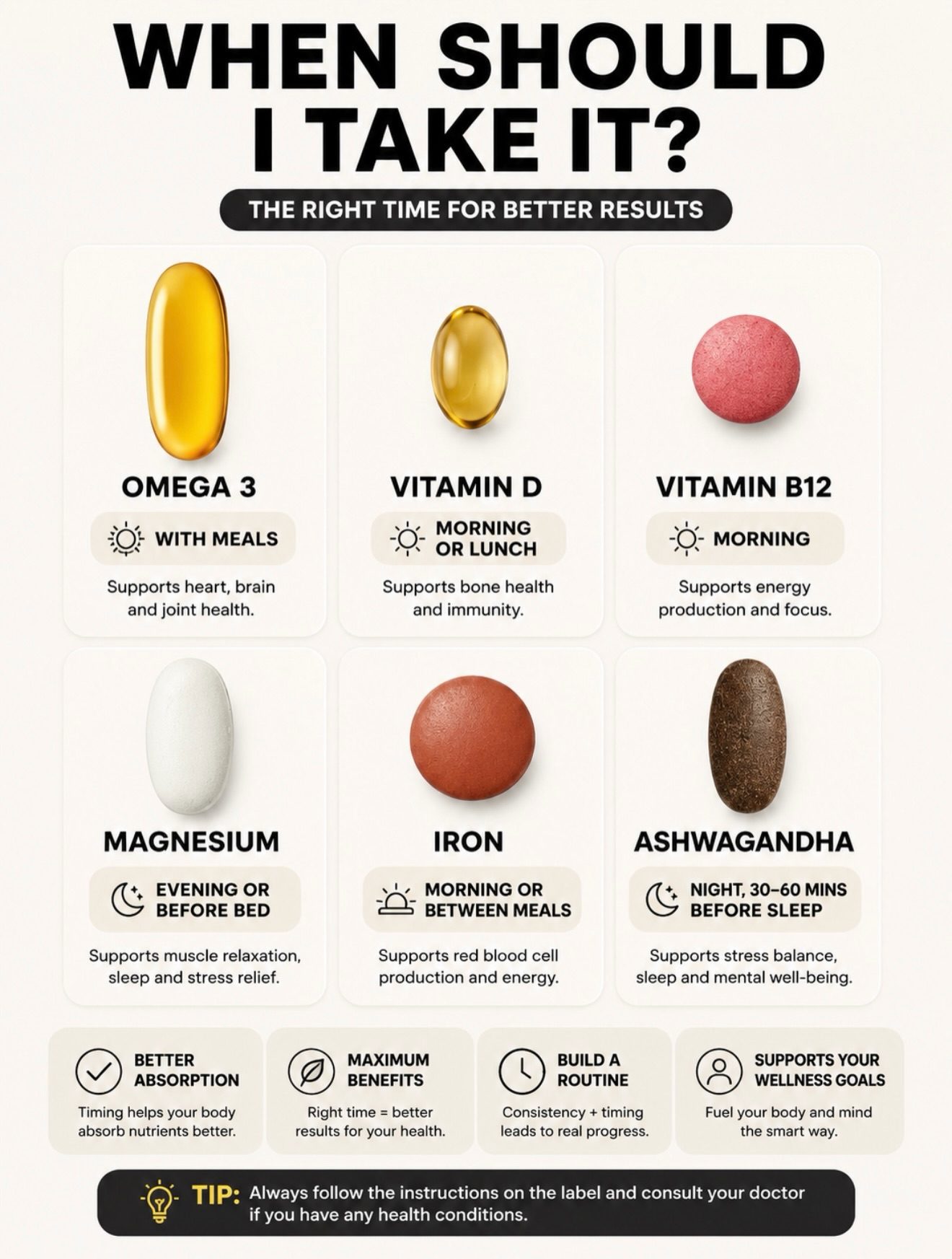
Supplement Timing & Benefits
Taking vitamins and supplements is a common practice for many people looking to enhance their health and wellness. However, the timing of when you take these supplements can significantly impact their effectiveness. Understanding the optimal times to take specific supplements can help maximize their benefits and improve overall well-being.
Why This Matters
Supplements are designed to support a healthy lifestyle, but their effectiveness can be greatly influenced by when and how they are taken. For example, some supplements are better absorbed when consumed with certain foods, while others are more effective at specific times of the day. This can make a notable difference in energy levels, recovery, sleep quality, focus, mood, workout performance, and overall wellness. Therefore, it is crucial to understand the best practices for supplement timing to get the most out of these products.
Key Supplements and Their Optimal Timing
Omega-3 Fatty Acids
Omega-3 fatty acids are essential for heart, brain, and joint health. To maximize their benefits, it is best to take them with meals. This approach ensures better absorption and utilization by the body. Omega-3 supplements can be taken with any meal, but pairing them with a balanced diet rich in healthy fats can enhance their effectiveness.
Vitamin D
Vitamin D is a fat-soluble vitamin that plays a crucial role in bone health and immune function. For optimal absorption, Vitamin D should be taken in the morning or with lunch, especially when paired with a meal that contains healthy fats. NutraPlus Vitamin D3, for instance, is designed to support bone health and immunity, and taking it with a meal that includes fats like avocados, nuts, or olive oil can enhance its absorption.
Vitamin B12
Vitamin B12 is essential for energy production and maintaining focus. Taking it in the morning can provide a boost of energy to start the day. Vitamin B12 supplements are often recommended for individuals who are vegan or have limited sources of B12 in their diet, as it is primarily found in animal products.
Magnesium
Magnesium is vital for muscle relaxation, sleep, and stress relief. Taking magnesium in the evening or before bed can help promote a better night's sleep and reduce stress levels. NutraPlus Magnesium Glycinate is a popular choice for evening supplementation, as it supports muscle relaxation and mental well-being. It is best taken about 30-60 minutes before bed to ensure maximum benefits.
Iron
Iron is crucial for blood cell production and energy levels. To support these functions, it is best to take iron supplements in the morning or with lunch. Taking iron with meals can help reduce the risk of gastrointestinal discomfort and enhance its absorption. It is also advisable to avoid consuming iron with coffee or dairy products, as they can inhibit iron absorption.
Ashwagandha
Ashwagandha is an adaptogen known for its stress-balancing and mental well-being properties. For maximum benefit, take Ashwagandha at night, 30-60 minutes before bed. This timing allows it to support sleep quality and promote a sense of calm and relaxation, setting the stage for a restful night.
Practical Tips
General Guidelines
Always follow the instructions on the supplement label and consult your healthcare provider before starting any new supplement regimen. This is especially important if you have any underlying health conditions or are taking other medications.
Meal Pairing
Pairing supplements with the right foods can significantly enhance their absorption and effectiveness. For example, fat-soluble vitamins like Vitamin D and A should be taken with a meal that contains healthy fats. Conversely, water-soluble vitamins like B and C can be taken with or without food.
Consistency
Consistency is key when it comes to supplement use. Taking supplements at the same time each day can help maintain stable levels in the body and ensure you are getting the full benefits of the supplement.
Daily Health Habits
Supplements are meant to complement a healthy lifestyle, not replace it. Maintaining a balanced diet, staying hydrated, engaging in regular physical activity, getting enough sleep, and managing stress are all critical components of overall wellness. Incorporating these practices alongside supplement use can yield the best results.
Building Healthy Routines
One of the biggest challenges in maintaining fitness and health goals is consistency. Building healthy routines can help overcome this hurdle. The Workit app, for instance, is designed to help users stay consistent with workouts, daily movement, and healthy habits. The app encourages users to track their progress, set goals, and reward themselves for achieving them, making it easier to maintain a consistent routine.
Important Takeaways
Maximize Benefits
By following the recommended timing for taking specific supplements, you can maximize their benefits and improve overall well-being. For example, taking Omega-3 with meals, Vitamin D with fats, and Magnesium before bed can enhance absorption and effectiveness. Pay attention to these small details to support energy levels, recovery, and mental health.
Support a Healthy Lifestyle
Remember that supplements are meant to support a healthy lifestyle, not replace it. Maintaining a balanced diet, staying hydrated, exercising regularly, and getting enough sleep are all essential components of a healthy routine. These practices, combined with the right supplements, can help you achieve your health and wellness goals.
Conclusion
Supplements can be a valuable addition to a healthy lifestyle, but their effectiveness depends on how and when they are taken. Understanding the optimal timing for specific supplements can help maximize their benefits and improve overall well-being. By following the recommended guidelines and building healthy routines, you can support your body and mind the smart way.
Watch the Reel
Questions readers ask
What is the ideal time to take omega-3 fatty acids?
Omega-3 fatty acids are best absorbed when taken with a meal that contains some fat. This can help enhance their absorption and effectiveness. Aim to take omega-3 supplements with your largest meal of the day, such as lunch or dinner.
Should I take vitamin B12 in the morning or evening?
Vitamin B12 is crucial for energy production. Therefore, taking it in the morning can help boost your energy levels and mental focus throughout the day. It's also best to take vitamin B12 on an empty stomach for optimal absorption.
What is the best way to maximize the benefits of magnesium?
Magnesium before bed can significantly improve sleep quality. It's also helpful to take magnesium with a small snack or meal, as it can cause stomach discomfort when taken on an empty stomach. For optimal relaxation, consider taking it 1-2 hours before bedtime.
When is the optimal time for taking vitamin D supplements?
Vitamin D is fat-soluble, so it should be taken with a meal containing healthy fats to enhance absorption. Unlike other supplements, vitamin D can be taken at any time of the day. However, consistency is key, so choose a time that you can stick to, such as with your morning or evening meal.
Can taking certain supplements at specific times improve workout performance?
Yes, taking supplements like creatine with your pre-workout meal, or BCAAs (branched-chain amino acids) before or during your workout can enhance muscle recovery and performance. Additionally, consuming a source of carbohydrates with these supplements can further improve their effectiveness.
Is it better to take vitamins and supplements with or without food?
This depends on the specific supplement. Fat-soluble vitamins, such as vitamins A, D, E, and K, should be taken with a meal containing fat. Other supplements, like vitamin C and B vitamins, can be taken with or without food. However, some people may experience stomach upset when taking certain supplements on an empty stomach, so it's important to find what works best for you.
What are the benefits of taking B vitamins in the morning?
Taking B vitamins in the morning can provide a natural energy boost, as B vitamins play a key role in energy production. They can also enhance mental focus and cognitive function, making them an excellent addition to your morning routine. For optimal absorption, take them with a meal or snack containing some protein.
Recent articles
Fresh deep dives from the latest Reels we unpacked.




Comments
Be the first to comment.