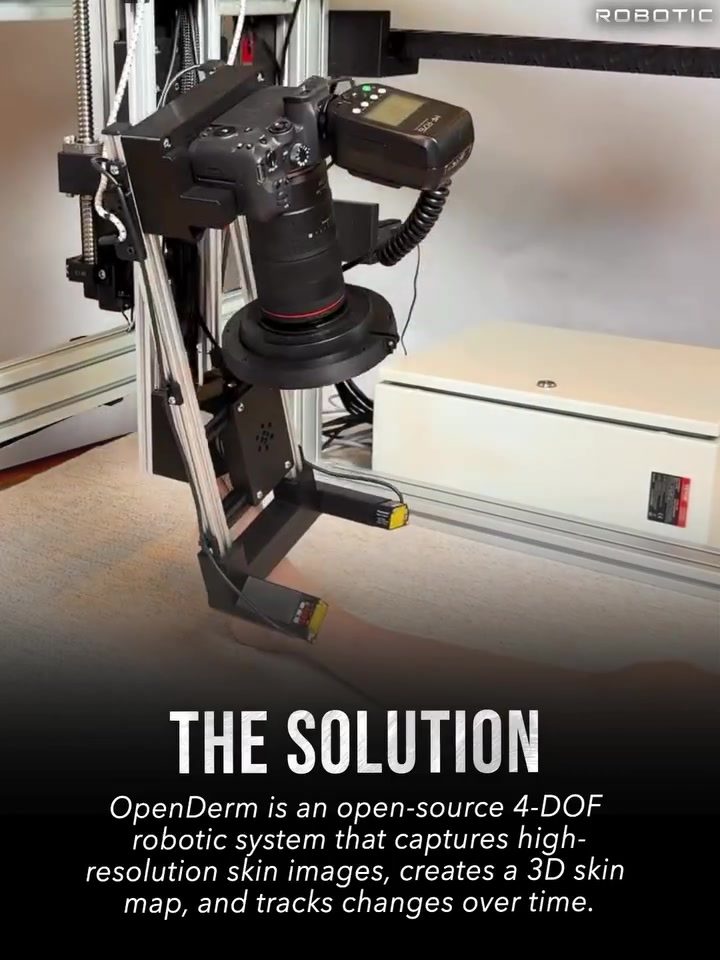
OpenDerm: Revolutionizing Early Skin Cancer Detection
OpenDerm is an innovative open-source robotic system designed to enhance the accuracy and accessibility of early skin cancer detection. Devised by a Stanford graduate, this sophisticated system employs high-resolution imaging and advanced mapping techniques to monitor skin health over time.
Why This Matters
Preventive healthcare, particularly in the realm of skin health, is crucial for early detection and treatment of diseases. Skin cancer, one of the most common forms of cancer, often presents in ways that are subtle and easily missed. The ability to track changes in moles and skin spots consistently and accurately can significantly improve early detection rates, leading to more effective treatment outcomes.
How OpenDerm Works
High-Resolution Imaging
One of the standout features of OpenDerm is its capability to capture high-resolution skin images. This level of detail is essential for identifying minute changes that could indicate the presence of skin cancer. By focusing on detailed textures and subtle variations in the skin, the system provides a comprehensive overview that is hard to achieve with the naked eye.
3D Skin Mapping
Beyond high-resolution imaging, OpenDerm creates detailed 3D maps of the skin. This 3D mapping allows for a more nuanced understanding of the skin's topography, enabling healthcare professionals to identify irregularities that might be overlooked in traditional 2D images. The 3D maps provide a three-dimensional view, which can offer insights into the depth and spread of potential issues.
Tracking Changes Over Time
One of the most significant advantages of OpenDerm is its ability to track changes in moles and skin spots over time. Regular monitoring is crucial for detecting any suspicious changes that could indicate the onset of skin cancer. By maintaining a consistent record of skin health, OpenDerm helps in early identification, making treatment more effective and less invasive.
The Role of Open Source Technology
OpenDerm is built on the principles of open source, which means that its design and functionalities are accessible to anyone. This open-source approach fosters innovation and collaboration, allowing researchers and developers to build upon and improve the system. This transparency also ensures that the technology remains cost-effective, making it more accessible to a broader range of healthcare providers and patients.
AI and Robotic Integration
The integration of AI and robotics is what sets OpenDerm apart. The robotic components work in tandem with the AI algorithms to automate the imaging and mapping processes, reducing the margin for human error. This integration enhances the consistency and accuracy of the data collected, ensuring that every scan is as reliable as the last.
Consistency in Long-Term Monitoring
OpenDerm’s 4-DOF robotic system ensures that the process of capturing images and creating maps is consistent. This consistency is vital for long-term monitoring, as it provides a reliable benchmark for comparing changes over time. Whether it's a monthly check-up or an annual review, the system delivers uniform, high-quality data, making it a valuable tool for healthcare providers.
Practical Tips for Using OpenDerm
Regular Monitoring
To get the most out of OpenDerm, regular monitoring is key. Schedule consistent check-ups to track any changes in moles and skin spots. This proactive approach ensures that any developing issues are caught early.
Consultation with Healthcare Professionals
While OpenDerm provides valuable data, it's essential to consult with healthcare professionals for a comprehensive diagnosis. Use the 3D maps and high-resolution images as a tool to guide your discussions with your doctor.
Maintaining Skin Health
In addition to using OpenDerm, maintain good skin health practices. This includes protecting your skin from excessive sun exposure, using sunscreen, and avoiding tanning beds. A holistic approach to skin care will complement the data provided by OpenDerm.
Important Takeaways
OpenDerm represents a significant advancement in skin cancer detection. Its high-resolution imaging, 3D mapping, and AI-driven tracking capabilities make it a powerful tool for early detection. The open-source nature of the system ensures that it remains accessible and affordable, while its integration of robotics and AI enhances its reliability and accuracy.
Conclusion
OpenDerm is more than just a tool; it's a game-changer in the field of preventive healthcare. By making early skin cancer detection more accurate and accessible, it has the potential to save lives and improve the quality of care. Whether you're a healthcare professional or someone concerned about your skin health, OpenDerm offers a new standard in monitoring and diagnosis.
Watch the Reel
Questions readers ask
What is OpenDerm and how does it work?
OpenDerm is an innovative, open-source robotic system developed to enhance skin cancer detection. It operates by employing high-resolution imaging to capture detailed images of the skin and using 3D mapping to track changes in moles and skin spots over time. This combination allows for precise monitoring of skin health, aiding in the early identification of potential issues.
Who developed the OpenDerm system?
The OpenDerm system was devised by a graduate from Stanford. The development of this system reflects a commitment to advancing medical technology and making it more accessible for skin cancer detection.
How does OpenDerm improve early skin cancer detection?
OpenDerm improves early skin cancer detection by providing a detailed and consistent method to track changes in moles and skin spots. By using 3D imaging, it can identify subtle changes that might otherwise go unnoticed, which is crucial for early intervention and effective treatment.
Can OpenDerm be used for general skin health monitoring?
Yes, OpenDerm is designed not only for skin cancer detection but also for general skin health monitoring. Its high-resolution imaging and 3D mapping make it a valuable tool for tracking the overall health and condition of the skin, helping users stay informed about any changes.
What are the benefits of using 3D imaging in skin cancer detection?
3D imaging provides a comprehensive view of the skin's surface, allowing for more accurate tracking of changes in moles and skin spots. This method can detect subtle changes that might indicate the presence of skin cancer, offering a more reliable means of early detection.
Is OpenDerm an open-source system? What does this mean?
Yes, OpenDerm is an open-source system, which means its design and software are freely available for use and modification by anyone. This open-source nature encourages collaboration and improvements from the medical and technology communities, fostering continuous enhancement of the system.
How can OpenDerm help with the tracking of mole changes over time?
OpenDerm uses high-resolution imaging and 3D mapping to create detailed records of moles and skin spots. By comparing these images over time, the system can detect even minor changes that might indicate the development of skin cancer, providing a reliable method for continuous monitoring and early intervention.
Recent articles
Fresh deep dives from the latest Reels we unpacked.




Comments
Be the first to comment.