Open Carry Laws in the United States
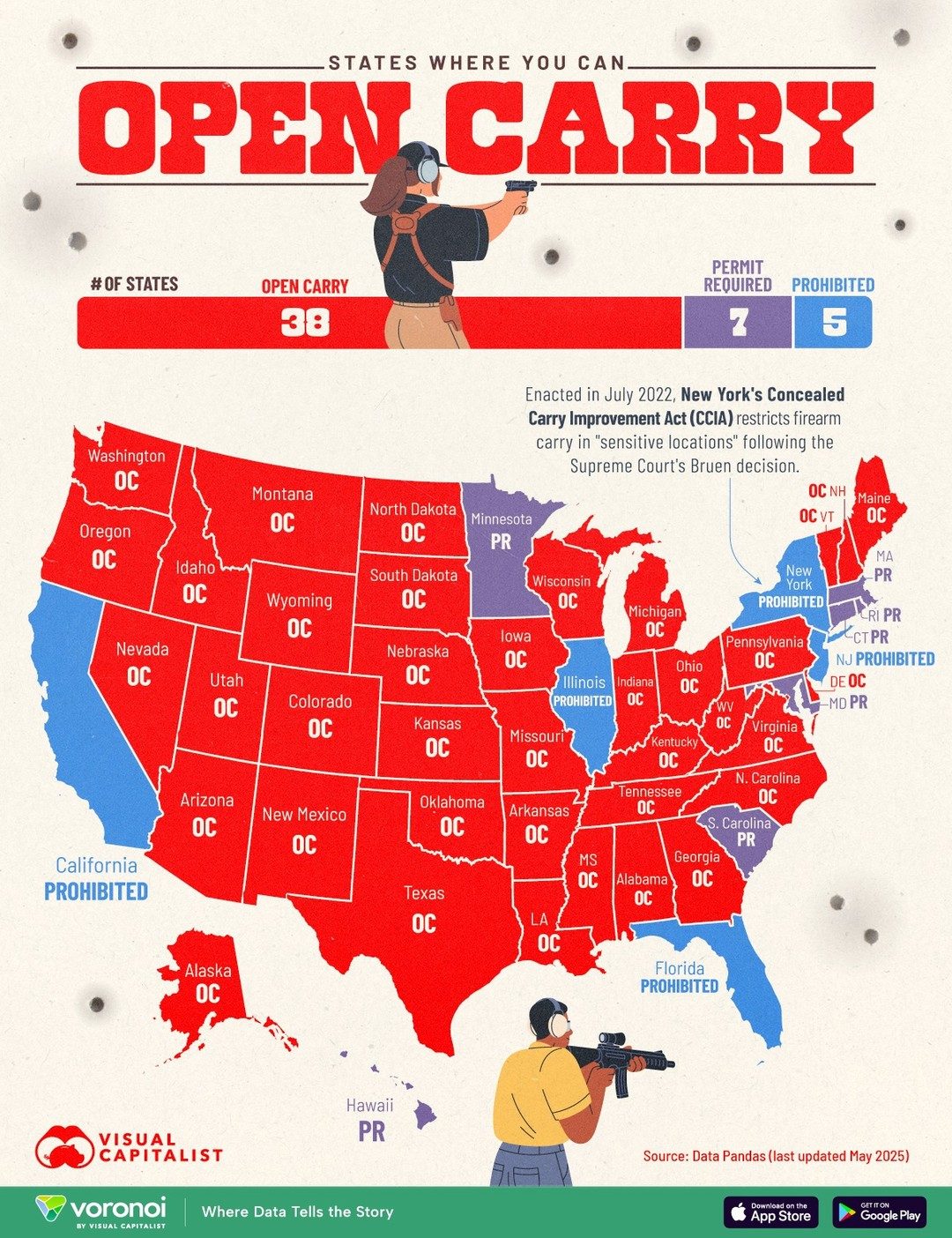
Open carry laws in the United States vary widely from state to state, creating a complex legal landscape for gun owners. Understanding these laws is crucial for anyone who owns or plans to own a firearm, as it directly impacts how and where they can carry their weapon. This guide will map out the current open carry regulations across the U.S., highlighting states that permit open carry without a permit, those that require a permit, and those that prohibit it outright.
Context: Why This Matters
Open carry laws are a significant aspect of the broader conversation around gun rights in the U.S. These laws affect public safety, personal freedoms, and the interpretation of the Second Amendment. Whether you are a gun owner, a concerned citizen, or simply curious about the legal framework, knowing the specifics of open carry laws can provide clarity and help you navigate the nuances of firearms regulations.
A Map of Open Carry Laws
States Allowing Open Carry Without a Permit
Thirty-eight states allow open carry without requiring a permit. These include Montana, Wyoming, and Arkansas, which are known for having some of the highest gun ownership rates in the country. In these states, individuals can openly carry a firearm in public without needing to obtain a permit.
Permitless Open Carry States:
| State |
|---|
| Montana |
| Wyoming |
| Arkansas |
| Washington |
| North Dakota |
| Oregon |
| Idaho |
| South Dakota |
| Nevada |
| Texas |
| Iowa |
| Utah |
| Wisconsin |
| Colorado |
| Illinois |
| Kansas |
| Missouri |
| Indiana |
| Oklahoma |
| Tennessee |
| Arizona |
| New Mexico |
| Kentucky |
| Alabama |
| Alaska |
| Hawaii |
| Florida |
| Maine |
| Virginia |
| West Virginia |
| Pennsylvania |
| Georgia |
| North Carolina |
| South Carolina |
| California |
| Minnesota |
| Iowa |
| Delaware |
| Kentucky |
States Requiring a Permit for Open Carry
Seven states require a permit for open carry. This means that individuals must obtain a specific permit to legally carry a firearm openly in public. The process and requirements for obtaining such a permit can vary significantly from state to state.
Permit Required States:
| State |
|---|
| Washington |
| Oregon |
| Minnesota |
| Wisconsin |
| Illinois |
| Kansas |
| Missouri |
| Indiana |
| Oklahoma |
| Arkansas |
| North Carolina |
| South Carolina |
| Texas |
| Tennessee |
| Arizona |
| New Mexico |
| Kentucky |
| Alabama |
| Alaska |
| Hawaii |
States Prohibiting Open Carry
Five states prohibit open carry outright, meaning it is illegal to carry a firearm openly in public without any exceptions. These states have stricter regulations regarding the possession and carrying of firearms.
Prohibited States:
| State |
|---|
| New York |
| California |
| Virginia |
| Pennsylvania |
| Texas |
Legislative Influences and Key Decisions
The Supreme Court’s Breen Decision
The Supreme Court’s Breen decision is a pivotal point in the history of open carry laws. This decision has had a significant impact on how states interpret and enforce their open carry regulations. The Breen decision set a precedent for understanding the Second Amendment's implications on state-level firearm laws, affecting how state legislatures and courts approach open carry regulations in new cases.
New York’s Concealed Carry Improvement Act (CCIA)
New York’s Concealed Carry Improvement Act (CCIA) of 2022 is another significant piece of legislation that has impacted open carry laws. The CCIA restricts firearm carry in “sensitive locations,” such as schools, hospitals, and places of worship. While the CCIA primarily addresses concealed carry, its provisions have also influenced how open carry is regulated in certain contexts. It emphasizes the importance of location-based restrictions, ensuring that firearms are kept out of areas where they could potentially pose a greater risk to public safety.
Practical Tips for Navigating Open Carry Laws
Understanding Your State’s Regulations
The first step in navigating open carry laws is to thoroughly understand the specific regulations in your state. This includes knowing whether a permit is required, what the permit application process involves, and any restrictions on where you can carry your firearm.
Checking Local Ordinances
In addition to state laws, it’s essential to check local ordinances. Some cities and counties may have additional regulations or restrictions on open carry that go beyond what the state law requires. These local ordinances can be crucial in determining where and how you can legally carry your firearm.
Staying Informed About Legal Changes
Firearm laws are subject to change, and it’s important to stay informed about any updates or amendments to open carry regulations. This can include new legislation, court decisions, or changes to local ordinances. Keeping up-to-date with these changes ensures that you are always in compliance with the law.
Carrying Responsibly
Regardless of the specific regulations in your state, responsible carrying practices are essential. This includes being aware of your surroundings, understanding the potential risks of carrying a firearm, and always prioritizing safety. Responsible carrying helps to maintain a positive image of firearm ownership and contributes to public safety.
Important Takeaways
Open carry laws in the U.S. are intricate and vary widely from state to state. Understanding these laws is crucial for anyone who owns or plans to own a firearm. Key takeaways include:
- Thirty-eight states allow open carry without a permit.
- Seven states require a permit for open carry.
- Five states prohibit open carry outright.
- The Supreme Court’s Breen decision and New York’s Concealed Carry Improvement Act (CCIA) are significant legislative and judicial influences on open carry regulations.
- Responsible carrying and staying informed about legal changes are essential for navigating open carry laws.
Conclusion
Open carry laws in the United States are a critical aspect of the broader conversation around gun rights and public safety. Whether you are a gun owner or simply interested in understanding the legal framework, knowing the specifics of open carry regulations can provide valuable insights and help you navigate the complexities of these laws. By staying informed, understanding your state’s regulations, and carrying responsibly, you can ensure that you are in compliance with the law and contributing to a safer environment.
Watch the Reel
Questions readers ask
Which states allow open carry without a permit?
States like Montana, Wyoming, and Arizona permit open carry without a permit. It is important for gun owners to familiarize themselves with local laws and regulations, as some areas within these states might have restrictions. **It's crucial to understand that even in these states, certain locations like schools, government buildings, and private properties may prohibit open carry.**
What are the open carry permit requirements in states that mandate one?
In states that require a permit for open carry, such as New York, the process typically involves background checks, firearms safety training, and sometimes a demonstration of proficiency. Specific requirements vary by state, so it's essential to consult the local regulations. **For instance, in New York, residents must obtain a pistol license, which can be used for concealed or open carry, depending on local interpretation.**
How do open carry laws differ between Arkansas and Montana?
Arkansas requires a permit to open carry, whereas Montana allows open carry without a permit. In Arkansas, the permit process involves background checks and training, while in Montana, no permit is needed, but understanding local restrictions and responsible firearm handling is crucial. **Both states have specific areas where open carry is prohibited, so it's important to know the local laws.**
What impact did the Supreme Court's Breen decision have on open carry laws?
The Supreme Court's decision in Breen v. New York did not directly address open carry but reinforced the right to bear arms under the Second Amendment. This decision has influenced subsequent interpretations of gun laws, including open carry regulations. **However, open carry laws still vary widely by state, and the Breen decision did not create a uniform standard across the country.**
Are there any recent changes to open carry laws in 2023?
In 2023, several states have implemented new laws and regulations to clarify open carry laws. By staying informed about these developments, gun owners can better navigate the complexities of firearm regulations. **For example, the Open Carry Improvement Act was enacted in 2023 to clarify and improve open carry laws in some states, making it essential for gun owners to review the latest changes.**
How does the Open Carry Improvement Act affect gun owners?
The Open Carry Improvement Act aims to streamline and clarify open carry laws to make them more user-friendly for gun owners. The act provides clearer guidelines on permit requirements, legal carrying locations, and other essential details. **By understanding the specifics of this act, gun owners can better comply with local regulations and avoid potential legal issues.**
Recent articles
Fresh deep dives from the latest Reels we unpacked.




Comments
Be the first to comment.