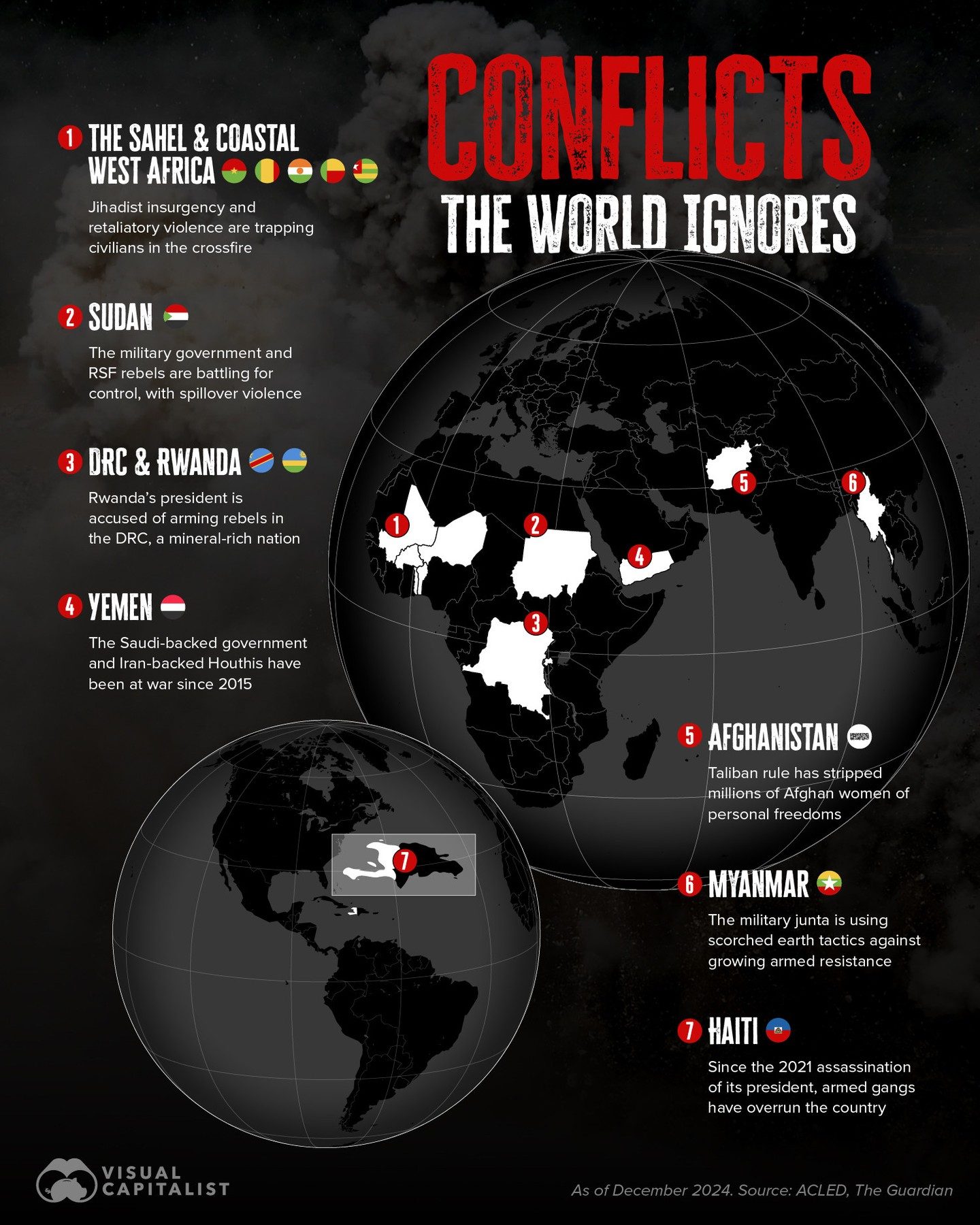
Global Conflicts: Conflicts the World Ignores
Beyond the well-publicized conflicts in Ukraine and Palestine, there are numerous other armed struggles affecting millions of people worldwide. These lesser-known conflicts often receive minimal global attention, but their impact is profound. Let's delve into some of these ongoing conflicts, highlighting the key issues and the regions they impact.
Context: The Importance of Awareness
Armed conflicts have widespread consequences, including humanitarian crises, economic devastation, and widespread displacement. Understanding these conflicts is crucial for fostering global empathy, supporting humanitarian efforts, and promoting international peace. By acknowledging the scale and complexity of these issues, we can better advocate for solutions and aid those affected.
Main Discussion
Since these conflicts are often overshadowed by more prominent struggles, it's essential to shine a spotlight on the regions and issues at play to foster greater awareness and support.
The Sahel and Coastal West Africa
The Sahel region, stretching across West Africa, is embroiled in a complex mix of jihadist insurgencies and retaliatory violence. Groups like Boko Haram and Islamic State West Africa Province (ISWAP) have created a climate of fear, trapping millions of civilians in the crossfire. The instability is further exacerbated by poverty, drought, and weak governance, making it difficult for peace to take hold.
Sudan
Sudan's ongoing conflict pits the military government against the Rapid Support Forces (RSF) rebels, with violent clashes often spilling over into civilian areas. The power struggle has led to widespread displacement, with millions of people forced to flee their homes. The conflict has also disrupted essential services, deepening the humanitarian crisis.
Democratic Republic of Congo (DRC) and Rwanda
The DRC, known for its mineral wealth, has been plagued by a complex web of conflicts. Rwanda, its neighboring country, has been accused of arming rebel groups within the DRC, fueling ongoing violence. The conflict has led to severe human rights abuses, including mass displacement, sexual violence, and the exploitation of natural resources.
Yemen
Yemen has been locked in a brutal war since 2015, with the Saudi-backed Houthis on one side and the internationally recognized government on the other. The conflict has resulted in one of the world's worst humanitarian crises, with millions of people facing starvation, disease, and lack of access to basic services. The fighting has also led to widespread destruction of infrastructure, further exacerbating the suffering.
Afghanistan
Afghanistan's recent history has been marked by instability, including the military rule that has stripped millions of Afghan women of their personal freedoms. The Taliban's return to power has led to severe restrictions on women's rights, including access to education and healthcare. The ongoing conflict has also displaced millions, creating a significant refugee crisis.
Myanmar
Myanmar's military has employed harsh tactics, including scorched earth strategies, to suppress growing armed resistance. The conflict has resulted in widespread human rights abuses, including the displacement of millions of people, particularly from ethnic minority groups. The instability has also disrupted essential services, further deepening the humanitarian crisis.
Haiti
Since the 2021 assassination of its president, Haiti has been engulfed in chaos, with armed gangs taking control of many areas. The political instability has led to widespread violence, economic collapse, and a humanitarian crisis. Millions of people are in dire need of aid, but the situation on the ground remains precarious, with limited international support.
Practical Tips for Staying Informed
Staying informed about global conflicts can be challenging, but there are practical steps to keep up with the latest developments:
-
Follow Reliable News Sources: Websites and organizations like The Guardian, Armed Conflict Location & Event Data (ACLED) Registry, and Visual Capitalist provide reliable and up-to-date information on global conflicts, including detailed maps and data visualizations.
-
Engage with Humanitarian Organizations: Organizations like the United Nations, International Committee of the Red Cross, and Doctors Without Borders offer insights into the humanitarian impact of conflicts and ways to support relief efforts.
-
Monitor Social Media: Platforms like Twitter and Facebook can provide real-time updates from on-the-ground sources, though it's important to verify information from multiple sources.
-
Support Advocacy Groups: Organizations that focus on human rights and conflict resolution can provide valuable context and advocacy opportunities.
Important Takeaways
Understanding the complexities of global conflicts is essential for fostering awareness and support. These lesser-known conflicts, though often overlooked, have profound impacts on millions of people. By staying informed and engaged, we can play a role in advocating for peace and supporting humanitarian efforts.
Conclusion
Global conflicts, often overshadowed by more prominent struggles, continue to affect millions of people around the world. From the Sahel region to Haiti, these ongoing conflicts highlight the need for greater global attention and support. By understanding the key issues and regions affected, we can better advocate for solutions and aid those in need. Keeping informed and staying engaged is crucial for fostering empathy and promoting international peace.
Watch the Reel
Questions readers ask
Why are conflicts in the Sahel, Sudan, and the Democratic Republic of Congo often overlooked by the global community?
These regions often lack the political or economic significance that would draw global attention. Additionally, the complex nature of these conflicts, involving a mix of extremist groups, political strife, and resource competition, can make them difficult to understand or address quickly. Media coverage is also limited, which contributes to their oversight.
What are the key drivers of the ongoing conflict in the Sahel?
The conflict in the Sahel is primarily driven by a mix of extremist activities, political instability, and competition for resources such as water and arable land. The region's climatic changes, which have led to increased desertification, have also exacerbated tensions and contributed to the spread of extremist ideologies.
How does the conflict in the Democratic Republic of Congo impact the wider region?
The DRC conflict has significant regional implications, including the displacement of millions of people, which puts pressure on neighboring countries. It also fuels the illicit trade of natural resources, further destabilizing the region. The conflict has led to severe humanitarian crises, with widespread violence and human rights abuses.
What role do resource competition and political strife play in the conflict in Sudan?
Resource competition, particularly over oil and water, is a significant factor in the Sudan conflict. Political strife, including power struggles between different factions and ethnic groups, further complicates the situation. These conflicts contribute to the displacement of millions of people and ongoing humanitarian crises.
What can individuals do to support peace efforts in these overlooked conflicts?
Individuals can support peace efforts by staying informed about these conflicts and raising awareness among their communities. Advocating for policies that address the root causes of these conflicts, such as resource competition and political instability, is also crucial. Donating to reputable organizations working on the ground can provide direct support to those affected.
How do conflicts in these regions contribute to global issues like displacement and humanitarian crises?
These conflicts result in widespread displacement, as millions of people are forced to flee their homes due to violence and insecurity. This displacement puts immense pressure on neighboring countries and international aid systems, creating severe humanitarian crises. The long-term effects include economic instability and the proliferation of extremist ideologies.
What resources can help someone learn more about ongoing conflicts around the world?
For a comprehensive view of ongoing conflicts, consider exploring global conflict maps and databases that provide up-to-date information. Websites like the Armed Conflict Location & Event Data Project (ACLED) and the Global Conflict Tracker offer detailed conflict data. Additionally, reports from organizations like the United Nations and the International Committee of the Red Cross provide valuable insights into the causes and impacts of these conflicts.
Recent articles
Fresh deep dives from the latest Reels we unpacked.




Comments
Be the first to comment.