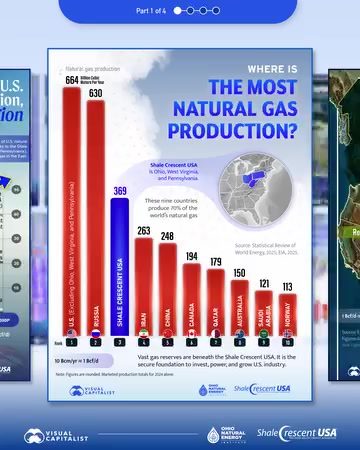
Natural Gas Production in the Shale Crescent USA Region
Natural gas production is a critical component of the U.S. energy landscape, and the Shale Crescent USA region—comprising Ohio, West Virginia, and Pennsylvania—has emerged as a dominant player. This region's growth, cost advantages, and future potential make it a key area of interest for energy stakeholders and investors alike.
Why This Matters
The Shale Crescent USA region has become a significant contributor to the nation's natural gas supply. Understanding its role in the energy sector provides valuable insights into the U.S. energy landscape, infrastructure needs, and future production trends. The region's competitive cost advantage and projected growth make it a focal point for discussions on energy policy, infrastructure development, and investment opportunities.
Regional Gas Production
Historical Context
The Shale Crescent USA has rapidly grown to become one of the leading natural gas producers in the United States. In recent years, the region has surpassed traditional energy hubs like Texas and Louisiana in terms of natural gas production. This growth is driven by advancements in drilling technologies, such as horizontal drilling and hydraulic fracturing, which have made it economically viable to extract gas from shale formations.
The region's natural gas production has reached over 664 billion cubic feet, a testament to its significance in the national energy supply. This growth has not only boosted the region's economy but also enhanced its role in the broader energy market.
Current Production and Cost Analysis
One of the most compelling aspects of the Shale Crescent USA is its cost efficiency. The region produces natural gas at the lowest cost per barrel of oil equivalent compared to other energy sources. This competitive pricing is a result of the region's abundant natural gas reserves, efficient extraction methods, and well-developed infrastructure. The low cost of production makes natural gas from the Shale Crescent USA an attractive option for both domestic and international buyers.
Infrastructure and Buyer Access
Existing Infrastructure
The Shale Crescent USA region benefits from a robust infrastructure network that supports natural gas production, transportation, and distribution. This includes pipelines, processing facilities, and storage units that ensure a steady supply of natural gas to consumers. The well-developed infrastructure not only supports current production levels but also positions the region to handle future growth.
Access to Buyers
The region's strategic location and proximity to major markets provide easy access to buyers. This proximity reduces transportation costs and ensures a reliable supply chain, making it an attractive option for energy companies and consumers. The region's natural gas is exported to various parts of the United States and beyond, contributing to the national energy security and economic stability.
Future of Natural Gas Production
Projected Growth
According to the Energy Information Administration (EIA), the Shale Crescent USA is projected to be the future leader of U.S. natural gas production. This projection is based on the region's continued growth in production, cost advantages, and infrastructure development. The region is well-positioned to meet the growing demand for natural gas, both domestically and internationally.
Future Leaders
The future of U.S. natural gas production will likely be shaped by the Shale Crescent USA's growth. The region's natural gas production is projected to increase significantly over the next few decades, with the EIA predicting a substantial rise in output. This growth will make the Shale Crescent USA a dominant player in the global natural gas market, influencing energy policies and investment decisions worldwide.
Practical Tips for Stakeholders
Investors
Investors looking to capitalize on the region's growth should consider the following points:
- Infrastructure Investment: Investing in infrastructure projects, such as pipelines and processing facilities, can yield significant returns as the region's production continues to grow.
- Diversification: Diversifying investments across different energy sources and regions can mitigate risks associated with market fluctuations and regulatory changes.
Energy Companies
Energy companies can leverage the region's cost advantages and infrastructure to enhance their market position:
- Cost Efficiency: Utilizing the region's low-cost natural gas can improve operational efficiency and profitability.
- Market Diversification: Expanding operations in the Shale Crescent USA can provide access to new markets and reduce reliance on traditional energy hubs.
Policy Makers
Policy makers have a crucial role in supporting the region's growth and ensuring sustainable development:
- Regulatory Frameworks: Developing clear and supportive regulatory frameworks can attract investment and foster growth in the natural gas sector.
- Infrastructure Development: Prioritizing infrastructure development can enhance the region's ability to meet growing demand and support broader economic development.
Important Takeaways
- Regional Significance: The Shale Crescent USA has emerged as a leading natural gas producer, surpassing traditional energy hubs like Texas and Louisiana.
- Cost Advantages: The region produces natural gas at the lowest cost per barrel of oil equivalent, making it an attractive option for buyers.
- Infrastructure and Access: The region's well-developed infrastructure and strategic location provide easy access to buyers, reducing transportation costs and ensuring a reliable supply.
- Future Growth: The Shale Crescent USA is projected to be the future leader of U.S. natural gas production, driven by continued growth, cost advantages, and infrastructure development.
Conclusion
The Shale Crescent USA region, encompassing Ohio, West Virginia, and Pennsylvania, has become a pivotal player in the U.S. natural gas landscape. Its rapid growth, competitive cost advantages, and robust infrastructure make it a key area for energy stakeholders, investors, and policy makers. As the region continues to grow and shape the future of natural gas production, understanding its dynamics and opportunities will be essential for maximizing benefits and ensuring sustainable development.
Watch the Reel
Questions readers ask
What makes the Shale Crescent USA region a significant player in the U.S. natural gas market?
The Shale Crescent USA region, which includes Ohio, West Virginia, and Pennsylvania, has become a major player due to its rapid growth in natural gas production, cost advantages, and strategic location. The region's infrastructure development and investment opportunities make it a key player in the broader energy market.
Which states are included in the Shale Crescent USA region, and why are they important for natural gas production?
The Shale Crescent USA region comprises Ohio, West Virginia, and Pennsylvania. These states are important for natural gas production because of their vast shale reserves, cost-efficient production methods, and proximity to major energy markets, making them pivotal for the future of U.S. energy.
How does the cost-efficiency of natural gas production in the Shale Crescent USA region benefit the broader energy market?
The cost-efficiency of natural gas production in the Shale Crescent USA region allows for more competitive pricing, which can lower energy costs for consumers and industries. This, in turn, stimulates economic activity and makes the region an attractive area for infrastructure investment and development.
What are the implications of the Shale Crescent USA's growth on energy infrastructure investment?
The growth of the Shale Crescent USA region is driving significant investment in energy infrastructure, such as pipelines and processing facilities. This expansion is crucial for transporting natural gas to markets and ensuring a reliable supply, further solidifying the region's role in the U.S. energy landscape.
Why is Pennsylvania a key component of the Shale Crescent USA region's natural gas production?
Pennsylvania is a key component due to its significant shale gas reserves, particularly in the Marcellus and Utica shale formations. The state's advanced drilling technologies and established infrastructure make it a major contributor to the region's natural gas production and a focal point for energy stakeholders.
What role does natural gas production in Ohio play in the Shale Crescent USA's energy landscape?
Ohio's natural gas production is vital to the Shale Crescent USA's energy landscape, driven by the Utica and Marcellus shale formations. The state's strategic location and growing infrastructure make it a critical hub for natural gas processing, storage, and transportation, enhancing the region's overall energy capabilities.
What future trends can be expected in the natural gas industry within the Shale Crescent USA region?
Future trends in the Shale Crescent USA region include continued growth in natural gas production, further infrastructure development, and increased investment in related industries. The region's competitive cost advantages and strategic location are expected to drive these trends, positioning the Shale Crescent USA as a cornerstone of the U.S. energy sector.
Recent articles
Fresh deep dives from the latest Reels we unpacked.




Comments
Be the first to comment.