Immigration Growth Across OECD Countries
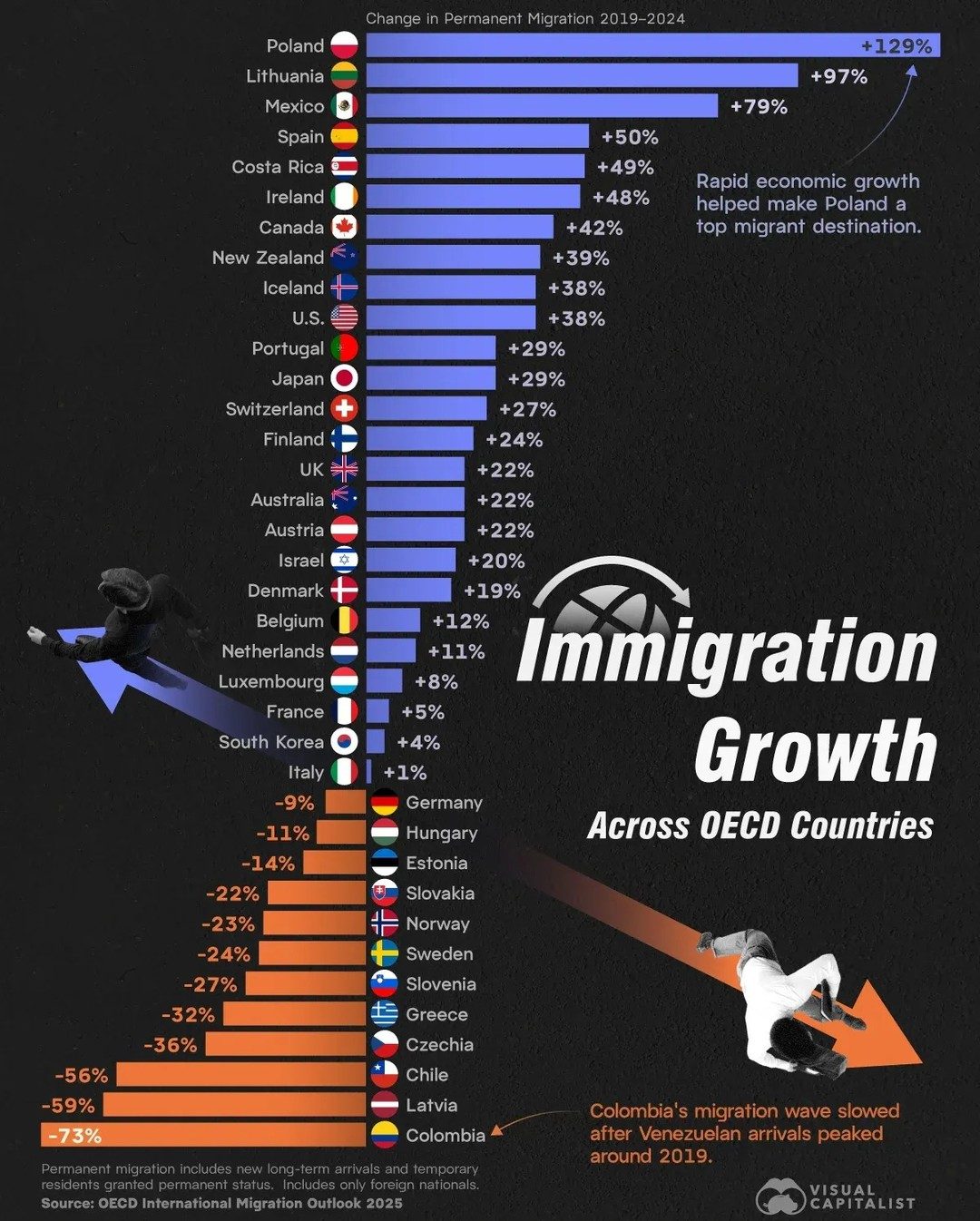
Permanent immigration growth across OECD countries has shown remarkable variation, with Poland leading the way. From 2019 to 2024, Poland recorded the fastest growth in permanent immigration, an impressive 129% increase, according to the OECD. Other countries have also seen significant growth, illustrating a broader trend of shifting immigration patterns. The OECD International Migration Outlook 2025 highlights these changes, providing a comprehensive view of where immigration is booming and where it's declining.
Why This Matters
Understanding immigration trends is crucial for policymakers, businesses, and societies. Immigration influences labor markets, economic growth, and cultural diversity. As traditional immigration destinations like the United States and Canada continue to attract immigrants, the rising numbers in countries like Poland, Mexico, and Spain indicate a shift in global migration patterns. This shift can lead to new opportunities and challenges, from workforce development to integration policies.
Main Discussion
Poland's Immigration Surge
Poland's 129% increase in permanent immigration between 2019 and 2024 is the most significant growth among OECD countries. This surge can be attributed to a number of factors, including Poland's economic growth, labor market needs, and favorable immigration policies. This trend has transformed Poland into a major destination for immigrants, challenging traditional perceptions of European migration.
Other Notable Countries
While Poland stands out, other countries have also seen substantial growth:
-
Mexico: With a 49% increase, Mexico has become a key destination for immigrants, driven by economic opportunities and family reunification.
-
Spain: Spain saw a 48% increase in permanent immigration, benefiting from its strong economy and cultural appeal. The country's tourism industry also attracts workers from around the world.
-
Costa Rica and Ireland: Both countries experienced a 48% increase, showing that smaller nations can also become significant immigration destinations. In Costa Rica, factors like quality of life and economic stability are key drivers. In Ireland, opportunities in tech and healthcare are attracting more immigrants.
Decline in Some Regions
While some countries are experiencing a boom in immigration, others have seen a decline. Negative growth or stagnation in countries like South Korea, Chile, and Colombia highlights varying economic conditions and policy environments. For instance, South Korea has faced challenges in attracting foreign workers due to language barriers and strict visa policies. Economic instability in countries like Chile can also deter immigrants. In contrast, policies aimed at protecting domestic labor markets may limit immigration in certain countries.
Practical Tips for High-Growth Destinations
For countries experiencing rapid immigration growth, it's crucial to implement effective integration strategies and policies:
-
Efficient Integration Policies: Create programs that help immigrants integrate into the local economy and society, such as language training, job placement services, and cultural orientation.
-
Access to Social Services: Ensure that immigrants have access to essential social services, including healthcare, education, and housing. This not only improves their quality of life but also contributes to social stability.
-
Workforce Development: Invest in training and education programs to help immigrants develop skills that align with the local labor market needs, benefiting both immigrants and the host country.
Important Takeaways
-
Poland's 129% increase in permanent immigration between 2019 and 2024 is a standout example of the shifting global migration landscape.
-
Other countries, such as Mexico, Spain, Costa Rica, and Ireland, have also seen significant immigration growth, driven by economic opportunities and favorable policies.
-
Decline in immigration in some countries, like South Korea, Chile, and Colombia, can be attributed to economic instability, strict policies, and language barriers.
-
For countries experiencing rapid immigration growth, effective integration policies, access to social services, and workforce development are critical.
Conclusion
The significant growth in permanent immigration across OECD countries, particularly in Poland, Mexico, Spain, Costa Rica, and Ireland, underscores a broader trend of shifting migration patterns. These countries are emerging as new immigration destinations, driven by economic opportunities, favorable policies, and quality of life. As immigration continues to evolve, countries must adapt their policies to integrate newcomers effectively, ensuring that both immigrants and the host populations benefit from these changes. Whether you're a policymaker, an entrepreneur, or an individual interested in immigration trends, staying informed about these developments is essential for navigating the changing global landscape.
Watch the Reel
Questions readers ask
Which OECD country experienced the most significant increase in permanent immigration from 2019 to 2024?
Poland saw the most substantial increase, with a 129% growth in permanent immigration during this period. This surge highlights Poland's emergence as a key destination for migrants within the OECD.
What are the primary factors driving immigration growth in countries like Mexico, Spain, and Costa Rica?
Economic prospects and favorable immigration policies are the main drivers. These countries offer opportunities that attract migrants seeking better job prospects and living conditions.
How do these immigration trends impact the countries experiencing growth?
Increased immigration can positively influence labor markets by filling skill gaps and boosting economic growth. It also contributes to cultural diversity, which can enrich societies and workplaces.
What insights does the OECD International Migration Outlook 2025 provide about immigration patterns?
The report offers a detailed analysis of where immigration is on the rise and where it is declining. It helps stakeholders understand the shifting dynamics of immigration within OECD countries and plan accordingly.
Which countries besides Poland are seeing notable increases in immigration within the OECD?
Mexico, Spain, and Costa Rica are among the countries experiencing significant growth in immigration. These nations are attracting more migrants due to their economic opportunities and welcoming policies.
How can understanding these immigration trends benefit businesses and societies?
It allows them to prepare for changes in the labor market, anticipate economic impacts, and foster inclusive policies. This can help businesses attract a diverse workforce and societies to integrate new residents effectively.
What role do favorable policies play in attracting immigrants to these countries?
Favorable policies, such as streamlined visa processes and pathways to citizenship, can make a country more appealing to potential immigrants. They signal a welcoming environment and can significantly boost immigration numbers.
Recent articles
Fresh deep dives from the latest Reels we unpacked.




Comments
Be the first to comment.