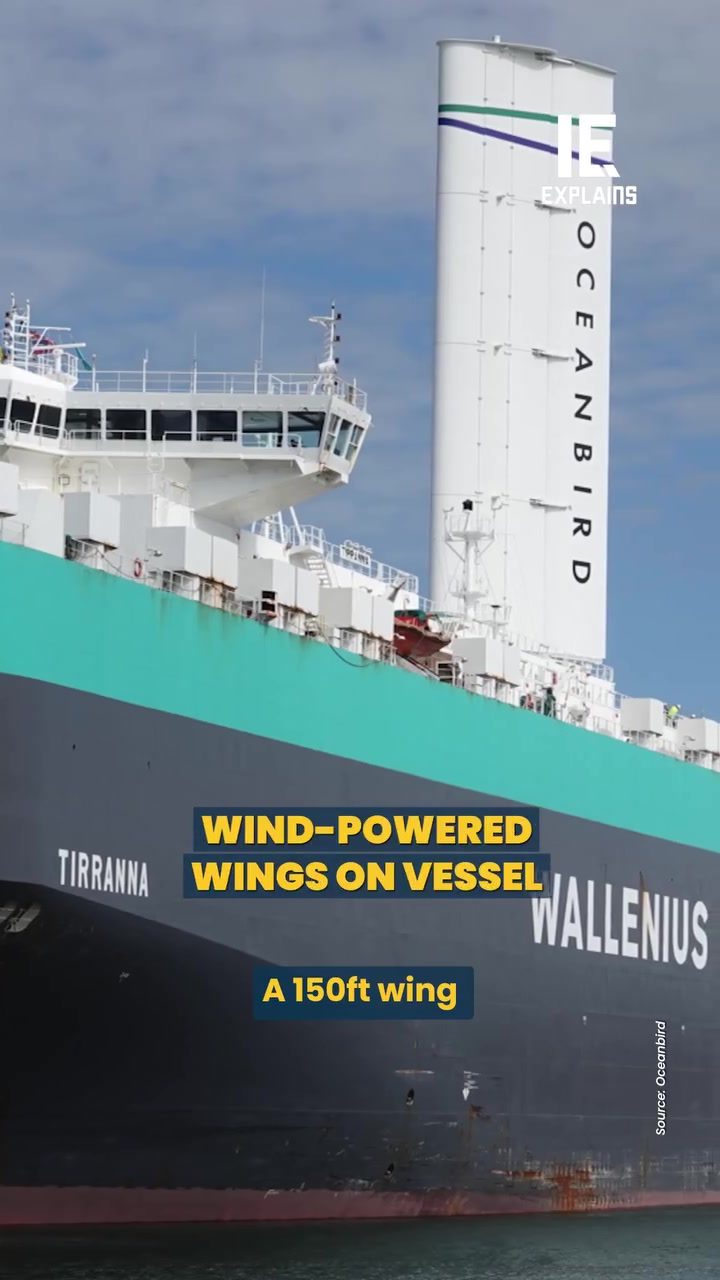
Wind-Powered Vessel: Revolutionizing Maritime Technology with Wing 560
Wind propulsion is making a significant comeback in the maritime industry, with innovative technologies like the Wing 560 designed to harness the power of the wind. This cutting-edge system, developed by the Swedish company Oceanbird, is the latest addition to maritime technology, aiming to reduce fuel consumption and emissions in cargo ships. The Wing 560 is a 46-metre (150-foot) rigid, tiltable wing sail mounted on the Tirranna, a 230-metre (754-foot) car carrier operated by Wallenius Wilhelmsen.
This advanced technology is part of a growing trend towards sustainable shipping, driven by the urgent need to reduce carbon footprints in the maritime sector.
The Wing 560 is designed to harness the power of the wind by generating mechanical thrust, much like an airplane wing turned on its side. This innovative design allows the ship to reduce its reliance on traditional fuel sources, thereby lowering emissions and operational costs. The ability to tilt the wing flat when needed ensures safety and operational efficiency, especially during port operations or adverse weather conditions. This adaptability is crucial for maintaining the ship's normal schedule while still achieving significant fuel savings.
Context / Why this matters
The maritime industry is under increasing pressure to adopt greener technologies due to the environmental impact of traditional shipping methods. Cargo ships are significant contributors to global emissions, and the push for more sustainable solutions is driven by regulatory pressures and corporate sustainability goals. Wind-powered propulsion, once a staple of maritime travel, is experiencing a revival due to advancements in technology and the need for clean energy sources.
The Wing 560 technology represents a significant step towards achieving these sustainability goals. By harnessing the power of the wind, it not only reduces the environmental footprint of cargo ships but also provides a cost-effective solution for carriers. The installation of the Wing 560 on the Tirranna marks a pivotal moment in the adoption of wind propulsion, demonstrating the technology's feasibility and potential for widespread use.
Main discussion
The Science Behind Wind-Powered Propulsion
Wind-powered propulsion is not a new concept, but recent advancements have made it more practical for modern shipping. The Wing 560 leverages principles of aerodynamics to generate thrust, similar to how an airplane wing works. By tilting the wing, the system can optimize its performance based on wind conditions and operational needs. This flexibility is essential for ensuring the vessel's efficiency and safety.
The Installation and Testing Process
The installation of the Wing 560 on the Tirranna was completed at Damon Shipyard in Rotterdam. This process involved rigorous testing to ensure the wing's performance and safety. The ship underwent both harbour and sea acceptance tests to validate its functionality. By July 1, 2026, the Tirranna successfully passed these tests, proving the Wing 560's reliability and effectiveness.
Expected Benefits
The Wing 560 is expected to cut fuel use and emissions by around 10% on optimal routes. This reduction in fuel consumption not only lowers operational costs but also significantly decreases the vessel's carbon footprint. The design of the wing allows it to tilt flat when needed for safety or port operations, ensuring that the ship's normal schedule remains unaffected.
The Orsel Horizon Project
The Wing 560 is part of the EU-backed Orsel Horizon project, which aims to develop cargo ships that draw over 50% of their propulsion from wind. This ambitious initiative underscores the growing interest in wind propulsion as a viable solution for sustainable shipping. The project's goal is to create a fleet of ships that leverage wind power to reduce reliance on fossil fuels, thereby contributing to global efforts to combat climate change.
Practical tips
Optimizing Wind Conditions
Ships equipped with wind-powered propulsion systems like the Wing 560 need to be strategic about their routes. Optimal routes should consider prevailing wind conditions to maximize the efficiency of the wing. This may involve adjusting traditional shipping lanes or scheduling voyages during periods of favorable winds.
Regular Maintenance and Monitoring
Wind-powered systems require regular maintenance to ensure their performance and longevity. This includes inspections of the wing's mechanism, checks for any wear and tear, and monitoring the system's overall efficiency. Regular monitoring can help identify potential issues early, preventing costly repairs and downtime.
Integration with Existing Systems
For the Wing 560 to be effective, it must be seamlessly integrated with the ship's existing systems. This includes ensuring compatibility with navigation, communication, and propulsion systems. Proper integration can enhance the overall performance of the vessel and ensure that the wing operates efficiently.
Important takeaways
The Wing 560 represents a major advancement in maritime technology, offering a practical and effective solution for reducing emissions in the shipping industry. The successful installation and testing of the Wing 560 on the Tirranna demonstrate the technology's potential for widespread adoption. The Orsel Horizon project underscores the importance of wind propulsion in achieving sustainability goals, and the Wing 560 is a significant step towards this vision.
Conclusion
Wind-powered propulsion is set to play a crucial role in the future of sustainable shipping. The Wing 560, with its innovative design and proven performance, is at the forefront of this technological revolution. As more ships adopt wind-powered systems, the maritime industry will move closer to achieving its sustainability goals, reducing emissions, and lowering operational costs. The Tirranna's journey with the Wing 560 is a testament to the potential of wind propulsion, paving the way for a greener and more efficient maritime future.
Watch the Reel
Questions readers ask
How does the Oceanbird Wing 560 reduce fuel consumption and emissions?
The Wing 560 reduces fuel consumption and emissions by harnessing wind power for mechanical thrust. By supplementing the ship's engine, the wing sail decreases the amount of fuel needed to propel the vessel, directly cutting down on CO2 and other harmful emissions.
What makes the Wing 560 different from traditional sails?
Unlike traditional sails, the Wing 560 is a rigid, tiltable wing sail that can be adjusted to optimize wind capture based on wind direction and speed. This design allows for efficient use of wind power in various weather conditions, making it a practical solution for modern cargo ships.
How large is the Wing 560 and how is it integrated into a cargo ship?
The Wing 560 is 46 metres tall and is designed to be mounted on cargo ships. It is integrated into the vessel’s structure and can be tilted to adapt to different wind conditions and weather scenarios, ensuring seamless operation without hindering the ship’s functionality.
What is the operational range of the Wing 560 in terms of wind speed and direction?
The Wing 560 is designed to operate efficiently in a wide range of wind conditions. It can capture wind energy effectively from various angles and speeds, making it versatile for different maritime routes and weather patterns. This adaptability enhances its usability in real-world shipping scenarios.
What are the benefits of using the Wing 560 for cargo shipping?
The Wing 560 offers several benefits, including significant reductions in fuel costs, lower greenhouse gas emissions, and a more sustainable approach to cargo transportation. By leveraging wind power, it helps shipping companies meet environmental regulations and contribute to a greener maritime industry.
Related deep dives
Similar reads based on topic and creator.


Recent articles
Fresh deep dives from the latest Reels we unpacked.




Comments
Be the first to comment.