Nutrition and Diet Choices for Muscle Gain and Fat Loss
Nutrition and diet choices play a crucial role in achieving fitness goals, whether you're aiming for muscle gain or fat loss. The key lies in understanding how to tailor your food intake to support your specific objectives. Let's delve into the nutritional strategies that can help you reach your goals more effectively.
Why This Matters
Understanding the nutritional needs for muscle gain and fat loss is essential for anyone looking to optimize their fitness journey. By making informed dietary choices, you can accelerate your progress and maintain your goals more sustainably. This guide will help you navigate the often confusing world of diet and nutrition, focusing on practical tips and strategies that work.
Nutritional Choices for Muscle Gain
For those looking to build muscle, the primary goal is to achieve a calorie surplus while consuming adequate protein. This surplus provides the necessary energy for muscle repair and growth. Opting for slightly more calorie-dense foods can help you reach your daily calorie target without feeling overwhelmed by the sheer volume of food.
Protein Sources for Muscle Gain
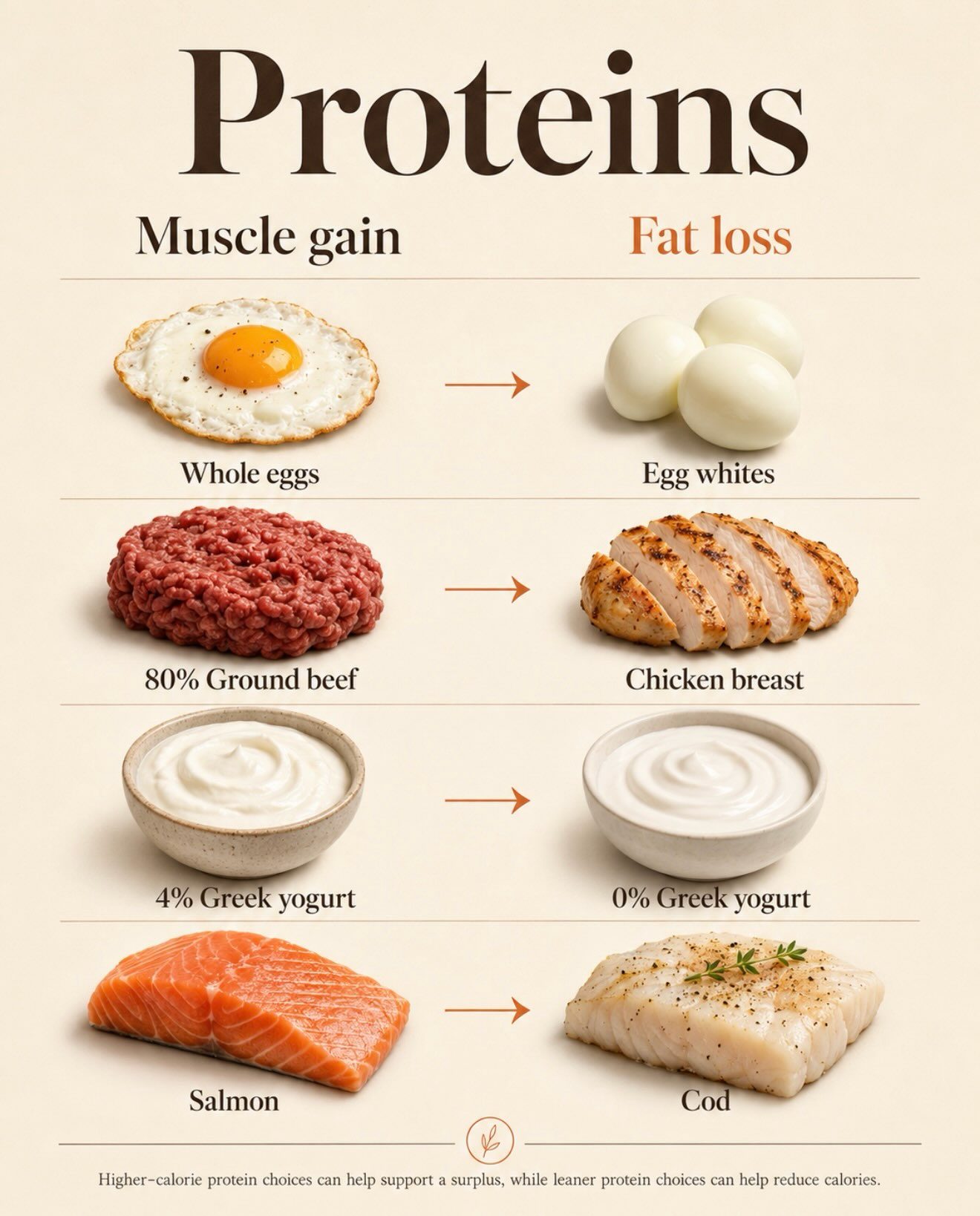
When it comes to protein, whole foods are your best bet. Whole eggs, for instance, offer a higher calorie density compared to egg whites, making them an excellent choice for muscle gain. Other high-calorie protein sources include:
- Salmon
- 80% lean ground beef
- Full-fat Greek yogurt
Carbohydrate Sources for Muscle Gain
Carbohydrates are essential for providing the energy needed for intense workouts and muscle recovery. For muscle gain, focus on foods that offer a higher calorie density:
- White rice
- Bagels
- White potatoes
Healthy Fats for Muscle Gain
Healthy fats are crucial for muscle gain, as they provide a concentrated source of energy. Incorporate foods like:
- Avocado
- Peanut butter
Nutritional Choices for Fat Loss
For those aiming to lose fat, the primary goal is to achieve a calorie deficit while consuming adequate protein to maintain muscle mass. Opting for leaner or higher-volume, low-calorie-density foods can help you feel satisfied while keeping your calorie intake in check.
Protein Sources for Fat Loss
Lean protein sources are ideal for fat loss, as they help maintain muscle mass while keeping calorie intake low. Opt for:
- Chicken breast
- Cod
- Egg whites
- 0% Greek yogurt
Carbohydrate Sources for Fat Loss
For carbohydrates, focus on foods that offer a higher volume and lower calorie density. These foods can help you feel full and satisfied while keeping your calorie intake in check:
- Sweet potatoes
- Oats
- Rice cakes
- Berries
Healthy Fats for Fat Loss
While healthy fats are still important for fat loss, it's crucial to measure them carefully to avoid overeating. Include small portions of:
- Avocado
- Peanut butter
- Cheese
Practical Tips for Eating for Your Goals
Making informed dietary choices can be challenging, but with the right strategies, you can achieve your fitness goals more effectively. Here are some practical tips to help you along the way.
Mindful Portion Control
Portion control is crucial for both muscle gain and fat loss. For muscle gain, opt for slightly larger portions of calorie-dense foods. For fat loss, focus on smaller portions of leaner, higher-volume foods. Tracking your portions can help you stay on track and avoid overeating.
Meal Planning and Preparation
Meal planning and preparation can help you stay on track with your nutritional goals. Plan your meals in advance, and prepare them accordingly. This can help you avoid impulsive, unhealthy food choices and ensure that you have healthy options readily available.
Hydration
Staying hydrated is essential for both muscle gain and fat loss. Aim to drink at least 2 liters of water daily. Proper hydration supports overall health, aids in digestion, and helps with muscle recovery.
Track Your Progress
Tracking your progress is essential for staying motivated and making adjustments as needed. Use a reliable fitness app like Workit to track your meals, calories, protein intake, workouts, steps, and progress. This can help you stay accountable and make informed decisions about your nutrition and fitness journey.
Importance of Consistency
Consistency is key to achieving your fitness goals. Whether you're aiming for muscle gain or fat loss, sticking to your plan and making consistent choices will yield the best results.
Important Takeaways
When it comes to nutrition and diet choices, there are a few key takeaways to keep in mind:
- No single food is exclusively for muscle gain or fat loss. You can include a variety of foods in your diet, depending on your calorie and macronutrient needs.
- Portion control and consistency are crucial. Regardless of your fitness goal, staying consistent with your diet and tracking your portions can help you achieve your desired results.
- Food quality matters. Opt for whole, nutrient-dense foods that support your overall health and fitness goals.
- Stay hydrated. Proper hydration supports overall health, aids in digestion, and helps with muscle recovery.
Conclusion
Achieving your fitness goals through nutrition and diet choices involves making informed decisions about what and how much to eat. By understanding the nutritional needs for muscle gain and fat loss, you can tailor your diet to support your specific objectives. Focus on calorie-dense foods for muscle gain and leaner, higher-volume foods for fat loss. Consistency and portion control are crucial, and tracking your progress can help you stay on track. With the right strategies and mindset, you can optimize your nutrition and achieve your fitness goals more effectively.
Watch the Reel
Questions readers ask
What are the best muscle gain foods to include in my diet?
To support muscle gain, focus on nutrient-dense, whole foods. Lean proteins like chicken breast, turkey, and fish are excellent choices. Additionally, incorporate complex carbohydrates such as brown rice, quinoa, and sweet potatoes, along with healthy fats from avocados and nuts.
How do I determine my calorie surplus for muscle gain?
To create a calorie surplus for muscle gain, first calculate your total daily energy expenditure (TDEE). Then, add 300-500 calories to your TDEE. This surplus will provide the extra energy needed to build muscle. Monitor your progress and adjust as needed.
What is a good fat loss diet plan?
A effective fat loss diet plan should focus on a calorie deficit while maintaining lean protein intake. Include low-calorie, high-volume foods like leafy greens, broccoli, and lean proteins such as grilled chicken or tofu. Limit processed foods and sugars, and stay hydrated.
Why are lean proteins important for fat loss?
Lean proteins are crucial for fat loss as they help maintain muscle mass while in a calorie deficit. Foods like chicken breast, turkey, and fish provide the necessary amino acids for muscle repair and growth, and they also promote feelings of fullness, aiding in appetite control.
Should I avoid carbs when trying to lose fat?
Not necessarily. While it's important to reduce overall calorie intake, carbs can still be part of a fat loss diet. Opt for complex carbohydrates like whole grains, fruits, and vegetables, which provide essential nutrients and fiber. Limit refined carbs and sugars.
How does rice benefit muscle building?
Rice, particularly brown rice, is beneficial for muscle building due to its high carbohydrate content, which fuels workouts and promotes muscle recovery. It also provides essential nutrients like B vitamins and minerals. Pair it with a protein source for optimal muscle gain.
Recent articles
Fresh deep dives from the latest Reels we unpacked.




Comments
Be the first to comment.