Nutritional Value of Grass-Fed, Organic, and Conventional Chicken, Beef, and Milk
Understanding the nutritional differences between grass-fed, organic, and conventional meats and dairy is essential for making informed food choices. Let's dive into the specifics of chicken, beef, and milk to understand how these labels can impact nutritional content.
Context / Why This Matters
The labels "organic," "grass-fed," "pasture-raised," and "wild-caught" often signal a higher nutritional value, but the reality is more nuanced. Specific factors like cut, fat content, species, feed, season, and production methods play a significant role in determining the nutritional profile. Knowledge of these differences helps consumers make choices based on their dietary goals, budget, taste preferences, and animal welfare priorities.
Nutritional Comparison: Chicken
Conventional vs. Organic vs. Pasture-Raised
When comparing different types of chicken, the nutritional differences can be subtle but significant. Here's a breakdown of the key differences:
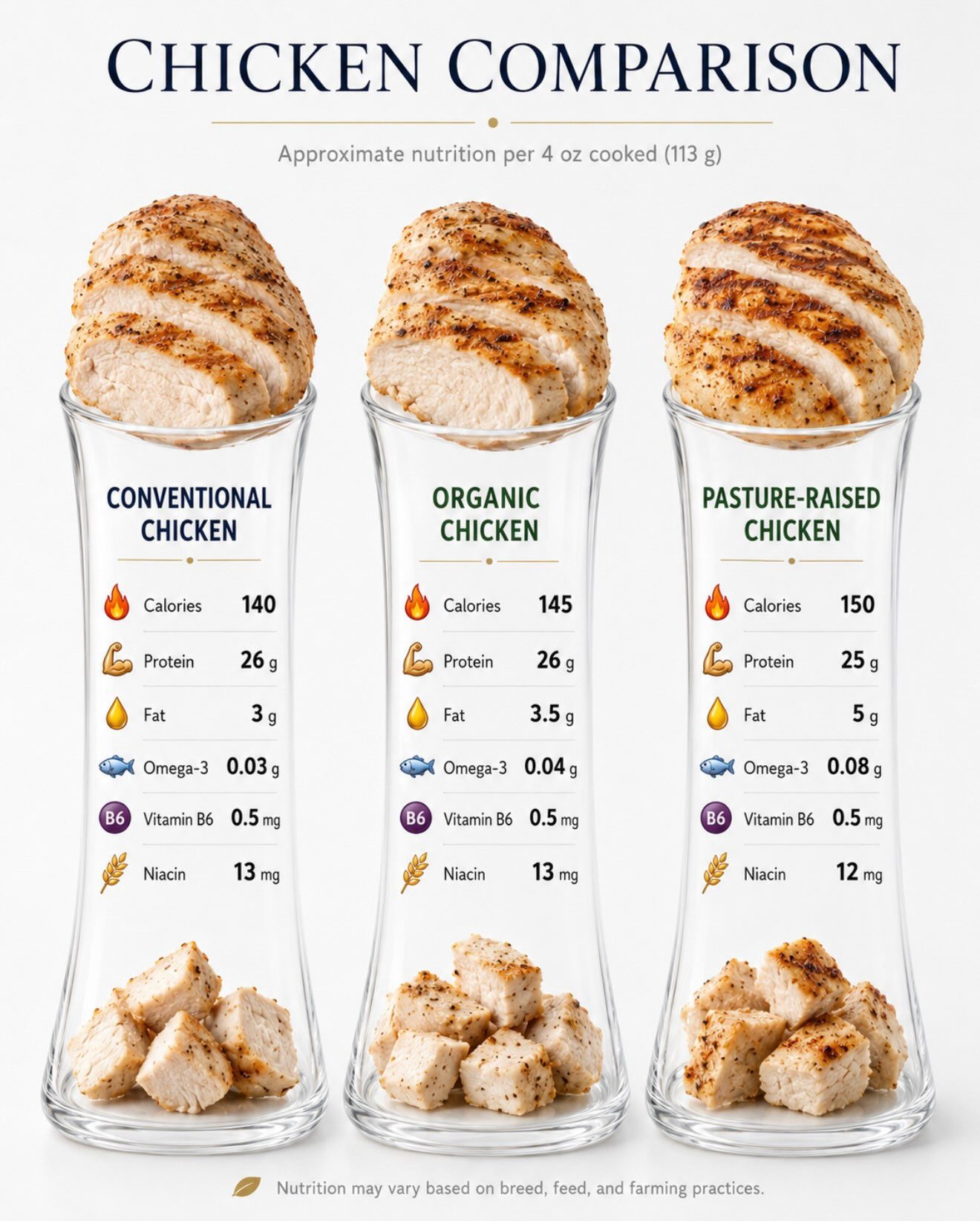
- Conventional Chicken: Typically lower in calories, with around 140 calories, 26 grams of protein, and 0.03 grams of omega-3 per 4-ounce serving.
- Organic Chicken: Slightly higher in calories at 145, with the same protein content and a marginally higher omega-3 content of 0.04 grams.
- Pasture-Raised Chicken: The highest in calories and omega-3 content, with 150 calories, 25 grams of protein, and 0.08 grams of omega-3.
Vitamin and Mineral Content
Vitamin B6 and niacin levels are generally consistent across all types, each offering around 0.5 milligrams of Vitamin B6 and approximately 12-13 milligrams of niacin.
Factors Affecting Nutrition
Nutritional values can vary based on factors such as breed, feed, and farming practices. For example, pasture-raised chickens may have higher omega-3 content due to their diet, which often includes more insects and plants.
Nutritional Comparison: Beef
Grain-Fed vs. Organic vs. Grass-Fed
Beef is a staple in many diets, and its nutritional profile can vary significantly based on the farming method.
- Grain-Fed Beef: Highest in calories and fat, with 250 calories and 17 grams of fat per 4-ounce serving. It also contains 26 grams of protein, 0.05 grams of omega-3, 2.4 milligrams of iron, and 2.0 micrograms of vitamin B12.
- Organic Beef: Slightly leaner with 240 calories, 15 grams of fat, 27 grams of protein, 0.07 grams of omega-3, 2.5 milligrams of iron, and 2.1 micrograms of vitamin B12.
- Grass-Fed Beef: The leanest option, with 220 calories, 11 grams of fat, 28 grams of protein, 0.10 grams of omega-3, 2.5 milligrams of iron, and 2.2 micrograms of vitamin B12.
Factors Affecting Nutrition
The cut, feed, and farming practices can significantly impact the nutritional content. Grass-fed beef, for example, often has a higher omega-3 content due to the natural grass diet, which is richer in these beneficial fats.
Nutritional Comparison: Milk
Conventional vs. Organic vs. Grass-Fed Organic
Milk is a common source of calcium and protein, and its nutritional profile can vary based on farming methods.
-
Conventional Milk: Offers 150 calories, 8 grams of protein, 8 grams of fat, 12 grams of carbohydrates, 300 milligrams of calcium, and 0.10 grams of omega-3 per cup.
-
Organic Milk: Similar to conventional milk in terms of macros, with 0.12 grams of omega-3, which is slightly higher but may not make a significant difference in daily intake.
-
Grass-Fed Organic Milk: Contains 0.20 grams of omega-3, making it the richest in omega-3 content among the three types. The other nutritional values remain consistent with conventional and organic milk.
Practical Tips
When choosing between different types of meat and dairy, consider the following:
-
Nutritional Goals: If you're looking to increase your omega-3 intake, opt for pasture-raised chicken, grass-fed beef, or grass-fed organic milk. For a leaner protein source, grass-fed beef is a good choice, while conventional meat and milk may be sufficient for basic nutritional needs.
-
Budget: Organic and grass-fed options are often more expensive. If budget is a concern, conventional options can still provide the necessary nutrients, albeit in slightly different amounts.
-
Taste and Texture: Personal preference plays a significant role. Grass-fed and pasture-raised meats often have a different texture and flavor due to their feeding methods.
-
Animal Welfare: Consider the farming practices and choose products that align with your ethical standards.
-
Availability: Not all areas may have easy access to organic or grass-fed products. Consider what is realistically available and make the best choice within those options.
Important Takeaways
-
Basic Macros Are Similar: Conventional, organic, and pasture-raised/grass-fed meats and dairy often have similar basic nutritional profiles. The key differences lie in specific nutrients like omega-3 fatty acids.
-
Omega-3 Content Varies: Grass-fed and pasture-raised options generally have higher omega-3 content, which is beneficial for heart health and overall well-being.
-
Cut, Feed, and Farming Practices Matter: These factors can significantly impact the nutritional profile, often more so than the label itself.
-
No One-Size-Fits-All: Choose based on your individual goals, budget, taste, and availability. You do not need the most expensive option to build a balanced, protein-rich diet.
Conclusion
Understanding the nutritional differences between grass-fed, organic, and conventional chicken, beef, and milk is crucial for making informed dietary choices. While the labels can provide some guidance, it's essential to consider the specific nutritional content based on factors like breed, feed, and farming practices. By doing so, you can align your food choices with your health goals, budget, and ethical standards.
Watch the Reel
Questions readers ask
What are the key nutritional differences between grass-fed and conventional beef?
Grass-fed beef often contains less total fat and significantly less saturated fat than conventionally raised beef, but it also has a higher content of omega-3 fatty acids and conjugated linoleic acid (CLA). Additionally, grass-fed beef may contain more vitamins and minerals, such as vitamin E and certain antioxidants, due to the natural diet of the cattle.
How does the nutritional content of organic milk compare to conventional milk?
Organic milk typically comes from cows that are raised without the use of synthetic hormones or antibiotics, which can influence the milk's nutritional profile. It often contains higher levels of omega-3 fatty acids and CLA. However, the overall nutritional differences between organic and conventional milk are relatively small, and the choice may come down to personal preferences and farming practices.
What are the benefits of choosing grass-fed chicken over conventional chicken?
Grass-fed chicken, while less common, generally has a more balanced omega-3 to omega-6 fatty acid ratio compared to conventional chicken. This is due to the chicken's diet, which often includes more natural, plant-based feed. Additionally, grass-fed chicken may have higher levels of certain vitamins and minerals, but the precise nutritional differences can vary based on farming practices and the specific diet of the chickens.
How do beef farming practices affect the nutritional content of the meat?
Beef farming practices, such as the diet of the cattle, can significantly impact the nutritional content of the meat. Grass-fed cattle consume a natural diet of grasses and forages, which can result in meat that is leaner and contains higher levels of beneficial fats like omega-3s and CLA. In contrast, conventional beef often comes from cattle fed a diet high in grains, which can lead to higher levels of saturated fat and lower levels of beneficial nutrients.
What should I consider when comparing the protein content in grass-fed vs. conventional chicken?
The protein content in grass-fed and conventional chicken is generally similar, as both types of chicken provide a high-quality source of protein. However, grass-fed chicken may offer a slightly better ratio of omega-3 to omega-6 fatty acids, which can be beneficial for overall health. When comparing, consider factors such as the specific farming practices, the diet of the chickens, and your personal dietary goals.
Is there a significant difference in vitamin content between grass-fed and conventional milk?
Grass-fed milk may contain higher levels of certain vitamins, such as vitamin E and beta-carotene, due to the natural diet of the cattle. These vitamins often come from the diverse plant life in the pastures. However, the overall vitamin content in milk can vary based on factors like the season, the specific diet of the cows, and the farming practices.
Related deep dives
Similar reads based on topic and creator.

Recent articles
Fresh deep dives from the latest Reels we unpacked.




Comments
Be the first to comment.