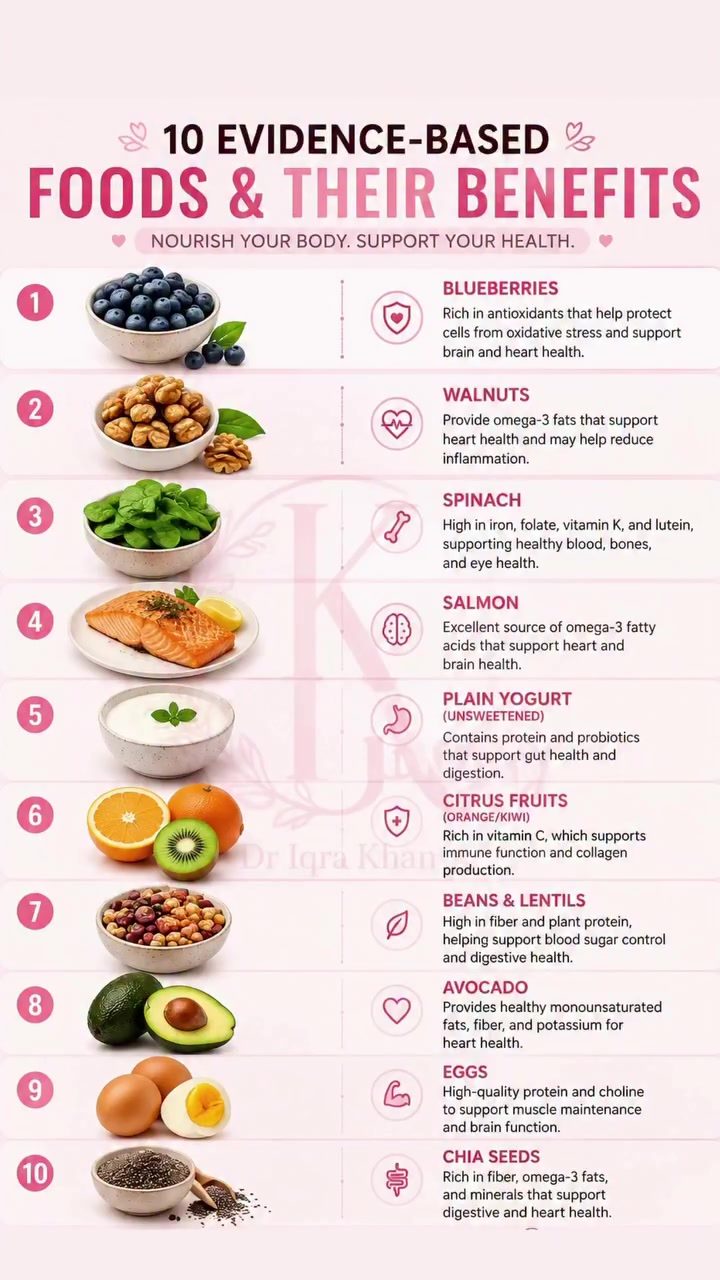
10 Evidence-Based Foods for Better Health
Good nutrition is built on more than just "superfoods" or miracle cures – it's about making consistent, informed choices. The following details ten foods that are packed with nutrients, each supporting various aspects of your health, from heart and brain function to digestion and overall well-being.
Context / Why this Matters
Regularly incorporating a variety of nutrient-dense foods into your diet supports your body’s long-term health. This isn’t just about single foods; it’s about creating a balanced diet that contributes to your overall well-being. Pairing these consistent, healthy choices with regular exercise, quality sleep, and hydration will elevate your lifestyle and promote long-term health.
Main Discussion
Blueberries: Antioxidant Powerhouses
Blueberries are rich in antioxidants, which help protect your cells from oxidative stress. This can lead to improved brain and heart health. Their high antioxidant content makes them a valuable addition to your diet, supporting overall well-being and possibly even slowing down the aging process.
Walnuts: Heart-Healthy Fats
Walnuts are an excellent source of omega-3 fatty acids, which support heart health. They also contain other nutrients that may help reduce inflammation, which is beneficial for overall health. Including walnuts in your diet can be a tasty way to support your cardiovascular system.
Spinach: A Nutrient Powerhouse
Spinach is high in iron, folate, and vitamin K, all of which are essential for healthy blood, bones, and eyes. Additionally, it contains lutein, an antioxidant that supports eye health. This versatile leafy green can be easily incorporated into salads, smoothies, or cooked dishes, making it a versatile addition to your diet.
Salmon: Essential Omega-3s
Salmon is an excellent source of omega-3 fatty acids, which are crucial for both heart and brain health. Regularly consuming salmon can help reduce inflammation and support cognitive function, making it a valuable addition to a balanced diet.
Plain Yogurt (Unsweetened): Gut-Friendly Probiotics
Plain, unsweetened yogurt is a great source of protein and probiotics, which support gut health and aid in digestion. Probiotics help maintain a healthy balance of gut bacteria, which is essential for overall health. Opting for unsweetened varieties ensures you avoid added sugars.
Citrus Fruits: Vitamin C Boost
Citrus fruits like oranges and kiwis are rich in vitamin C, which supports your immune system and helps in collagen production. Vitamin C is also a powerful antioxidant, making citrus fruits an excellent choice for maintaining overall health.
Beans and Lentils: Plant-Based Protein
Beans and lentils are high in fiber and plant protein, making them an excellent choice for supporting blood sugar control and digestive health. They can be incorporated into a variety of dishes, from soups and stews to salads and side dishes, making them a versatile and nutritious addition to your meal plan.
Avocado: Healthy Fats and Fiber
Avocados are packed with healthy monounsaturated fats, fiber, and potassium, all of which contribute to heart health and overall well-being. Their creamy texture and mild flavor make them an easy addition to salads, sandwiches, and even smoothies.
Eggs: High-Quality Protein
Eggs are a high-quality source of protein and choline, both of which are essential for muscle maintenance and brain function. They are also versatile and can be prepared in various ways, from scrambled and boiled to poached and fried, making them a convenient addition to any diet.
Chia Seeds: Digestive and Heart Health
Chia seeds are rich in fiber, omega-3 fatty acids, and essential minerals, all of which support digestive and heart health. They can be added to smoothies, yogurt, or baked goods for an extra nutritional boost.
Practical Tips
When it comes to incorporating these foods into your diet, consistency is key. Aim for a varied diet that includes a variety of the foods listed above. Here are a few practical tips:
- Plan Ahead: Incorporate these foods into your meal plan for the week. Prepping meals in advance can help ensure you're eating a balanced diet throughout the week.
- Experiment with Recipes: Try out new recipes that feature these nutrient-dense foods. This can make eating healthy more enjoyable and keep your meals interesting.
- Stay Hydrated: Pairing a balanced diet with adequate hydration is essential for overall health. Aim to drink at least 8 glasses of water a day.
- Quality Sleep: Prioritize getting 7-9 hours of quality sleep each night. Adequate sleep is crucial for maintaining overall health and well-being.
Important Takeaways
These 10 evidence-based foods offer a variety of health benefits, from supporting heart and brain function to improving gut health and boosting the immune system. Incorporating them into your diet, along with regular exercise, quality sleep, and adequate hydration, can significantly enhance your overall well-being. Remember that no single food can prevent or cure disease; it's the combination of these factors that contribute to long-term health.
Conclusion
By making informed, consistent choices and incorporating a variety of nutrient-dense foods into your diet, you can support your overall health and well-being. These 10 foods offer a range of benefits, from heart health to cognitive function, making them valuable additions to your daily meals. Embrace a balanced diet and a healthy lifestyle for long-term health and well-being.
Watch the Reel
Questions readers ask
What does it mean for a food to be 'nutrient-dense'?
Nutrient-dense foods are those that provide a high amount of essential nutrients, such as vitamins, minerals, and fiber, relative to their calorie content. These foods support overall health and help your body function optimally, making them a key component in any healthy diet.
How can incorporating these foods help with digestion?
These foods are packed with fiber and other essential nutrients that keep your digestive system operating smoothly. Foods rich in fiber, such as blueberries and leafy greens, promote healthy gut bacteria and help prevent digestive issues like constipation.
Are 'superfoods' really necessary for a healthy diet?
The term 'superfood' is often overused, but some foods do offer exceptional health benefits due to their concentrated nutrient profiles. However, it's more important to focus on a balanced diet that includes a variety of nutrient-dense foods rather than relying on a few so-called 'superfoods'.
Which foods from the list are particularly good for heart health?
Foods like blueberries, which are rich in antioxidants, and fatty fish, which contain healthy omega-3 fatty acids, are known for their heart-healthy benefits. These nutrients can help reduce inflammation, lower cholesterol, and improve overall heart function.
How do these foods support brain function?
Foods such as fatty fish, nuts, and leafy greens are packed with nutrients that support brain health. For instance, omega-3 fatty acids found in fatty fish are crucial for brain function, while antioxidants in foods like blueberries can help protect the brain from oxidative stress.
Can these foods help boost my immune system?
Yes, many of these nutrient-dense foods contain antioxidants and other immune-boosting properties. For example, garlic and onions contain compounds that can help fight infections, while citrus fruits are high in vitamin C, which is essential for a healthy immune system.
How does a balanced diet with these foods contribute to long-term health?
Consistently incorporating these nutrient-dense foods into your diet ensures that your body receives the nutrients it needs to function properly. This can help prevent chronic diseases, maintain a healthy weight, and support overall well-being. Combined with regular exercise and proper hydration, these choices can significantly enhance your quality of life.
Recent articles
Fresh deep dives from the latest Reels we unpacked.




Comments
Be the first to comment.