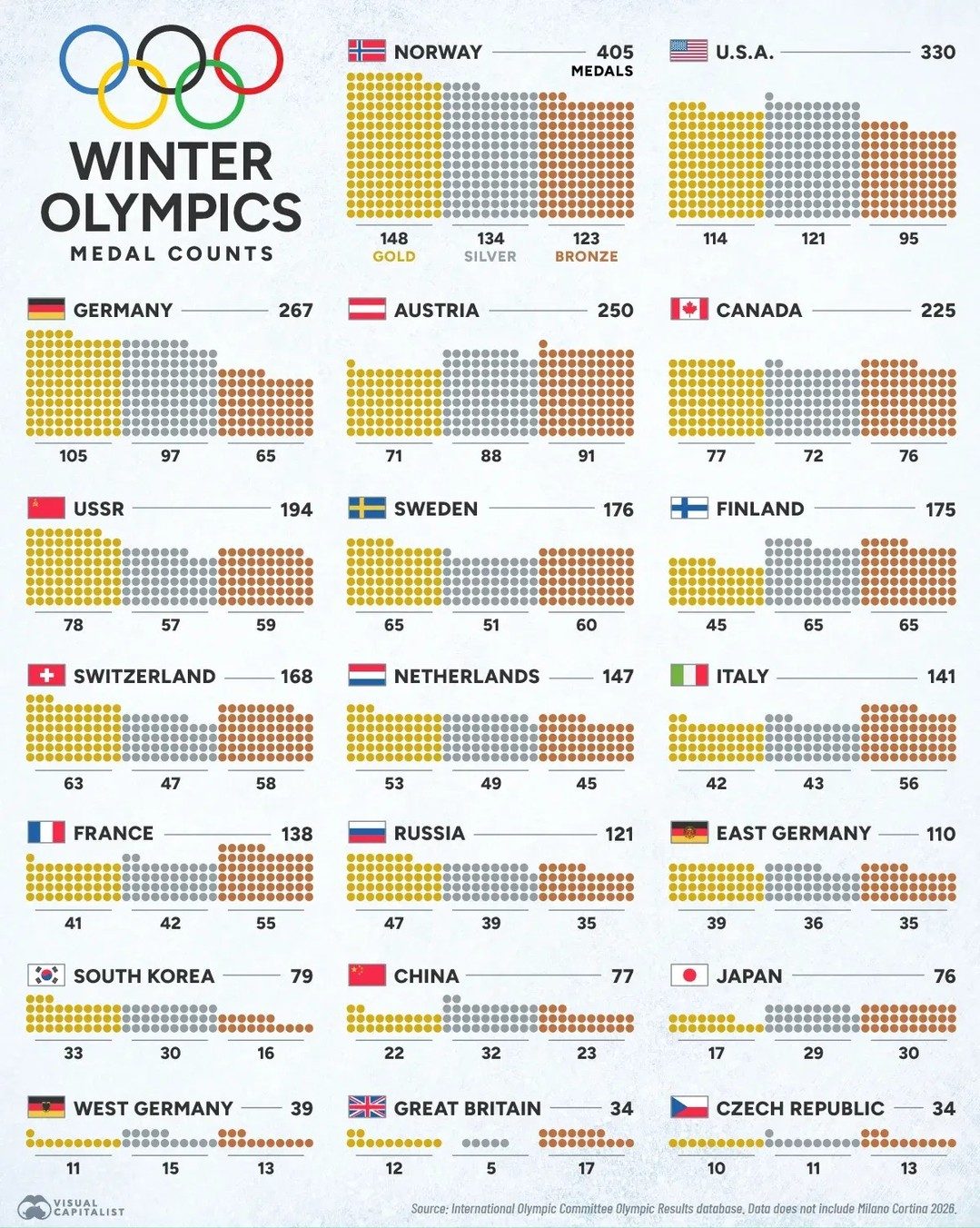
The Winter Olympics have consistently showcased the prowess of various nations in cold-weather sports, with Norway leading the all-time medal count, followed closely by the United States and Germany. This ranking is based on data from the International Olympic Committee (IOC) and highlights the dominance of these countries in Winter Olympic competitions.
Context / Why this matters
The Winter Olympics serve as a global stage for athletes to compete in a variety of cold-weather sports, ranging from skiing and snowboarding to ice skating and hockey. Medal counts offer insight into the sporting prowess and investment in sports infrastructure by different countries, showcasing their dedication to excellence and support for athletes. The ranking of countries by their all-time Winter Olympic medal counts underscores the historical performance and continuous efforts in these sports.
Medal Counts and Dominance
Norway's Unmatched Success
Norway stands at the pinnacle of Winter Olympic success, having garnered a total of 405 medals, including 148 golds, 187 silvers, and 70 bronzes. This remarkable achievement is a testament to Norway's dedication to winter sports, advanced training facilities, and excellent coaching programs. The country's consistent performance across various Winter Olympic events, from cross-country skiing and biathlon to ski jumping and Alpine skiing, solidifies its position as a leader in these sports.
United States: A Close Second
The United States ranks second overall with 305 medals, including 99 golds, 134 silvers, and 72 bronzes. The U.S. has a strong presence in a wide array of sports, including speed skating, figure skating, skiing, and ice hockey. The country's robust athletic programs and state-of-the-art training facilities contribute to its success. The consistent performance of American athletes in various Winter Olympics highlights the nation’s commitment to excellence in cold-weather sports.
Germany's Golden Legacy
Germany, with 267 medals, takes the third spot in the gold medals category. This includes 123 golds, 115 silvers, and 9 bronze medals. Germany’s dominance in sports like bobsledding, luge, and biathlon has been instrumental in its success. With a rich history in winter sports and a strong focus on training young athletes, Germany continues to produce world-class competitors, cementing its legacy in the Winter Olympics.
Other Notable Performers
Austria and Canada
Austria and Canada are also prominent in the Winter Olympics, with significant medal counts and notable achievements in various sports. Austria's strong performance in Alpine skiing, biathlon, and figure skating contributes to its high ranking. Canada, on the other hand, excels in sports like ice hockey, speed skating, and figure skating. Both countries have consistently showcased their athletic prowess, making them formidable competitors on the global stage.
USSR, Sweden, and Finland
The USSR, Sweden, and Finland also rank highly in the Winter Olympic medal counts. The USSR's legacy in sports like speed skating, figure skating, and biathlon has left a lasting impact. Sweden and Finland, known for their prowess in cross-country skiing, biathlon, and Alpine skiing, have produced numerous Olympic champions and continue to be strong contenders in these events.
The Evolution of Winter Olympic Sports
The Winter Olympics have evolved significantly since their inception, with new sports and disciplines being added to the program. From the early days of figure skating and ice hockey to the inclusion of snowboarding and freestyle skiing, the Games have expanded to encompass a broader range of cold-weather sports. This evolution has allowed for greater diversity in the types of athletes and nations that compete, creating a more dynamic and inclusive sporting event.
Important Takeaways
The Winter Olympics offer a comprehensive view of global sporting excellence, particularly in cold-weather sports. Norway, the United States, and Germany lead the medal counts, showcasing their dedication and dominance in these events. These rankings highlight the historical performance and ongoing efforts of different nations in training and developing athletes. The inclusion of various sports and disciplines in the Winter Olympics has expanded the scope of competition, allowing for greater diversity and inclusivity in the Games.
Conclusion
The Winter Olympics continue to be a global showcase of athletic prowess and dedication to excellence. Norway, the United States, and Germany stand out as leaders in the medal counts, reflecting their commitment to training and developing athletes in cold-weather sports. As the Games evolve, they provide a dynamic and inclusive platform for showcasing the best in winter sports, inspiring athletes and fans alike. Whether you're a dedicated follower of the Winter Olympics or simply appreciate the thrill of competition, the rankings and achievements of these nations offer a fascinating glimpse into the world of elite winter sports.
Watch the Reel
Questions readers ask
Why does Norway lead the all-time medal count in the Winter Olympics?
Norway's dominance in the Winter Olympics is a result of its deep-rooted cultural appreciation for winter sports, extensive sports infrastructure, and consistent investment in athlete development. This combination has enabled Norway to excel across multiple disciplines, securing 405 medals over time.
How do the United States and Germany compare to Norway in Winter Olympic performance?
The United States and Germany are close competitors to Norway, with robust athletic programs and a strong presence in various Winter Olympic disciplines. While Norway has the edge with 405 medals, both the United States and Germany have also demonstrated significant prowess, reflecting their substantial investments in winter sports.
Which sports contribute most to Norway's medal tally in the Winter Olympics?
Norway excels in a variety of sports, but particularly in cross-country skiing, biathlon, and ski jumping. These sports have historically contributed significantly to Norway's medal count, thanks to the country's cold climate and strong support for these disciplines.
How are the medal counts determined and tracked for the Winter Olympics?
Medal counts are determined and tracked by the International Olympic Committee (IOC). The IOC maintains detailed records of each country's performance in the Winter Olympics, including the total number of gold, silver, and bronze medals won. These counts are updated after each Olympic Games and are used to rank countries based on their overall success in the competition.
What factors contribute to a country's success in the Winter Olympics?
Several factors contribute to a country's success, including a supportive infrastructure for winter sports, extensive training programs, and a strong emphasis on athlete development. Additionally, a country's focus on specific disciplines and its ability to foster a culture that values and promotes winter sports significantly impact its medal tally.
Which disciplines are most competitive among top countries in the Winter Olympics?
The most competitive disciplines among top countries in the Winter Olympics are often skiing events, including alpine skiing and cross-country skiing, as well as ice skating and hockey. These events draw significant participation and are highly competitive due to the skill and endurance required, and the extensive training and resources invested by top-performing countries.
How does the medal count highlight the investment and dedication of a country to winter sports?
The medal count serves as a clear indicator of a country's investment in winter sports, reflecting the resources allocated to training facilities, coaching, and athlete support. A high medal count showcases a country's dedication to fostering excellence in winter sports, as well as the effectiveness of its sports programs and the quality of its athletes.
Recent articles
Fresh deep dives from the latest Reels we unpacked.




Comments
Be the first to comment.