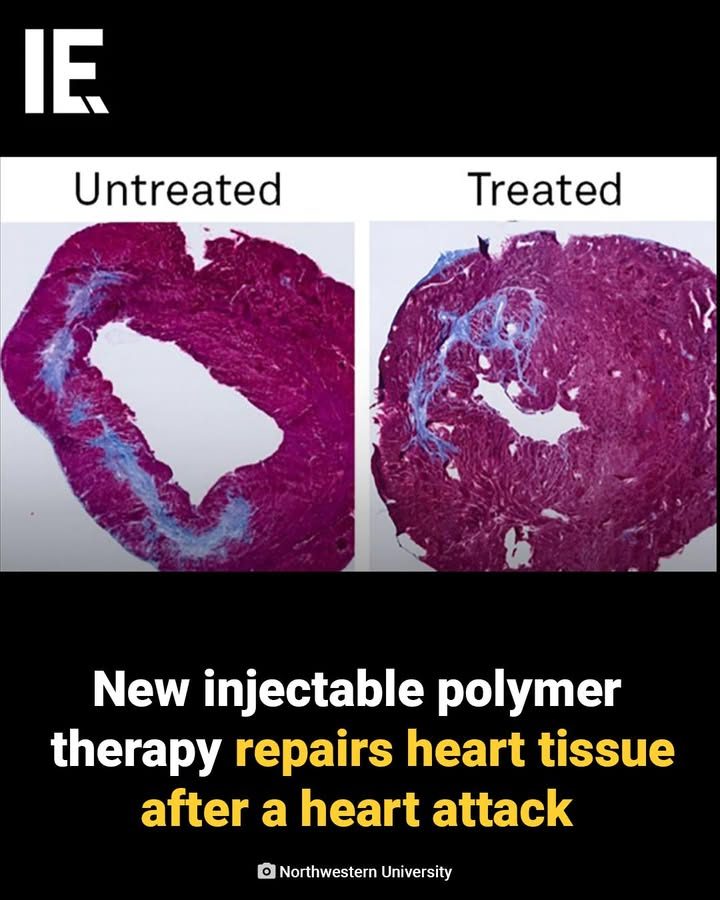
Heart Tissue Repair: A Promising New Polymer Therapy
Advances in medical research have led to the development of a groundbreaking injectable polymer therapy designed to repair heart tissue following a heart attack. This innovative treatment, developed by researchers at Northwestern University and UC San Diego, uses protein-like polymers (PLPs) to trigger cellular repair mechanisms in the heart.
Context / Why This Matters
Heart disease remains one of the leading causes of death worldwide, with heart attacks causing significant damage to heart tissue. Traditional treatments often focus on managing symptoms and preventing further damage, but this new polymer therapy offers a promising approach to actual tissue repair. The implications for heart health are profound, as effective repair of damaged tissue could significantly improve the quality of life for patients and reduce long-term complications.
Main Discussion
The Science Behind the Therapy
The injectable polymer therapy works by targeting specific molecular pathways in the heart tissue. The therapy uses PLPs to block Keap1, a protein that normally suppresses Nrf2. Nrf2 is a key regulator of cellular defense and repair mechanisms. By blocking Keap1, the therapy allows Nrf2 to activate, thereby triggering cellular repair processes.
Clinical Trials and Results
Initial trials of this therapy have shown promising results. In rodent studies, a single low-dose injection of the polymer therapy demonstrated several beneficial effects. These included improved heart function, reduced inflammation and cell death, and the promotion of new blood vessel formation over several weeks. These findings suggest that the therapy could potentially protect human hearts from the long-term effects of cardiac damage.
The Role of Polymer Therapy
Polymer therapies have gained attention in recent years for their ability to deliver targeted treatments to specific areas of the body. In the case of heart tissue repair, the injectable nature of the polymer therapy allows for direct application to the damaged area, ensuring that the therapeutic effects are localized and effective. This targeted approach minimizes systemic side effects and maximizes the therapeutic benefit.
Potential Applications and Future Directions
While the current research focuses on heart tissue repair following a heart attack, the principles behind this polymer therapy could have broader applications in regenerative medicine. The ability to trigger cellular repair mechanisms could be applied to other tissues and organs, offering new avenues for treating a range of conditions beyond heart disease.
Practical Tips
If you or someone you know is interested in the latest developments in heart health and regenerative medicine, here are some practical tips to stay informed:
- Stay Updated with Research: Keep an eye on publications from reputable institutions like Northwestern University and UC San Diego. These institutions are at the forefront of biomedical research and often publish their findings in scientific journals.
- Consult Health Professionals: For those with heart conditions, it's essential to consult with healthcare providers who can offer personalized advice and treatment options based on the latest research.
- Participate in Clinical Trials: If eligible, consider participating in clinical trials for new therapies. This not only provides access to cutting-edge treatments but also contributes to advancing medical knowledge.
- Maintain a Healthy Lifestyle: While new therapies offer hope, maintaining a healthy lifestyle remains crucial. Regular exercise, a balanced diet, and regular check-ups can help manage heart health and reduce the risk of heart attacks.
Important Takeaways
- Innovative Approach: The new polymer therapy represents a novel approach to heart tissue repair, utilizing molecular mechanisms to trigger cellular repair.
- Promising Results: Early trials have shown significant improvements in heart function, reduced inflammation, and the formation of new blood vessels.
- Potential for Broader Applications: The principles behind this therapy could be applied to other areas of regenerative medicine, offering hope for various conditions.
- Importance of Research: Staying informed about the latest research and potentially participating in clinical trials can provide access to new treatments and contribute to medical advancements.
Conclusion
The development of this injectable polymer therapy for heart tissue repair marks a significant advancement in the field of regenerative medicine. By targeting specific molecular pathways, this therapy offers a promising approach to repairing damaged heart tissue and improving overall heart function. As research continues, the potential for broader applications in regenerative medicine becomes increasingly evident, offering hope for numerous conditions. Staying informed and engaged with the latest developments in heart health can provide valuable insights and opportunities for better health outcomes.
Watch the Reel
Questions readers ask
How does the new polymer therapy developed by Northwestern and UC San Diego work to repair heart tissue?
The injectable polymer therapy utilizes protein-like polymers (PLPs) to target specific molecular pathways in the heart. By doing so, it initiates cellular repair mechanisms, aiming to restore damaged heart tissue and improve overall heart function following a heart attack.
What are the potential benefits of this polymer therapy for patients who have suffered a heart attack?
This new treatment offers several potential benefits, including the repair of damaged heart tissue, which can lead to improved heart function. By addressing the damage at a cellular level, it may also help reduce long-term complications associated with heart attacks, such as heart failure.
Is this polymer therapy a replacement for existing heart attack treatments?
The polymer therapy is not intended to replace existing treatments but rather to complement them. Traditional treatments focus on managing symptoms and preventing further damage, while this new therapy aims to actively repair the damaged heart tissue, providing a more comprehensive approach to heart attack recovery.
What stage of development is the polymer therapy currently in?
The article does not specify the exact stage of development. However, as it is a result of research conducted by Northwestern University and UC San Diego, it is likely in the preclinical or clinical trial phase. For the latest updates, it would be best to refer to the most recent research publications or announcements from the institutions involved.
How does the polymer therapy target specific molecular pathways in the heart?
The therapy uses protein-like polymers (PLPs) designed to interact with specific molecular targets within the heart tissue. By binding to these targets, the PLPs activate repair processes at the cellular level, promoting the healing of damaged tissue and enhancing heart function.
Recent articles
Fresh deep dives from the latest Reels we unpacked.




Comments
Be the first to comment.