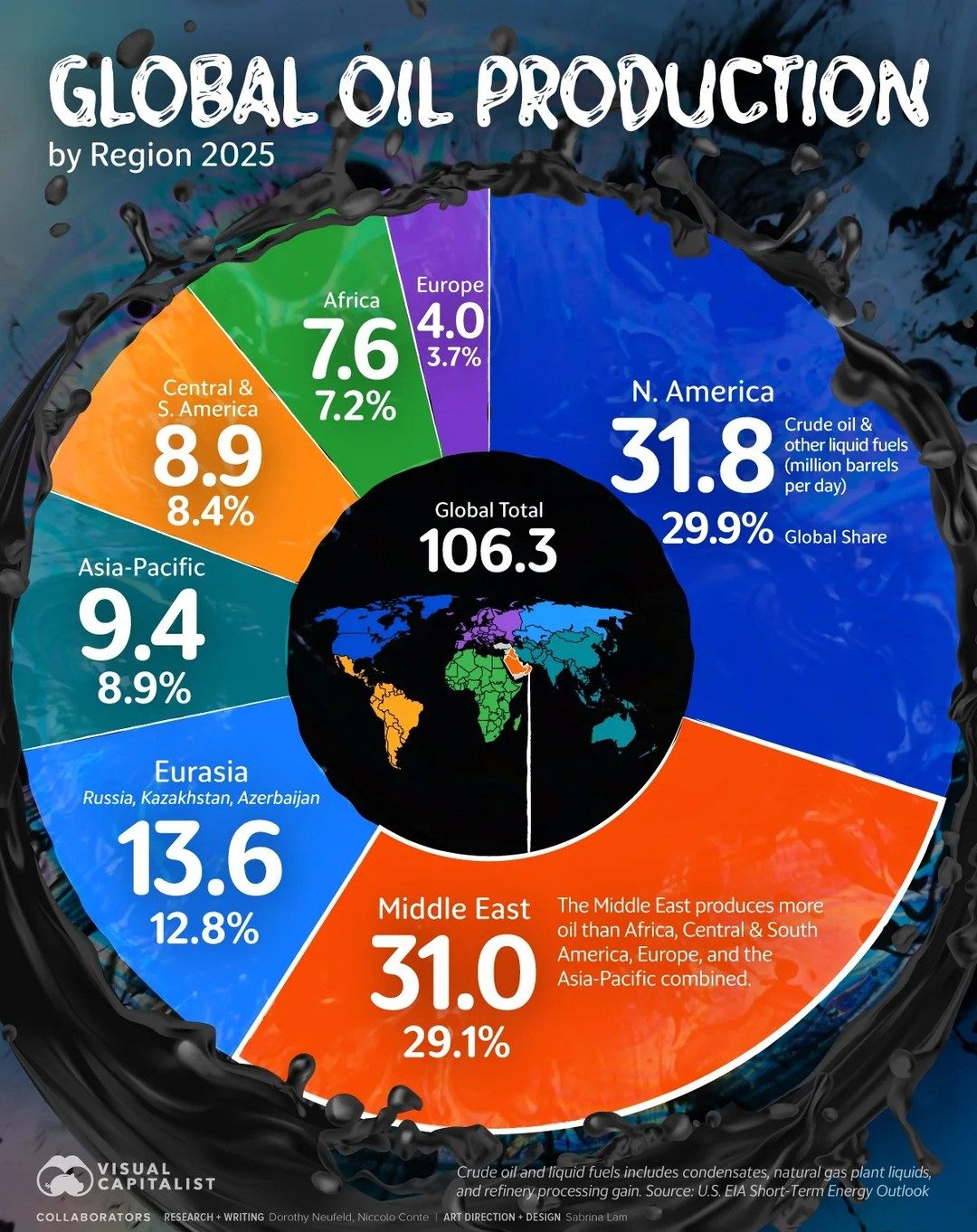
Global Oil Production by Region in 2025
Global oil production is a critical aspect of the world’s energy landscape, and understanding the distribution by region provides valuable insights into the dynamics of global energy markets. In 2025, North America is projected to be the world’s largest oil-producing region, generating nearly 30% of the global supply. Following closely is the Middle East, which contributes over 29%. Together, these two regions produce nearly 60% of the world’s oil, underscoring their dominance in the global energy sector.
Context / Why This Matters
The distribution of oil production across different regions is a key indicator of geopolitical influence, economic stability, and environmental impact. As the world continues to grapple with energy security and sustainability, knowing which regions are the primary contributors to global oil production helps stakeholders make informed decisions. Whether you are an investor, policymaker, or simply curious about global energy trends, understanding the regional breakdown of oil production is essential.
Global Oil Production Landscape
North America
North America’s dominance in oil production is driven by several factors, including technological advancements in extraction methods and significant investments in infrastructure. The region’s production is expected to reach 31.8% of the global total, making it a critical player in the energy market. This high level of production not only supports the region’s own energy needs but also contributes to global supply, influencing prices and market stability.
Middle East
The Middle East, with a production share of 31.0%, is another major contributor to global oil supply. This region is home to some of the world’s largest oil reserves and has long been a cornerstone of the global oil industry. The Middle East’s production capabilities are bolstered by vast reserves and established extraction infrastructure, ensuring that it remains a key player in the energy sector.
Asia-Pacific
The Asia-Pacific region, including countries like China, India, and Australia, is projected to produce 9.4% of the world’s oil. This region’s production is influenced by growing energy demands and efforts to diversify energy sources. While Asia-Pacific may not be the largest producer, its contribution is significant and reflects the region’s increasing role in the global energy market.
Russia, Kazakhstan, and Azerbaijan
Combined, these countries are expected to produce 13.6% of the global oil supply. This region’s production is driven by its vast reserves and strategic location, making it a crucial player in the global oil market. The combined efforts of Russia, Kazakhstan, and Azerbaijan ensure a steady supply of oil, contributing to global energy security.
Eurasia
Eurasia, which includes regions like Eastern Europe and Central Asia, is projected to produce 12.8% of the world’s oil. This region’s production is influenced by a mix of historical reserves and ongoing exploration efforts. The diverse geography and resource availability in Eurasia make it a significant contributor to global oil production.
Central & South America
Central and South America are expected to contribute 7.6% to global oil production. This region’s production is driven by countries like Brazil and Mexico, which have made significant investments in oil exploration and extraction. The region’s diverse geological conditions and resource availability make it an important player in the global energy market.
Africa
Africa’s share of global oil production is estimated at 4.0%. This region’s production is influenced by countries like Nigeria, Angola, and Algeria, which have significant oil reserves. While Africa may not be the largest producer, its contribution is crucial for global energy supply and economic development.
Europe
Europe’s production share is 3.7%. This region’s production is driven by countries like Norway and the United Kingdom, which have established oil and gas industries. However, Europe’s role in global oil production is relatively small compared to other regions, reflecting its focus on renewable energy and energy efficiency.
Practical Tips
For those interested in global energy trends, staying informed about regional oil production is crucial. Here are some practical tips to keep you updated:
Monitor Major Producers: Stay informed about the latest developments in North America, the Middle East, and Eurasia, as these regions are the largest contributors to global oil production.
Follow Key Reports: Regularly review reports from the U.S. Energy Information Administration (EIA) and other reputable sources to get the latest data on global oil production.
Understand Regional Dynamics: Recognize the unique factors influencing oil production in different regions, such as technological advancements, political stability, and environmental regulations.
Important Takeaways
Global oil production is a multifaceted issue with significant implications for energy security, economic stability, and environmental sustainability. By understanding the regional breakdown of oil production, stakeholders can make more informed decisions. Here are the key takeaways:
- North America and the Middle East are the world’s largest oil-producing regions, contributing nearly 60% of the global supply.
- Asia-Pacific, Russia, Kazakhstan, Azerbaijan, and Eurasia play significant roles in global oil production, each contributing varying percentages to the total supply.
- Central and South America, Africa, and Europe also make notable contributions, albeit on a smaller scale.
Conclusion
Understanding global oil production by region provides a comprehensive view of the world’s energy dynamics. With North America and the Middle East leading the way, followed by significant contributions from other regions, the global energy landscape is shaped by a complex interplay of factors. By staying informed about these trends, we can better navigate the challenges and opportunities in the ever-evolving energy market.
Watch the Reel
Questions readers ask
Which two regions will produce the most oil in 2025?
North America and the Middle East are expected to lead global oil production in 2025, with each region contributing nearly 30% of the world's oil supply.
What percentage of the global oil supply will North America produce in 2025?
North America is projected to generate nearly 30% of the global oil supply in 2025, making it the world's largest oil-producing region.
How much oil will the Middle East contribute to the global supply in 2025?
The Middle East is expected to contribute over 29% of the global oil supply in 2025, ranking as the second-largest oil-producing region.
Why is the distribution of oil production important for understanding global energy markets?
The distribution of oil production by region provides insights into global energy markets, geopolitical dynamics, and economic stability. Regions with high oil production have significant influence over global energy prices and policies.
What is the combined contribution of North America and the Middle East to the global oil supply in 2025?
Together, North America and the Middle East are expected to produce nearly 60% of the world's oil in 2025, highlighting their dominance in the global energy sector.
How does the dominance of North America and the Middle East in oil production impact global geopolitics?
The dominance of these two regions in oil production gives them substantial geopolitical influence. This influence can affect international relations, energy security, and global economic trends.
Which region is projected to be the largest oil producer in 2025?
North America is anticipated to be the largest oil-producing region in 2025, contributing nearly 30% of the world's oil supply.
Recent articles
Fresh deep dives from the latest Reels we unpacked.




Comments
Be the first to comment.