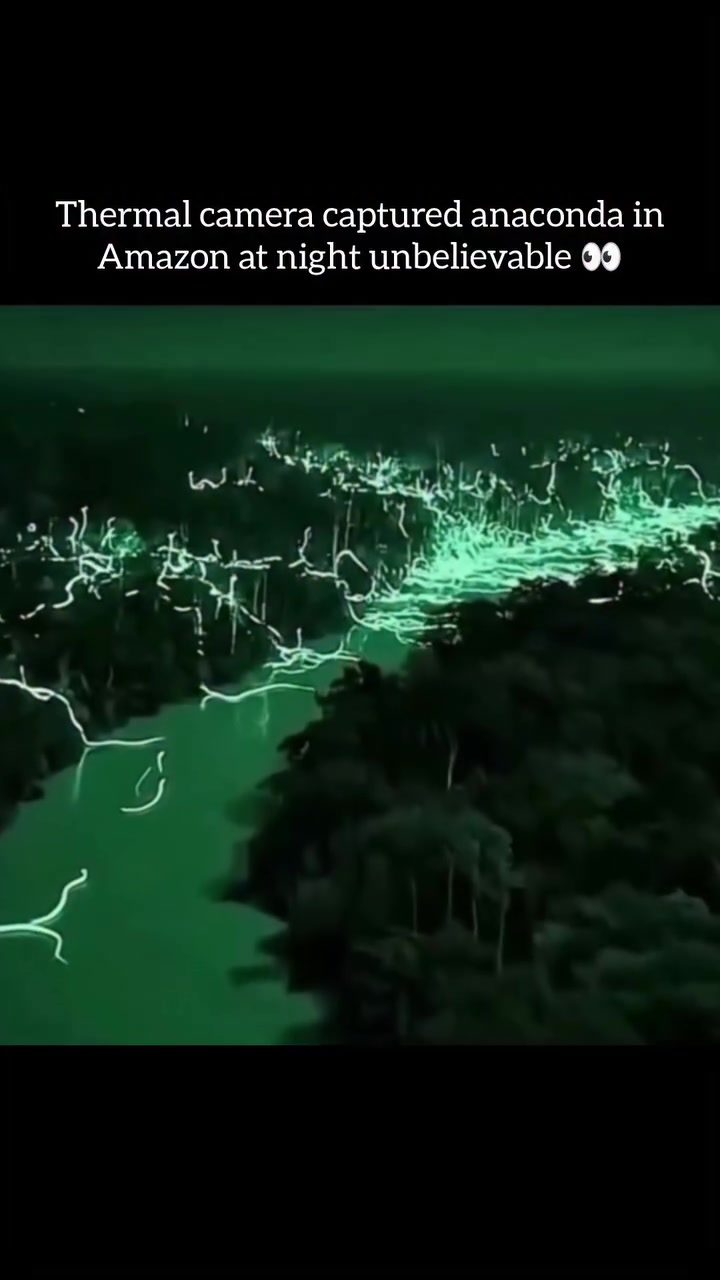
Anaconda in the Amazon Rainforest
The Amazon rainforest, teeming with life, has always been a mysterious realm for many creatures that find their home in the dense vegetation. A recent discovery showcasing the prowess of modern technology brings to light the hidden world of these animals. The sighting of an anaconda in the Amazon at night proves to be a stunning example of wildlife research and conservation using thermal cameras.
Why Thermal Imaging Matters
The Amazon rainforest is a challenging environment for wildlife observation, especially at night. The darkness conceals many nocturnal creatures, making it difficult for researchers to study their behavior without disturbing their natural habitat. Thermal cameras, however, offer a unique solution by detecting heat signatures, revealing animals that might otherwise remain unseen. This technology is invaluable for wildlife monitoring and conservation, allowing scientists to observe nocturnal animals without physical intrusion.
The Unseen World of the Amazon
Thermal Cameras and Wildlife
Thermal cameras work by detecting the infrared radiation emitted by all objects with heat. In the dense, dark Amazon rainforest, this capability allows researchers to see animals that blend perfectly into their surroundings. The anaconda, a massive predator, is an excellent example of this. The snake's heat signature appears as a bright, glowing shape against the cooler forest floor, making it clearly visible in the thermal image despite the complete darkness. This capability is a game-changer for understanding the behavior and ecology of nocturnal animals.
The Effectiveness of Thermal Imaging
The use of thermal cameras in wildlife research has several significant advantages. First, it allows for non-invasive monitoring, meaning animals can be observed without being disturbed. This is crucial for maintaining the natural behavior of the animals and ensuring that research does not alter their habitats. For example, scientists can track the movement and behavior of animals without the need for physical tags or traps, which can cause stress and injury.
Additionally, thermal imaging can reveal detailed information about the health and condition of animals. By analyzing the heat signatures, researchers can determine the animal's body temperature, which can provide insights into its metabolic rate, health status, and reproductive condition. This information is vital for conservation efforts, as it helps in understanding the impact of environmental changes on wildlife populations.
Thermal Cameras in Conservation
Conservation efforts in the Amazon rainforest are crucial for preserving the region's rich biodiversity. Thermal cameras play a vital role in these efforts by providing detailed information about animal populations and their habitats. For instance, researchers can use thermal imaging to monitor the distribution and abundance of different species, track migration patterns, and identify areas of high conservation value. This data is essential for developing effective conservation strategies and protecting endangered species.
Practical Tips for Using Thermal Cameras in Wildlife Research
Choosing the Right Equipment
Selecting the right thermal camera is crucial for effective wildlife research. Consider cameras with high resolution and sensitivity, as these features will provide clearer images and better detail. Additionally, choose a camera with a good range of temperature detection to capture the heat signatures of various animals.
Setting Up for Success
When using thermal cameras for wildlife research, it's essential to set up the equipment correctly. Ensure the camera is positioned in an area with minimal interference from other heat sources, such as the sun or artificial lights. This will help in obtaining clearer images and more accurate data. Also, use tripods or mounts to keep the camera steady and focused on the target area.
Capturing and Analyzing Data
Capturing and analyzing thermal images requires patience and skill. Spend time observing the target area and capturing the data at different times of the day and night. This will provide a comprehensive understanding of the animal's behavior and movements. After capturing the images, use specialized software to analyze the data and extract valuable information.
Important Takeaways
The sighting of an anaconda in the Amazon at night through a thermal camera highlights the incredible potential of this technology in wildlife research and conservation. The ability to detect heat signatures allows scientists to study nocturnal animals without disturbing their natural behavior, providing valuable insights into their ecology and behavior. Furthermore, thermal imaging offers a non-invasive way to monitor animal health and population dynamics, making it an essential tool for conservation efforts.
Conclusion
The Amazon rainforest is home to a vast array of incredible creatures, many of which remain unseen due to the dense vegetation and darkness. Thermal cameras, however, offer a unique solution by detecting heat signatures, revealing animals that might otherwise remain hidden. The sighting of an anaconda in the Amazon at night is a testament to the effectiveness of this technology in wildlife research and conservation. As we continue to explore the mysteries of the Amazon, thermal cameras will play an increasingly important role in understanding and preserving its rich biodiversity.
Watch the Reel
Recent articles
Fresh deep dives from the latest Reels we unpacked.




Comments
Be the first to comment.