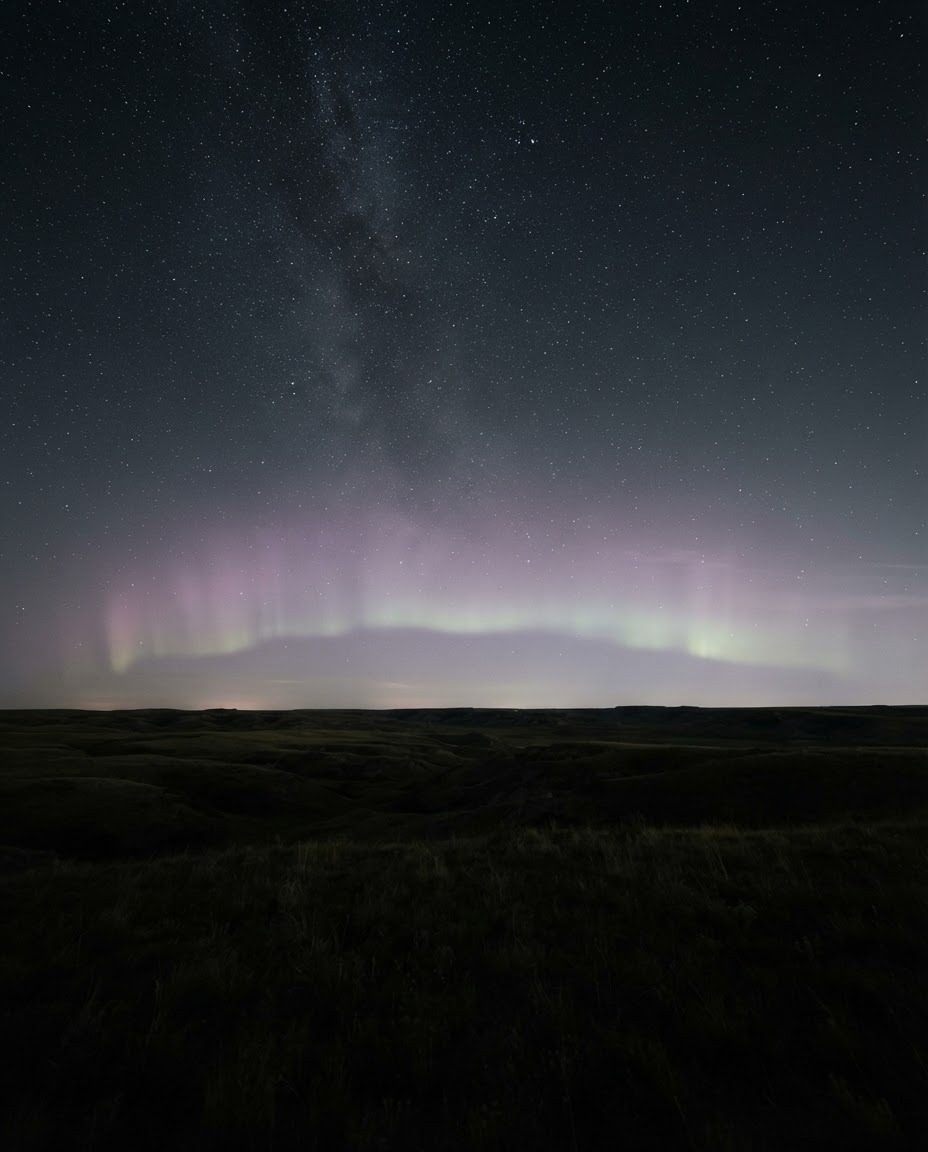
Capturing the Cosmos
Night sky photography isn't just about snapping shots of stars. It is an art form that requires a deep understanding of the cosmos and a good grasp of photographic techniques. It takes time and patience — not just in the field, but also in the digital darkroom. The Milky Way's gentle swirl, barely discernible to the naked eye, is a prime target for night photographers. The long exposure time required to capture this celestial dance, and the aurora borealis' faint, ethereal green and purple hues, are a testament to the patience and skill involved.
Milky Way: The Never-ending Band
The Milky Way is a spectacle that has captivated humans for millennia. From a dark spot on the Earth, it looks like a luminous band stretching across the sky. It is a silhouette of the galaxy we live in, and the stars we see are our closest neighbors. The Milky Way is a spiral galaxy with a diameter of around 100,000 light-years. By any measure, it is a massive structure. Astronomy and night sky photography might not intersect often, but the two can work together in unexpected ways. In the high-latitude regions where auroras are visible there is a certain science to the perfect night sky photography. There are no hard and fast rules. However, an intimate knowledge of the heavens, combined with patience and some technical know-how, can make for incredible results.
Aurora's Dance: A Spectacle of Light
The aurora borealis, or northern lights, is a magnificent natural light display. In high-latitude regions, the striking greens and purples that light up the sky are a result of the sun’s charged particles colliding with Earth’s magnetic field and atmosphere. The northern lights are a constant reminder of the invisible forces that shape our planet. The amount of time required to capture such a fleeting phenomenon while maintaining optimal gear and subject conditions are the factors that make it challenging to capture aurora's dance in its full glory. Else, it might dissolve into a soft blur.
Techniques for Night Sky Photography
A primer on night sky photography would not be complete without showing the fundamentals. Focus modes play a huge role in successful night sky photography. Manual focus is the most effective. A tripod is essential to keep the camera still. A fast lens lets in more light in low-light conditions, making it easier to use a low ISO. The first step is choosing a location with minimal light pollution. For photographers chasing the Milky Way and auroras, the first step is also often the most challenging. Ideally, you should find a location where you can see the horizon and large parts of the sky. Avoid shooting under trees, and keep buildings and other structures out of the frame. The lesser the obstacles, the better our eyes can appreciate the sights in the night sky.
Watch the Reel
Related deep dives
Similar reads based on topic and creator.




Recent articles
Fresh deep dives from the latest Reels we unpacked.




Comments
Be the first to comment.