The Dance of Light and Dust
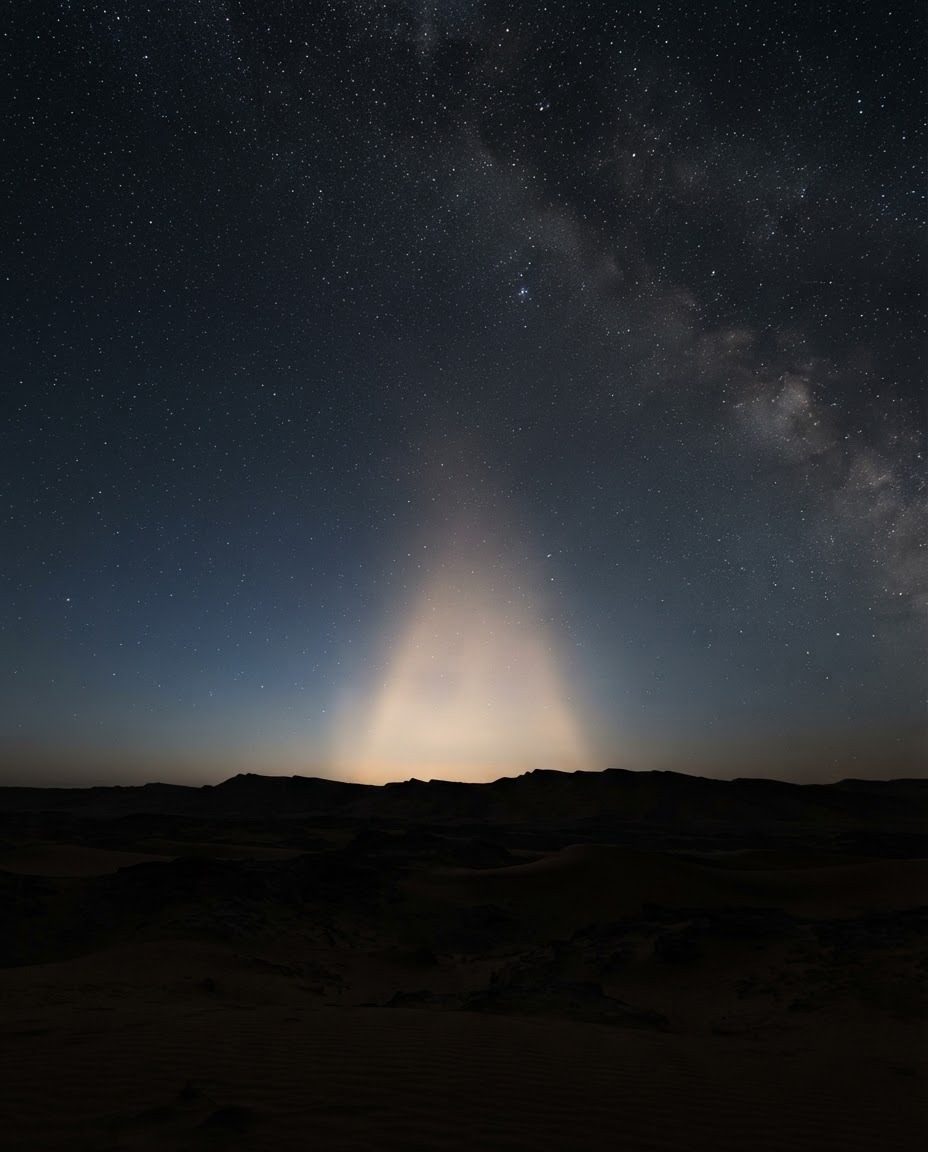
Night sky photography, particularly in long exposure, captures the fleeting drama of celestial bodies, yielding a visual impression of motion and ephemerality. In this case, the photograph shows a meteor, the transient result of two celestial bodies colliding. Inside this bright streak, a meteor has a story to tell. The tiniest piece of the night sky, which is typically invisible to the unaided eye, turns into a dramatic celestial ballet between a rocky comet, orbiting the sun, and a fragment that incinerates upon entering the Earth's atmosphere. The photographer must await the opportune moment: a gap in the clouds, a serendipitous alignment of celestial bodies, or clear skies overriding the ever-present risk of light pollution. Every night sky image reveals another facet of the Earth's celestial kin, offering images of stars that may have ceased to exist millions of years ago.
The Milky Way: A Galaxy of Stars
The Milky Way, a bare galaxy, appears in the visual data, and is large and visible, showcasing the vastness of our galaxy. The broad stripe of light seen traversing the night sky isn't a meteor trail. Known as the Milky Way, it consists of stars, interstellar gas, dust, and dark matter. Our galaxy is a visible source of light and a beacon displaying the Earth's position. The galaxy's interaction with celestial bodies has artistic value beyond its scientific importance. Images of Earth's celestial environment offer a unique perspective for a better appreciation of supporting natural systems.
Desert Nightscapes: A Canvas for Showcasing the Night Sky
Night sky photographs are made more endearing by the foreground landscape. The desert landscape provides a dramatic foreground for the night sky, and a simple concept underpins this intriguing contrast. Showing the vast sky against a desolate foreground emphasizes the Earth’s celestial expanse. The result is a captivating interplay between the unchanging stars and the outlandish desert terrain below. This concept isn't simply an aesthetic device. It visualizes the meteor trajectory amidst the stars to give a sense of scale of the celestial bodies and the Earth's environment. The starkly lit foreground enhances the contrast of the meteor trail, which displays a crucial interchange between the Earth and celestial bodies. The peculiar relationship between celestial and terrestrial environments is ultimately being visualized through desert nightscapes, revealing the cosmic intersection in a manner that's poetic and thought-provoking.
Watch the Reel
Related deep dives
Similar reads based on topic and creator.
Recent articles
Fresh deep dives from the latest Reels we unpacked.


Comments
Be the first to comment.