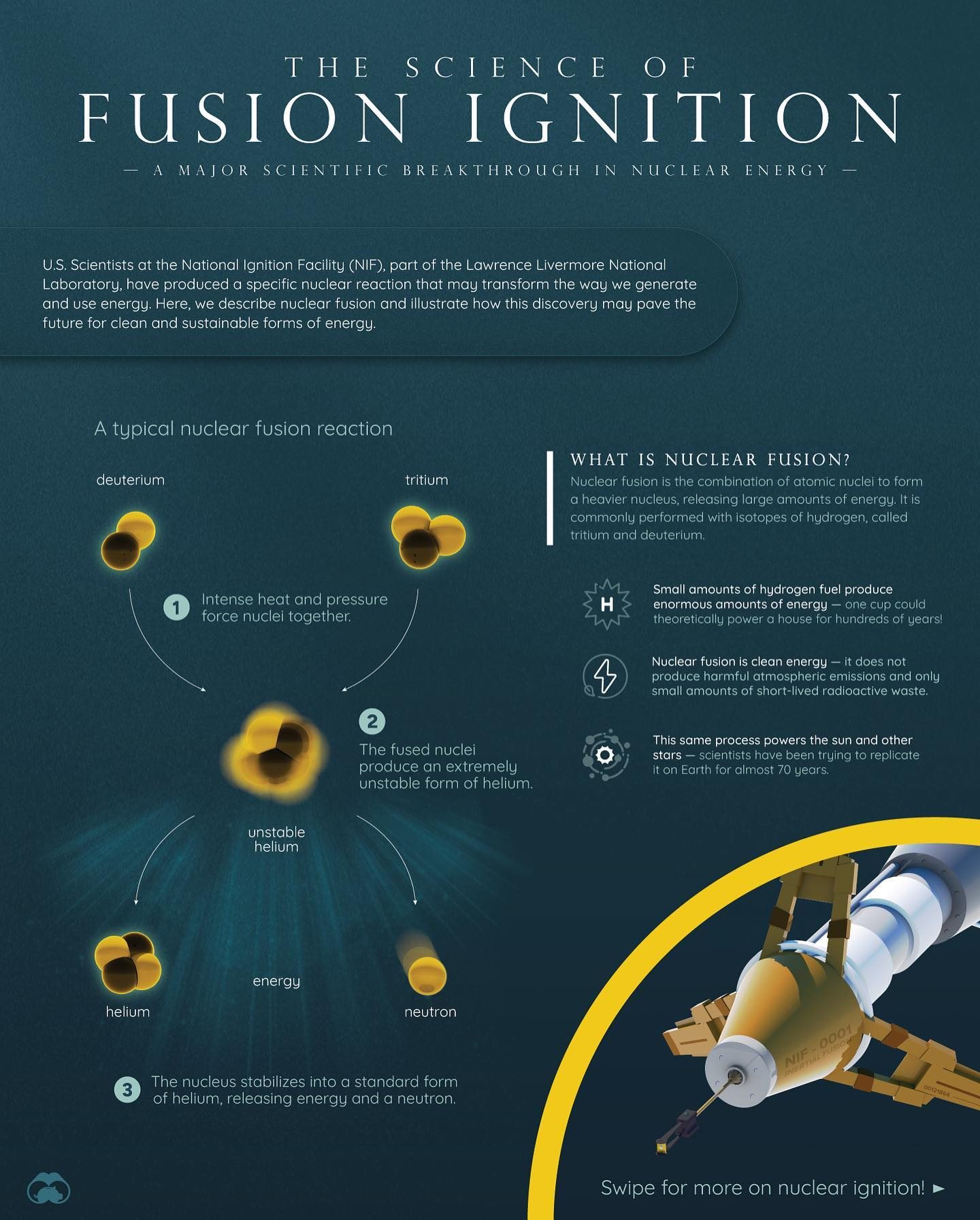
Nuclear Fusion Ignition: A Breakthrough in Clean Energy
Nuclear fusion ignition has recently captured global attention as scientists at the National Ignition Facility (NIF) achieved a significant milestone. For the first time, they produced more energy from a nuclear fusion experiment than the laser energy used to power it. This breakthrough marks a major step forward in the development of clean and sustainable energy sources.
Why This Matters
The quest for sustainable energy has never been more critical. As the world seeks to reduce its reliance on fossil fuels, nuclear fusion stands out as a promising solution. Unlike traditional nuclear fission, which splits heavy atoms to release energy, fusion combines lightweight atoms, producing minimal radioactive waste and no greenhouse gases. This makes it an environmentally friendly alternative to current nuclear power plants.
The Science Behind Nuclear Fusion
Nuclear Fusion Explained
At its core, nuclear fusion involves combining atomic nuclei to form heavier nuclei, releasing a tremendous amount of energy in the process. The most commonly studied fusion reaction involves isotopes of hydrogen: deuterium and tritium. When these isotopes fuse, they create a helium nucleus and a neutron, along with a significant amount of energy.
The Role of Deuterium and Tritium
Deuterium and tritium are isotopes of hydrogen, meaning they have the same number of protons but different numbers of neutrons. Deuterium has one neutron, while tritium has two. These isotopes are relatively abundant and can be extracted from seawater, making them a practical fuel source. The energy released from fusion is enormous: one cup of this hydrogen fuel could theoretically power a house for hundreds of years.
Clean Energy Characteristics
One of the most compelling aspects of nuclear fusion is its environmental benefits. Unlike fossil fuels, fusion does not produce harmful atmospheric emissions. Additionally, the radioactive waste generated by fusion is minimal and short-lived, addressing concerns about long-term environmental impact.
The National Ignition Facility (NIF)
Achieving Fusion Ignition
The National Ignition Facility, located at the Lawrence Livermore National Laboratory, has made significant strides in achieving fusion ignition. Ignition refers to the point at which the fusion reaction becomes self-sustaining, producing more energy than is required to initiate it. This breakthrough is crucial for making fusion a viable energy source.
Inertial Confinement Fusion
NIF employs a technique known as inertial confinement fusion. This process involves bombarding a tiny pellet of hydrogen plasma with high-energy lasers. The lasers are directed into a hollow cylinder known as a hohlraum, which converts the laser energy into x-rays. These x-rays then implode the fuel pellet, compressing it to extremely high densities and temperatures, where fusion occurs.
The Fusion Chamber
The fusion chamber at NIF is a complex setup designed to maximize energy output. It includes a capsule containing a pellet with a layer of deuterium and tritium fuel. Lasers are fired into the hohlraum, heating its walls and producing x-rays. These x-rays blast towards the capsule pellet, causing its surface to erode and the fuel to compress. The resulting fusion reaction releases a burst of energy.
The Process of Nuclear Ignition
Understanding the process of nuclear ignition involves delving into the intricate steps that occur within the fusion chamber.
Laser Firing and X-Ray Production
The process begins with lasers firing into the hohlraum. The heated walls of the holarum produce x-rays, which are directed towards the capsule pellet. This step is critical for initiating the fusion reaction.
Compression and Fusion
The x-rays cause the surface of the capsule pellet to erode, leading to the compression of the fuel inside. As the fuel is compressed, it reaches the necessary conditions for fusion: extremely high temperatures and pressures. When these conditions are met, the deuterium and tritium nuclei fuse, releasing a burst of energy.
Energy Release
The energy released from the fusion reaction is measured and compared to the energy input from the lasers. Achieving a net energy gain, where more energy is produced than consumed, is a significant milestone in the development of fusion power.
Practical Tips for Understanding Nuclear Fusion
Stay Informed
Keeping up with the latest developments in nuclear fusion research is essential. Follow reputable scientific journals, news outlets, and institutions involved in fusion research, such as the National Ignition Facility.
Engage with the Community
Participate in discussions and forums related to nuclear fusion. Engaging with experts and enthusiasts can provide deeper insights and help clarify complex concepts.
Explore Online Resources
Utilize online resources, including educational videos and infographics, to gain a better understanding of the science behind nuclear fusion. These resources can make complex topics more accessible and engaging.
Important Takeaways
Potential for Sustainable Energy
The recent breakthrough at NIF demonstrates the potential of nuclear fusion as a sustainable energy source. Achieving fusion ignition is a crucial step towards harnessing the power of the stars for practical energy production.
Environmental Benefits
Nuclear fusion offers significant environmental benefits, including minimal radioactive waste and no greenhouse gas emissions. This makes it an attractive option for a cleaner, more sustainable future.
Continued Research and Development
While the latest breakthrough is a major milestone, continued research and development are essential. Scientists must overcome technical challenges and optimize the fusion process to make it a viable energy source.
Conclusion
Nuclear fusion ignition represents a groundbreaking achievement in the pursuit of clean and sustainable energy. The recent success at the National Ignition Facility highlights the potential of this technology to revolutionize the energy sector. As research continues, we can look forward to a future where fusion power plays a pivotal role in meeting global energy demands while minimizing environmental impact.
Watch the Reel
Questions readers ask
What is nuclear fusion ignition and why is the NIF's achievement significant?
Nuclear fusion ignition is the process where the energy released from a fusion reaction exceeds the energy input. The NIF's achievement is significant because it marks the first time more energy was produced from fusion than the laser energy used to initiate the reaction, demonstrating the potential for practical and sustainable energy production.
How does nuclear fusion differ from traditional nuclear fission?
Nuclear fusion combines lightweight atoms, typically isotopes of hydrogen like deuterium and tritium, to release energy. In contrast, nuclear fission splits heavy atoms. Fusion produces minimal radioactive waste and no greenhouse gases, making it a more environmentally friendly energy source.
What role do lasers play in the NIF's fusion process?
Lasers at the National Ignition Facility (NIF) are used to heat and compress a small pellet of fuel, typically a mix of deuterium and tritium, to the extreme temperatures and pressures required for fusion to occur. The recent breakthrough involved producing more energy from the fusion reaction than the energy delivered by the lasers.
What are the potential benefits of nuclear fusion as a sustainable energy source?
Nuclear fusion offers a clean and sustainable energy source with minimal radioactive waste and no greenhouse gas emissions. If harnessed effectively, it could significantly reduce our reliance on fossil fuels and help mitigate climate change.
What challenges remain in developing nuclear fusion as a viable energy source?
While the NIF's breakthrough is a significant step, there are still challenges to overcome. These include sustaining the fusion reaction over longer periods, improving efficiency, and scaling up the technology to produce commercially viable amounts of energy.
How does the NIF's fusion breakthrough contribute to the future of clean energy?
The NIF's achievement demonstrates the potential for fusion to provide a clean and sustainable energy solution. This breakthrough brings us closer to a future where nuclear fusion could play a significant role in reducing dependence on fossil fuels and combating climate change.
Recent articles
Fresh deep dives from the latest Reels we unpacked.




Comments
Be the first to comment.