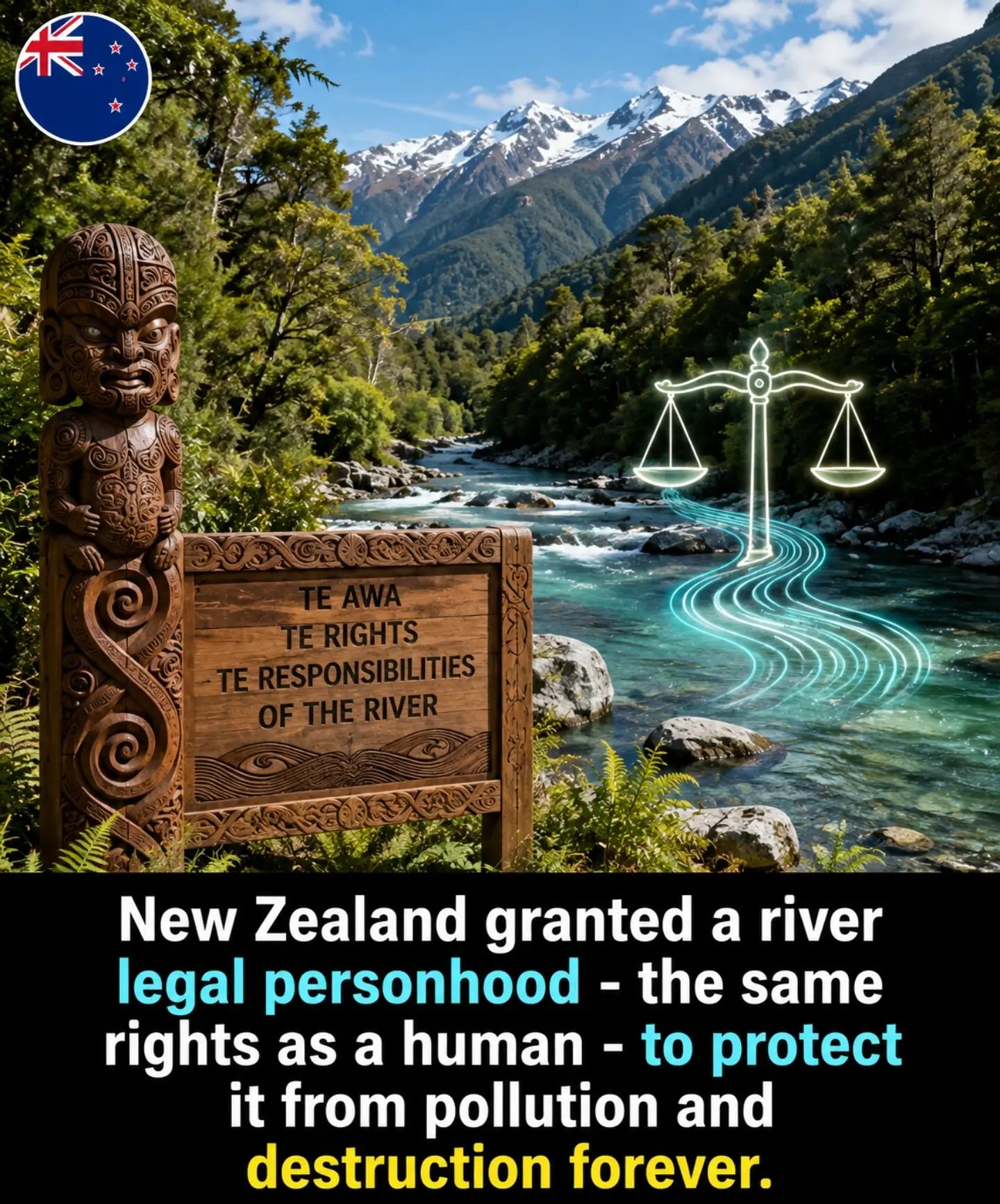
New Zealand River Rights
New Zealand has taken a groundbreaking step in environmental conservation by granting legal personhood to one of its rivers. This move assigns the river the same legal rights as a human being, aiming to protect it from pollution and destruction. The river, named Te Awa, is now recognized with rights and responsibilities that mirror those of a human entity.
Why This Matters
The granting of legal personhood to a river is a significant shift in how natural resources are protected. This approach acknowledges the intrinsic value of natural ecosystems and provides a robust legal framework to safeguard them. By treating the river as a legal entity, New Zealand has created a powerful tool to prevent environmental degradation and ensure the river's well-being for future generations.
Main Discussion
The Concept of Legal Personhood
Legal personhood is a concept that extends rights and responsibilities traditionally assigned to human beings to non-human entities. In the case of Te Awa, this means the river has the same legal standing as a person. This status allows the river to be represented in court, have its interests advocated for, and be held legally accountable for any actions that affect it. The river's legal personhood ensures that its protection is not at the mercy of political or economic interests but is enshrined in law.
The Maori Influence
The granting of legal personhood to Te Awa is deeply rooted in Maori culture and traditions. The Maori people have a profound connection to the land and its natural features, viewing them as living entities with spiritual significance. Traditional Maori carvings and cultural practices reflect this deep respect for nature. By recognizing the river's legal personhood, New Zealand acknowledges and honors these cultural values, integrating them into modern environmental law.
The Scale of Justice
The image of a scale of justice overlaid on the river symbolizes the legal recognition and the balance that must be maintained to protect it. This visual representation underscores the importance of fairness and equity in environmental governance. It serves as a reminder that the river's rights are not just words on paper but a tangible commitment to its preservation.
Responsibilities and Rights
The legal personhood of Te Awa comes with both rights and responsibilities. The river has the right to be protected from pollution, destruction, and any harm that could compromise its ecological integrity. Conversely, it also has responsibilities, such as maintaining its ecological functions and supporting the communities that depend on it. This duality ensures that the river's well-being is not just a legal obligation but a shared responsibility among all stakeholders.
Practical Tips
Understanding the Legal Framework
For those interested in advocating for similar legal protections for other natural resources, it is crucial to understand the legal framework behind Te Awa's personhood. This involves research into environmental law, the specifics of legal personhood, and the cultural and historical context that informed this decision. Engaging with legal experts and environmental advocates can provide valuable insights and guidance.
Engaging with Local Communities
Engaging with local communities, especially indigenous groups, is essential for advocating for environmental protections. The Maori influence in granting legal personhood to Te Awa highlights the importance of cultural values and traditions in conservation efforts. Building strong relationships with local communities can help ensure that environmental initiatives are culturally sensitive and effective.
Advocacy and Awareness
Creating awareness and advocacy for environmental protections is a continuous process. Sharing information about successful initiatives like Te Awa's legal personhood can inspire others to take similar actions. Using social media, community events, and educational programs can help spread the message and garner support for environmental conservation.
Important Takeaways
Cultural Sensitivity
The success of granting legal personhood to Te Awa underscores the importance of cultural sensitivity in environmental conservation. Incorporating indigenous knowledge and traditions can provide a holistic approach to environmental protection, ensuring that both natural and cultural values are respected.
Legal Protections
Legal personhood offers a powerful tool for protecting natural resources. By assigning legal rights to rivers, forests, and other ecosystems, we can create a robust framework to safeguard them from harm. This approach ensures that environmental conservation is not just a moral obligation but a legal requirement.
Community Involvement
Community involvement is crucial for the success of environmental conservation efforts. By engaging with local communities, we can build a shared responsibility for protecting natural resources. This collaborative approach ensures that environmental initiatives are sustainable and effective.
Conclusion
The granting of legal personhood to Te Awa in New Zealand is a pioneering step in environmental conservation. It demonstrates how legal protections, cultural values, and community involvement can work together to safeguard natural resources. By treating the river as a legal entity, New Zealand has created a powerful framework for environmental governance, ensuring that the river's well-being is protected for future generations. This approach serves as a model for other nations and communities seeking effective ways to protect their natural ecosystems.
Watch the Reel
Recent articles
Fresh deep dives from the latest Reels we unpacked.




Comments
Be the first to comment.