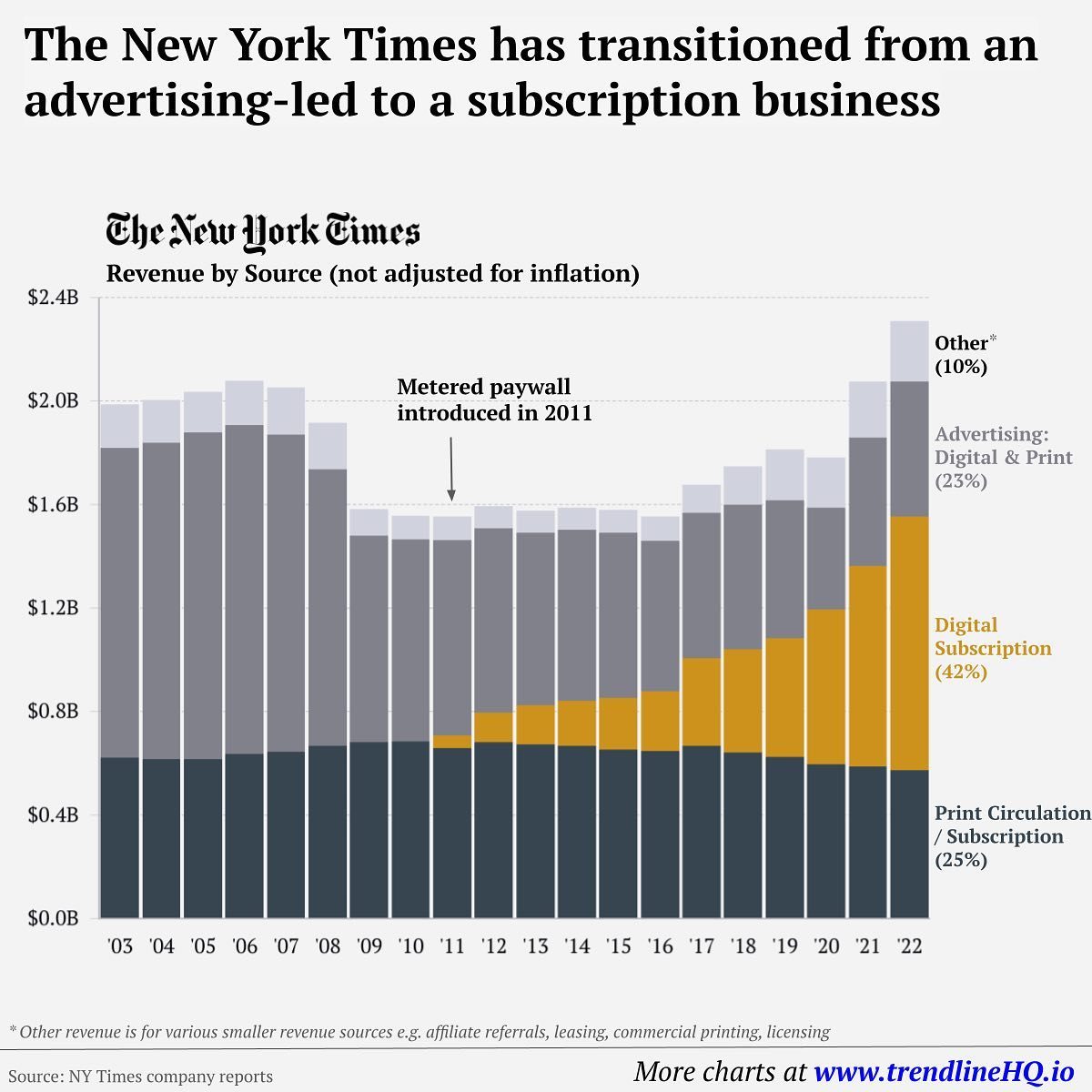
The New York Times Transforms Its Revenue Model
The New York Times has long been a stalwart in the news industry, but like many print publications, it faced significant challenges as the digital age emerged. Over the past decade, The New York Times has shifted its revenue model from an advertising-led approach to a subscription-based model. This transformation is a testament to the company's ability to adapt and thrive in the digital era.
Why This Matters
Understanding how The New York Times adapted to the changing landscape of digital media is crucial for several reasons. Firstly, it provides insights into the future of journalism. The rise of digital subscriptions and metered paywalls has become a common strategy for many news outlets. Secondly, The New York Times’ success in this area offers a roadmap for other publishers looking to make a similar transition. Finally, it highlights the importance of diversification in revenue streams, including affiliate referrals, leasing, commercial printing, and licensing. By examining this transition, we gain a clearer picture of what a sustainable and profitable future might look like for the news industry.
The Shift from Print to Digital
The Early 2000s: Dominance of Print Circulation and Subscription Revenue
In the early 2000s, The New York Times relied heavily on print circulation and subscription revenue. This was a time when newspapers were the go-to source for news, and print ads were a significant revenue driver. The bar graph from 2003 to 2010 shows a steady, albeit declining, trend in revenue from print subscriptions.
The Introduction of the Metered Paywall
The turning point came in 2011 when The New York Times introduced a metered paywall. This paywall allowed readers to access a limited number of articles for free before being required to pay for a subscription. The move was a strategic decision to balance the need for advertising revenue with the growing importance of digital subscriptions. By 2011, the metered paywall was introduced, marking a shift that would significantly impact the company's revenue structure in the coming years.
The Rise of Digital Subscriptions
Digital and Print Revenue
The introduction of the metered paywall and the increasing reliance on digital subscriptions led to a notable shift in revenue sources. Over the years, digital subscriptions have become a major revenue driver. The graph shows a steady increase in digital and print subscription revenue, indicating that more readers are willing to pay for digital access to The New York Times.
The Change in Revenue Composition
The composition of revenue sources shifted significantly from 2011 to 2022. Digital subscriptions and the metered paywall now account for a significant portion of revenue, while print circulation and subscription revenue has decreased. This shift underscores the importance of digital strategies in the modern media landscape.
Other Revenue Streams
Diversifying Revenue Sources
While digital subscriptions have become a major revenue driver, The New York Times has also diversified its revenue streams. Other sources of income include affiliate referrals, leasing, commercial printing, and licensing. This diversification helps to mitigate the risks associated with relying too heavily on a single revenue source.
Strategic Partnerships and Licensing
Affiliate referrals, leasing, and commercial printing are all part of a broader strategy to ensure financial stability. Licensing agreements and strategic partnerships have also played a role in generating additional revenue. These partnerships often involve collaborations with other media outlets, tech companies, and educational institutions, further solidifying The New York Times’ position in the digital age.
Practical Tips for Publishers
Adopt a Subscription-Based Model
For publishers looking to emulate The New York Times’ success, adopting a subscription-based model is a key step. This involves creating a compelling paywall strategy that balances free access with paid subscriptions. The metered paywall has proven effective in increasing digital subscriptions, so it's worth considering for other publishers.
Focus on Diversifying Revenue Streams
Relying on a single revenue source is risky. Diversifying revenue streams through affiliate referrals, leasing, commercial printing, and licensing can provide a more stable financial foundation. These additional revenue streams can help offset losses in other areas and ensure long-term sustainability.
Embrace Digital Transformation
Embracing digital transformation is essential for staying competitive. This involves investing in digital infrastructure, enhancing user experience, and leveraging data analytics to understand reader preferences. By focusing on digital strategies, publishers can attract a broader audience and increase engagement.
Important Takeaways
The New York Times’ transition from an advertising-led to a subscription-based model offers valuable insights for the news industry. Key takeaways include the importance of embracing digital strategies, adopting a subscription-based model, and diversifying revenue streams. These strategies can help publishers adapt to the changing media landscape and ensure long-term financial sustainability.
Conclusion
The New York Times’ transformation from an advertising-led to a subscription-based model is a testament to the company's ability to adapt and thrive in the digital era. By embracing digital subscriptions, diversifying revenue streams, and adopting a metered paywall, The New York Times has secured its position as a leading news organization. This transition highlights the importance of strategic planning, innovation, and the willingness to pivot in response to market changes. For publishers looking to navigate the complexities of the digital age, The New York Times serves as a valuable case study and a roadmap for success.
Watch the Reel
Questions readers ask
What prompted The New York Times to shift from print advertising to digital subscriptions?
The shift was driven by the decline in print advertising revenue as more readers turned to digital platforms for news consumption. This transition allowed The New York Times to create a sustainable business model in the digital age.
What is a metered paywall and how does it work?
A metered paywall allows readers to access a certain number of articles for free before requiring a subscription. This model encourages casual readers to engage with the content and convert to paid subscribers over time.
How has The New York Times’ digital subscription revenue evolved over the past decade?
The New York Times has seen significant growth in its digital subscription revenue. In 2021, the number of digital-only subscribers surpassed 7 million, marking a substantial increase from just a few hundred thousand a decade ago.
Why is diversifying revenue streams important for news publications?
Diversifying revenue streams helps news publications reduce reliance on a single income source, making them more resilient to market fluctuations. This approach ensures long-term sustainability and financial health, especially in the face of declining print advertising revenue.
What role do digital subscription trends play in the future of journalism?
Digital subscription trends indicate a shift towards reader-supported journalism. As more readers opt for digital subscriptions, news outlets can invest in quality journalism, ensuring the future of reliable and informative news coverage.
How does The New York Times’ transition from print to digital serve as a roadmap for other publishers?
The New York Times’ success demonstrates the viability of a digital subscription model. By analyzing their strategies, such as implementing a metered paywall and investing in digital content, other publishers can learn how to effectively make the transition from print to digital.
What are some key strategies for news outlets to achieve long-term sustainability in the media industry?
Key strategies include adopting a subscription-based model, diversifying revenue streams, and investing in high-quality digital content. Additionally, understanding and leveraging digital subscription trends can help news outlets thrive in a rapidly changing media landscape.
Recent articles
Fresh deep dives from the latest Reels we unpacked.




Comments
Be the first to comment.