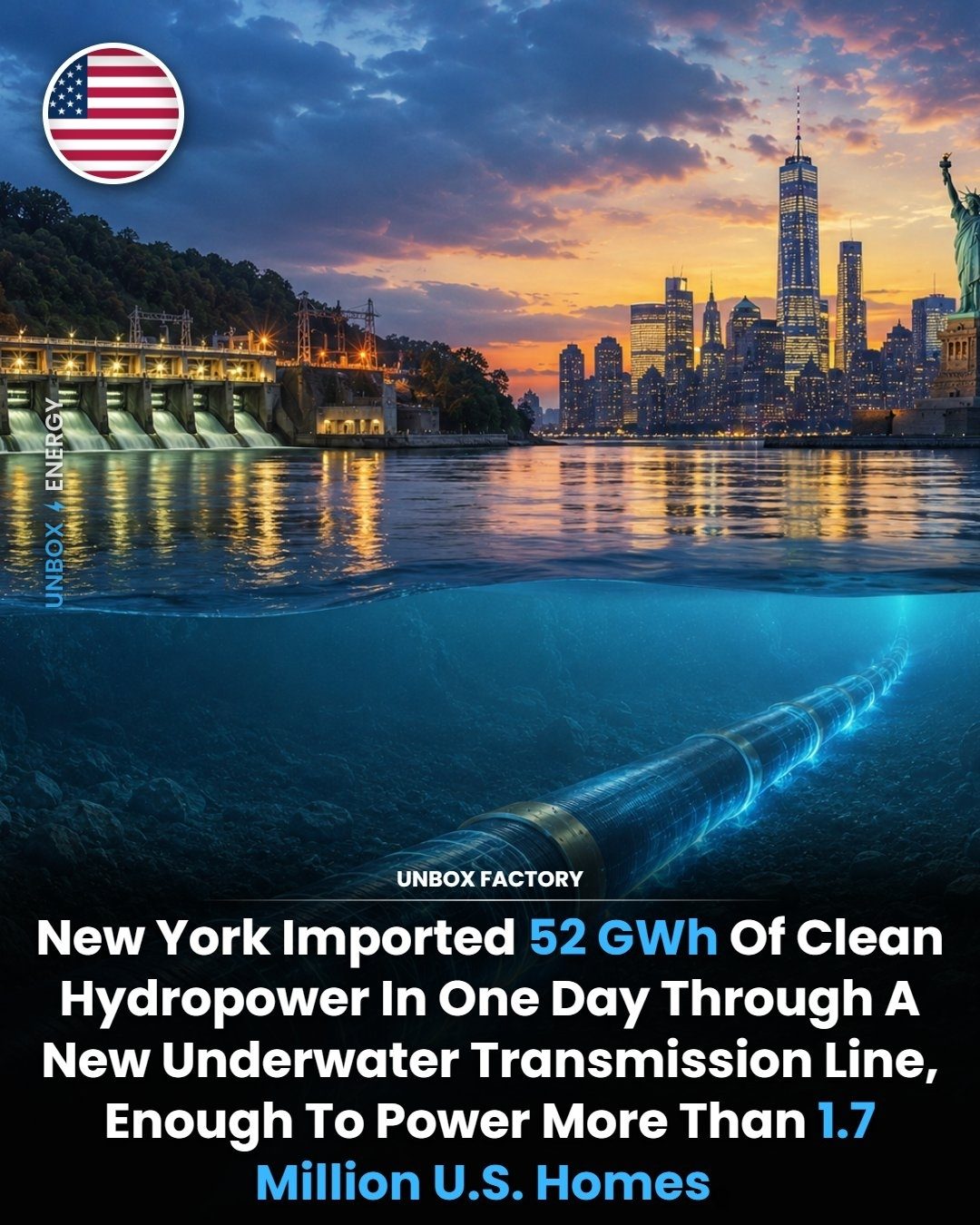
Underwater Transmission Lines and New York's Clean Energy Goals
The Champlain Hudson Power Express (CHPE) is a pivotal project for New York's clean energy ambitions. This high-voltage transmission line runs mostly underground and beneath waterways, stretching 339 miles (546 km) from Canada to New York City. The project's significance lies in its capacity to transmit up to 1,250 megawatts of renewable electricity, with a recent achievement of importing 52 gigawatt-hours (GWh) of clean hydroelectricity in a single day. This monumental feat underscores the potential of underwater transmission lines in enhancing energy infrastructure and reducing carbon footprints.
Why This Matters
New York's commitment to generating 70% renewable electricity by 2030 is ambitious and necessary. The CHPE project exemplifies how advanced transmission infrastructure can play a critical role in meeting these goals. By importing significant amounts of clean hydropower, New York is not only reducing its dependence on fossil-fuel power plants but also setting a precedent for other urban areas aiming to transition to renewable energy sources.
The Champlain Hudson Power Express (CHPE)
Project Overview
The CHPE is designed to transmit clean hydroelectric power from Quebec, Canada, to New York City. This transmission line is unique due to its predominantly underground and underwater path, which minimizes environmental impact and avoids the visual and land-use issues associated with overhead power lines. The project's route includes a critical underwater section that crosses the Hudson River and Lake Champlain, leveraging the natural landscape to enhance energy distribution efficiency.
Key Features
- Length and Capacity: The 339-mile transmission line is capable of delivering up to 1,250 megawatts of electricity.
- Underground Path: Running mostly underground and underwater, the CHPE minimizes environmental disruption and visual impact.
- Clean Energy Source: The power transmitted is predominantly hydropower, which is a clean and renewable energy source.
Environmental and Economic Benefits
The environmental benefits of the CHPE are substantial. By delivering clean hydroelectricity, the project helps reduce New York's reliance on fossil fuels, thereby lowering greenhouse gas emissions. Economically, the transmission line supports New York's goal of achieving 70% renewable electricity by 2030, which in turn fosters a cleaner and more sustainable energy grid.
The Role of Underwater Transmission Lines
Underwater transmission lines are becoming increasingly important in modern energy infrastructure. These lines offer several advantages, particularly in densely populated or environmentally sensitive areas.
Advantages
- Space Efficiency: Underwater transmission lines maximize space efficiency, particularly in urban areas where land is at a premium.
- Environmental Impact: They have a lower visual and environmental impact compared to overhead lines, reducing disruption to local ecosystems and landscapes.
- Reliability: Submarine cables are less susceptible to weather-related outages, making them a reliable option for energy transmission.
Challenges
While underwater transmission lines offer numerous benefits, they also present challenges:
- Cost: The installation and maintenance of underwater transmission lines can be more expensive than traditional overhead lines due to the complexity of underwater construction.
- Technical Complexity: Submarine cables require advanced engineering and maintenance to ensure reliability and durability.
Case Studies
The CHPE project is not the only example of successful underwater transmission lines. Similar projects worldwide showcase the potential of this technology.
- Nordea Link (Europe): This underwater transmission line connects the UK to Belgium, facilitating the exchange of renewable energy between the two countries.
- Turkey-Egypt Interconnection: This project aims to connect Turkey’s energy grid to Egypt’s, providing a stable and reliable energy supply.
Practical Tips for Implementing Underwater Transmission Lines
Considering the benefits and challenges, here are some practical tips for implementing underwater transmission lines:
- Thorough Planning: Conduct comprehensive surveys and environmental impact assessments before starting the project.
- Advanced Engineering: Utilize state-of-the-art engineering techniques and materials to ensure the longevity and reliability of the cables.
- Collaboration: Foster collaboration between energy providers, environmental agencies, and local communities to address potential concerns and ensure smooth project execution.
Important Takeaways
- The CHPE project demonstrates the viability and benefits of underwater transmission lines in delivering clean energy.
- Underwater transmission lines offer significant environmental and economic advantages, particularly in urban and environmentally sensitive areas.
- The CHPE is a crucial step in New York's journey towards achieving 70% renewable electricity by 2030.
- Collaboration, thorough planning, and advanced engineering are key to the successful implementation of underwater transmission lines.
Conclusion
The Champlain Hudson Power Express (CHPE) stands as a testament to the potential of underwater transmission lines in driving clean energy initiatives. By delivering 52 GWh of clean hydroelectricity in a single day, the CHPE not only meets New York's immediate energy needs but also paves the way for a more sustainable future. As cities worldwide strive to reduce their carbon footprints, underwater transmission lines offer a reliable and efficient solution for distributing renewable energy, enhancing both environmental sustainability and economic viability.
Watch the Reel
Questions readers ask
What is the primary source of energy transmitted by the CHPE?
The Champlain Hudson Power Express (CHPE) primarily transmits renewable hydroelectric power from Canada to New York City. This clean energy source is a key component in New York's strategy to reduce reliance on fossil fuels.
How much power can the CHPE transmit at its maximum capacity?
The CHPE has the capability to transmit up to 1,250 megawatts of electricity. This substantial capacity is crucial for supporting New York's renewable energy goals and ensuring a stable power supply.
What is the significance of the 52 GWh delivery in one day?
The delivery of 52 gigawatt-hours (GWh) in a single day highlights the efficiency and capacity of the CHPE. This achievement demonstrates the project's potential to significantly contribute to New York's clean energy objectives and reduce carbon emissions.
Why is the underground and underwater routing of the CHPE important?
The mostly underground and underwater routing of the CHPE minimizes environmental impact and enhances safety. This design helps to preserve natural landscapes and reduces the risk of disruptions from severe weather conditions or other external factors.
How does the CHPE support New York's energy goals?
The CHPE plays a vital role in helping New York meet its goal of generating 70% renewable electricity by 2030. By transmitting a large amount of clean hydroelectric power, the CHPE helps to decrease the state's dependence on fossil fuels and promotes sustainable urban energy.
What are the benefits of using hydroelectric power in New York's energy mix?
Hydroelectric power is a reliable and renewable source of energy that produces no greenhouse gas emissions. By integrating more hydroelectric power into its energy mix, New York can enhance its energy security, reduce its carbon footprint, and support a healthier environment.
What makes the CHPE a precedent for sustainable urban energy?
The CHPE sets a precedent by demonstrating the feasibility of transmitting large amounts of clean energy over long distances to urban areas. This project showcases how innovative transmission infrastructure can support the integration of renewable energy sources and contribute to sustainable urban development.
Related deep dives
Similar reads based on topic and creator.




Recent articles
Fresh deep dives from the latest Reels we unpacked.

Comments
Be the first to comment.