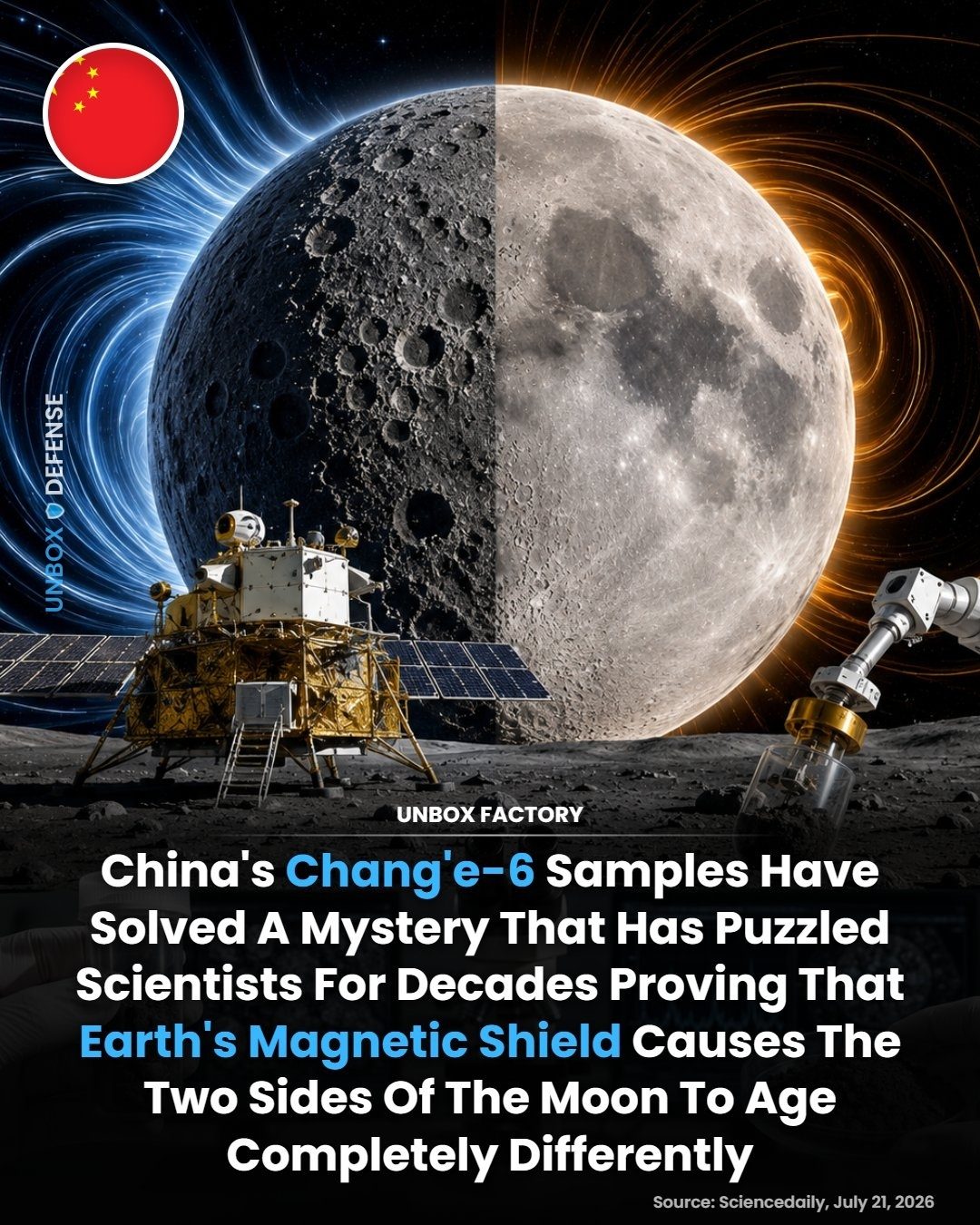
Lunar Samples Mystery
China's Chang'e-6 mission has shed new light on a long-standing mystery about the Moon's two sides. The mission returned samples from the Moon's far side, providing scientists with a unique opportunity to compare materials from both the near and far sides of the lunar surface. This comparison has revealed surprising differences in the geological evolution of these two hemispheres, which can be attributed to Earth's ancient magnetic field.
Why this Matters
The Moon's near side, which always faces Earth, and the far side, which remains hidden from our view, have long been known to exhibit distinct geological features. The near side is dominated by vast basaltic plains called maria, while the far side is characterized by rugged highlands. Understanding why these differences exist has puzzled scientists for decades. The recent findings from the Chang'e-6 mission offer a compelling explanation: Earth's historic magnetic field played a pivotal role in shaping the Moon's evolution.
The Chang'e-6 Mission
The Chang'e-6 mission marked a significant milestone as the first to return samples from the Moon's far side. This achievement allowed scientists to directly compare lunar materials from both hemispheres. The analysis revealed that the Moon's near side, protected by Earth's magnetic shield, aged differently from the far side. This shielding effect altered the geological evolution of the near side over billions of years, resulting in the distinct features observed today.
Earth's Magnetic Shield
Earth's magnetic field, a dynamic and essential component of our planet, acts as a shield against harmful solar winds. These winds, composed of charged particles, can erode and alter the surfaces of planetary bodies. The Moon, lacking a global magnetic field of its own, is particularly vulnerable to these effects.
During the early history of the solar system, Earth's magnetic field was likely much stronger and more extensive than it is today. This powerful shield protected the Moon's near side from portions of the solar wind, resulting in a different rate of bombardment and erosion compared to the far side. Over billions of years, this difference in exposure led to the distinct geological features observed on the near and far sides of the Moon.
Geological Differences
The near side of the Moon, with its vast basaltic plains, shows evidence of volcanic activity and extensive lava flows. These features suggest a more dynamic geological past, shaped by the presence of Earth's magnetic shield. In contrast, the far side, exposed to unfiltered solar winds, exhibits a more rugged and cratered surface, indicative of intense bombardment and erosion.
Implications for Lunar and Earth Formation
The findings from the Chang'e-6 mission have far-reaching implications for our understanding of both lunar formation and the early evolution of Earth's magnetic field. By comparing samples from the near and far sides, scientists can gain insights into the conditions present during the Moon's formation and the role of Earth's magnetic field in shaping its evolution.
Furthermore, these discoveries offer a unique perspective on the early history of our solar system. The differences between the Moon's two sides provide clues about the processes that shaped the inner solar system and the interactions between celestial bodies.
Practical Tips for Future Missions
Future missions to explore the Moon, whether manned or unmanned, can benefit from the knowledge gained from the Chang'e-6 mission. Understanding the geological differences between the near and far sides can help in selecting landing sites, planning scientific experiments, and interpreting data collected from lunar samples.
Scientists and engineers involved in future missions should consider the following:
- Site Selection: Choose landing sites that maximize the diversity of geological features available for study, including both near and far side locations.
- Sample Collection: Collect and analyze samples from a variety of locations and depths to gain a comprehensive understanding of the Moon's geological history.
- Technological Advancements: Invest in advanced analytical tools and techniques to precisely date and analyze lunar samples, providing more accurate insights into the Moon's formation and evolution.
- Collaboration: Foster international collaboration to share data, resources, and expertise, enhancing the collective understanding of lunar science.
Important Takeaways
The Chang'e-6 mission's findings provide a groundbreaking explanation for the Moon's asymmetrical aging. Here are the key points to remember:
- Earth's ancient magnetic field shielded the Moon's near side from portions of the solar wind, altering its geological evolution.
- The near side's basaltic plains and the far side's rugged highlands are the result of billions of years of differential exposure to solar winds.
- The mission's success highlights the importance of comparative analysis in lunar science.
- Future missions should build on these findings to advance our understanding of lunar and solar system formation.
Conclusion
The Chang'e-6 mission has offered unprecedented insights into the Moon's geological evolution and the role of Earth's magnetic field in shaping its surface. By comparing samples from the near and far sides, scientists have uncovered a mystery that has puzzled researchers for decades. The findings not only enhance our understanding of the Moon but also provide valuable context for future space missions. As we continue to explore the Moon and beyond, the knowledge gained from the Chang'e-6 mission will serve as a cornerstone for ongoing research and discovery.
Watch the Reel
Questions readers ask
What are the key findings of the Chang'e-6 mission regarding the Moon's age and formation?
The Chang'e-6 mission has provided new insights into the Moon's age and formation by revealing that Earth's ancient magnetic field played a significant role in shaping the distinct geological features of the Moon's near and far sides. This discovery suggests that the Moon's evolution was closely linked to Earth's magnetic influence, offering a new perspective on lunar development.
How do the lunar samples from the far side help in understanding the Moon's geological evolution?
The samples returned from the Moon's far side by the Chang'e-6 mission have allowed scientists to compare materials from both the near and far sides. This comparison has highlighted surprising differences in their geological evolution, which can be attributed to the influence of Earth's ancient magnetic field, offering a clearer picture of the Moon's history.
What are the main differences between the near and far sides of the Moon?
The near side of the Moon, which always faces Earth, is dominated by vast basaltic plains known as maria. In contrast, the far side is characterized by rugged highlands. These distinct geological features have long been a subject of interest, and the Chang'e-6 mission has provided valuable insights into why these differences exist.
How does Earth's magnetic field influence the Moon's geological features?
Earth's ancient magnetic field has significantly influenced the distinct geological features of the Moon's near and far sides. The interaction between Earth's magnetic field and the Moon's development has resulted in the different landscapes we observe today, with the near side's smooth maria and the far side's rugged highlands.
What makes the Chang'e-6 mission significant in the study of the Moon's age mystery?
The Chang'e-6 mission is significant because it returned samples from the Moon's far side, allowing scientists to make comparisons with materials from the near side. This has led to a better understanding of the Moon's age and the factors that shaped its geological evolution, particularly the role of Earth's magnetic field in creating the Moon's distinct hemispheres.
Why is it important to study the geological features of the Moon's far side?
Studying the geological features of the Moon's far side is important because it provides a clearer picture of the Moon's overall formation and evolution. By understanding the differences between the near and far sides, scientists can gain insights into the broader processes that have shaped the Moon and its relationship with Earth over billions of years.
Related deep dives
Similar reads based on topic and creator.



Recent articles
Fresh deep dives from the latest Reels we unpacked.




Comments
Be the first to comment.