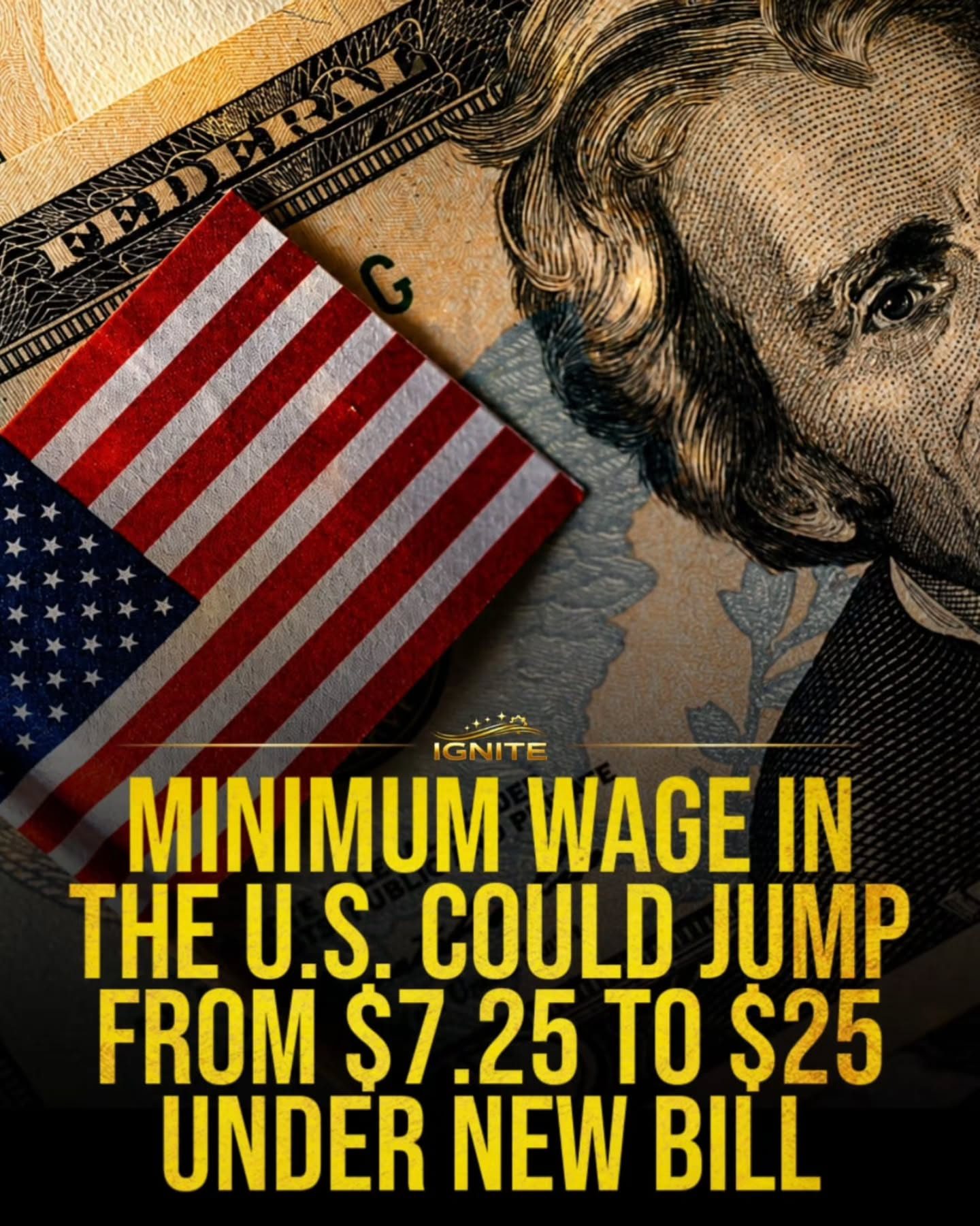
Minimum Wage Increase: Potential Jump from $7.25 to $25
The discussion around the minimum wage in the United States has been a contentious and ongoing debate, with recent proposals suggesting a significant increase. Currently, the federal minimum wage stands at $7.25 per hour, a figure that has remained unchanged since 2009. However, there is a new bill under consideration that could more than triple this amount, potentially raising it to $25 per hour.
Context / Why this Matters
The minimum wage is a critical component of the economic landscape, affecting millions of workers and their families. It serves as a baseline for wages, ensuring that even the lowest-paid workers earn a living wage. Any changes to the minimum wage have far-reaching implications for both workers and businesses.
Economic Impact
A substantial increase in the minimum wage would have a profound economic impact. For workers, it could mean a significant boost in income, potentially lifting many out of poverty. For businesses, especially small enterprises, it could pose challenges in terms of increased labor costs, which might necessitate adjustments in pricing, staffing, or operational efficiencies.
Historical Perspective
The federal minimum wage has seen numerous adjustments over the years, often influenced by economic conditions, political climates, and societal pressures. However, the last significant increase was over a decade ago. This prolonged stagnation has led to growing calls for an update, with advocates arguing that the current minimum wage is insufficient to meet basic living costs in many parts of the country.
Main Discussion
Proposed Increase and Its Implications
The proposed increase from $7.25 to $25 per hour represents a dramatic shift. This would be one of the most substantial minimum wage hikes in history, potentially benefiting millions of low-wage workers. However, such a massive increase would also disrupt the economic equilibrium, affecting various sectors differently.
Benefits for Workers
An increase to $25 per hour would provide significant financial relief for many workers, particularly those in sectors with a high concentration of minimum-wage jobs, such as retail, hospitality, and food service. This boost in income could lead to improved living standards, reduced reliance on government assistance, and increased consumer spending, which could stimulate economic growth.
Challenges for Businesses
On the other hand, businesses would face increased labor costs, which could strain their financial health. Small businesses, in particular, might struggle to adapt, potentially leading to job cuts, reduced hours, or even closures. Larger corporations might face fewer immediate challenges but would still need to adjust their operational strategies to accommodate the higher wage costs.
Potential Economic Repercussions
The economic impact of such a significant wage increase would be multifaceted. While some argue that higher wages would boost consumer spending and drive economic growth, others worry about potential inflationary pressures and job displacement. The overall effect would depend on a variety of factors, including the pace of implementation, regional economic conditions, and the broader policy environment.
Legislative Landscape
The push for a higher minimum wage is not new, but recent political dynamics have brought renewed energy to the debate. Advocates for the increase argue that it is necessary to keep pace with rising living costs and address income inequality. Opponents, meanwhile, express concerns about the potential economic fallout and the impact on small businesses.
Practical Tips
If you are a worker or employer affected by potential changes in the minimum wage, here are some practical tips to help you navigate the transition:
For Workers
-
Financial Planning: Start planning how you will use any additional income. Prioritize essential expenses, such as housing, food, and utilities, and consider saving or investing the rest.
-
Education and Training: Invest in developing new skills or obtaining additional education. This can make you more competitive in the job market and open up opportunities for higher-paying positions.
-
Stay Informed: Keep up-to-date with the latest developments in minimum wage legislation and how it might affect your income and benefits.
For Employers
-
Budget Adjustments: Review your budget to identify areas where you can reduce costs or increase revenue to offset the higher labor expenses. Consider investing in technology or automation to improve operational efficiency.
-
Employee Training: Focus on upskilling your workforce. This can help you retain valuable employees and improve overall productivity, potentially mitigating the impact of higher wages.
-
Pricing Strategies: Evaluate your pricing strategy to ensure it remains competitive while covering increased labor costs. Consider passing on some of the increased costs to consumers, but be mindful of market conditions and customer sensitivity.
-
Policy Advocacy: Engage with local and national policymakers to voice your concerns and advocate for balanced policies that support both workers and businesses.
Important Takeaways
- The proposed increase in the minimum wage from $7.25 to $25 per hour would have significant economic implications for workers and businesses alike.
- Workers could see a substantial boost in income, potentially improving their living standards and reducing reliance on government assistance.
- Businesses, especially small enterprises, would face increased labor costs, requiring strategic adjustments to remain viable.
- The overall economic impact would depend on various factors, including the pace of implementation and regional economic conditions.
- Both workers and employers need to stay informed and proactive in preparing for potential changes in the minimum wage.
Conclusion
The discussion around the minimum wage increase is complex and multifaceted, with potential benefits and challenges for both workers and businesses. While advocates argue for the need to address income inequality and keep pace with rising living costs, opponents raise concerns about economic stability and job displacement. As the debate continues, it is crucial for all stakeholders to stay informed, prepare for potential changes, and engage in constructive dialogue to shape policies that support a balanced and thriving economy.
Watch the Reel
Questions readers ask
What is the current federal minimum wage in the U.S.?
The current U.S. federal minimum wage is $7.25 per hour, a rate that has remained constant since 2009. This means that the lowest hourly wage for covered, non-exempt employees is $7.25.
How much could the minimum wage increase to under the new bill?
The proposed bill aims to more than triple the current minimum wage, raising it to $25 per hour. This significant increase is designed to address the rising cost of living and provide better compensation for low-wage workers.
Why is there debate surrounding the $25 minimum wage proposal?
The debate centers around the potential impacts on both workers and businesses. Supporters argue that it will improve the standard of living for low-wage workers, while opponents worry about potential job losses and increased costs for businesses, which could lead to higher prices for consumers or reduced investment in other areas.
How will the proposed minimum wage increase affect businesses?
Businesses will need to adjust to the increased labor costs, which could potentially lead to higher operational expenses. Some businesses may need to raise prices, reduce employee hours, or even lay off workers to maintain profitability. However, it could also potentially lead to reduced turnover, improved productivity, and more consumer spending from better-paid workers.
What are the potential economic impacts of raising the minimum wage to $25?
The economic impacts could be multifaceted. On one hand, low-wage workers may experience improved living standards, leading to increased consumer spending. However, there could also be unintended consequences, such as job losses or reduced hiring due to increased labor costs, which could slow economic growth. Businesses in low-margin industries, such as retail or food service, may be particularly affected, or it might lead to accelerated automation in response to increased wages.
How often is the federal minimum wage typically adjusted?
The federal minimum wage is not automatically adjusted for inflation or cost of living increases. Changes to the minimum wage typically require new legislation to be passed. Since its establishment in 1938, the federal minimum wage has been raised 22 times, with the most recent increase occurring in 2009.
What factors are considered when determining the federal minimum wage?
Several factors are considered when determining the federal minimum wage, including inflation, cost of living, and the economic climate. Additionally, the potential impacts on both workers and businesses are taken into account, as well as the overall effect on the economy. Recent discussions have also focused on regional differences in the cost of living, with some advocating a regional approach to minimum wage.
Recent articles
Fresh deep dives from the latest Reels we unpacked.




Comments
Be the first to comment.