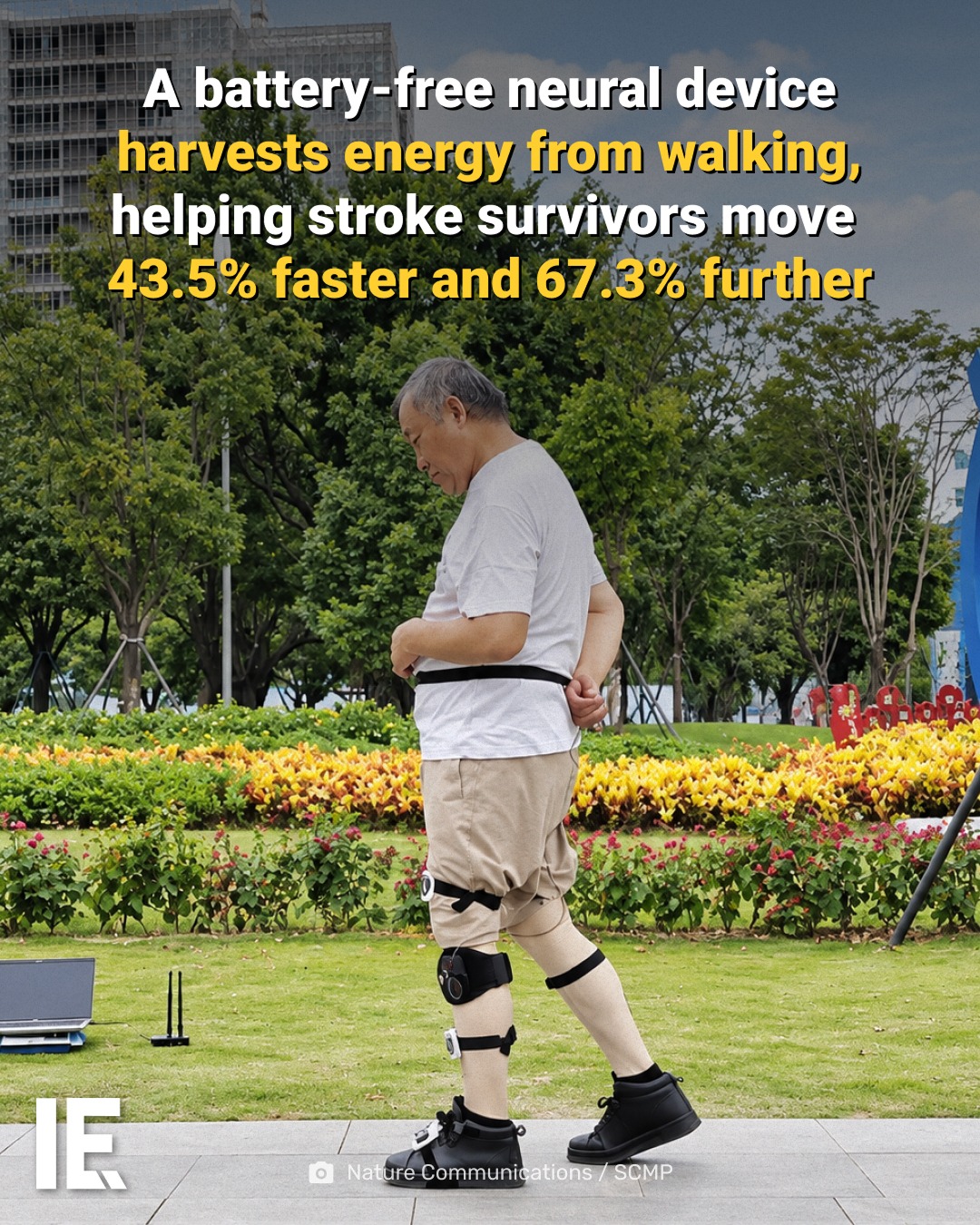
A new neural device is helping stroke survivors reclaim their mobility through energy harvested from movement, allowing users to progress 43.5% faster and 67.3% further. The device highlights the potential for innovative technology to enhance rehabilitation.
The Exoskeleton as Energy Harvester
The device in question is a battery-free neural exoskeleton designed to assist stroke survivors in their recovery. It functions as a wearable robotic suit that attaches to the legs, providing mechanical support and assistance with movement. The exoskeleton’s most distinctive feature is its ability to harvest energy from the user's walking motion. This energy is then used to power the device, eliminating the need for external batteries or power sources. This makes the device incredibly convenient, as the user is not restricted by the need to recharge or replace batteries. According to the on-screen text, the device can help users move 43.5% faster and 67.3% further. Stroke survivors often face significant challenges in regaining their mobility. This device addresses those challenges by providing targeted mechanical support and assistance. The exoskeleton's design is tailored to adapt to the user's movements, offering resistance and support in the areas where it is needed most, while allowing the patient to use their natural gait for movement.
Walking into a New Era of Rehabilitation
Medical advancements like this neural device spotlight a broader shift towards integrative rehabilitation strategies that blend technology with traditional therapy. These innovations offer new hope to survivors of strokes and other neurological conditions. Stroke recovery often involves arduous physical therapy sessions and intensive rehabilitation exercises. The neural device represents a significant leap forward in this field. It provides survivors with the tools they need to progress at their own pace, with less strain and greater independence. The exoskeleton’s energy-harvesting mechanism supports the sustainability of the recovery process, as it eliminates the need for frequent recharge and makes it more accessible for daily use.
Identifying a New Neural Energy Pathway
Breakdown of Exoskeleton Components.
The neural device integrates several key components to support its function. The primary component is the exoskeleton structure, which is designed to fit over the legs and provide mechanical support. This structure is lightweight and adjustable, allowing it to adapt to the user's body and movements. The exoskeleton includes sensors that track the user's gait and movements, providing real-time feedback to the device's control system. This feedback helps the device adjust its support and resistance dynamically, ensuring that the user receives the assistance they need.
Energy Conversion and Storage
The energy-harvesting mechanism is central to the device's functionality. It converts the kinetic energy generated by the user's walking motion into electrical energy. This energy is then stored in capacitors within the device, providing power for its various functions. The device is designed to optimize energy efficiency, ensuring that it can operate continuously without the need for external power sources.
Machine-Learning Application
The neural device employs machine-learning algorithms to analyze and adapt to the user's movement patterns. These algorithms help the device to learn from the user's gait and provide personalized support. The device’s control system uses this data to fine-tune its performance, ensuring that it provides the most effective assistance possible. The device’s machine-learning capabilities enhance its adaptability, making it a versatile tool for stroke survivors at different stages of their recovery.
Personalizing Stroke Recovery
This device has been shown to help stroke survivors move 43.5% faster and 67.3% further. This progress represents a significant improvement in mobility and independence for those who use the device. The device's use of machine-learning algorithms tailors the experience to each individual, ensuring that the support provided is personalized and effective. This personalized approach is crucial, as the challenges faced by stroke survivors can vary widely. The potential of the neural device lies in its ability to adapt to these individual needs and provide targeted assistance.
Regaining Mobility One Step At a Time
Purchasing or using a device such as this one might seem out of reach for many survivors. It's a practical solution for any stroke survivors and caregivers to personally evaluate the impact of the neural device on their recovery journey.
- Sustainable Recovery: The energy-harvesting mechanism ensures that the device can be used continuously, without the need for frequent recharging, which helps with a more sustainable recovery experience.
- Progress Tracking: The device's sensors and machine-learning algorithms provide real-time feedback on the user's progress, allowing for more informed decision-making and adjustments in their recovery plan.
- Personalized Support: The device adapts to the user's unique needs and movement patterns, providing personalized support and assistance. This adaptability makes it a versatile tool for a wide range of stroke survivors, regardless of their stage of recovery.
- Petilence: There are no known side effects on the users. However, it is always advised to consult with a healthcare professional before integrating any new medical device into your recovery plan.
- Long-term Well-being: The device can be an essential part of the recovery process, helping survivors regain mobility and independence while also providing support and assistance in the long term. This can result in improved overall well-being and a higher quality of life.
Watch the Reel
Questions readers ask
What exactly is a neural exoskeleton and how does it help stroke survivors?
A neural exoskeleton is a wearable robotic suit designed to support and assist stroke survivors in their mobility recovery. It attaches to the legs and provides mechanical support, helping users move faster and further by adapting to their movements and offering targeted assistance where needed. It is an energy harvester too, which makes it very convenient.
How does the neural exoskeleton harvest energy from the user's movements?
The device converts kinetic energy generated by the user's walking motion into electrical energy. This energy is then stored in capacitors within the device, powering its various functions. This means the exoskeleton doesn't rely on external batteries, making it more convenient for daily use.
Can stroke survivors use this device independently, or do they need assistance?
The device is designed to be used independently. It adapts to the user's movements and provides real-time support, allowing stroke survivors to progress at their own pace with less strain and greater independence. However, initial setup and fitting might require professional assistance.
How does this device compare to traditional rehabilitation methods?
Unlike traditional methods that rely heavily on manual therapy and exercises, this device integrates technology to enhance rehabilitation. It provides targeted mechanical support and assistance, allowing users to move faster and further with less strain, and it offers a more sustainable recovery process by eliminating the need for frequent recharges.
What are the potential long-term benefits of using this neural device for stroke recovery?
The long-term benefits include improved mobility, increased independence, and a more sustainable recovery process. By providing targeted support and assistance, the device helps users progress faster and further, potentially reducing the overall duration of rehabilitation and enhancing the quality of life for stroke survivors.
Are there any limitations or potential drawbacks to using this device?
While the device offers significant benefits, it's important to note that its effectiveness may vary depending on the individual's condition and progress. Additionally, the initial cost and accessibility of the device could be a concern. However, its energy-harvesting feature makes it more convenient for long-term use.
How does the exoskeleton's energy-harvesting system ensure continuous operation?
The energy-harvesting system converts kinetic energy from the user's movements into electrical energy, which is stored in capacitors. This design ensures that the device can operate continuously as long as the user is moving, eliminating the need for frequent recharges and making it more accessible for daily use.
Recent articles
Fresh deep dives from the latest Reels we unpacked.




Comments
Be the first to comment.