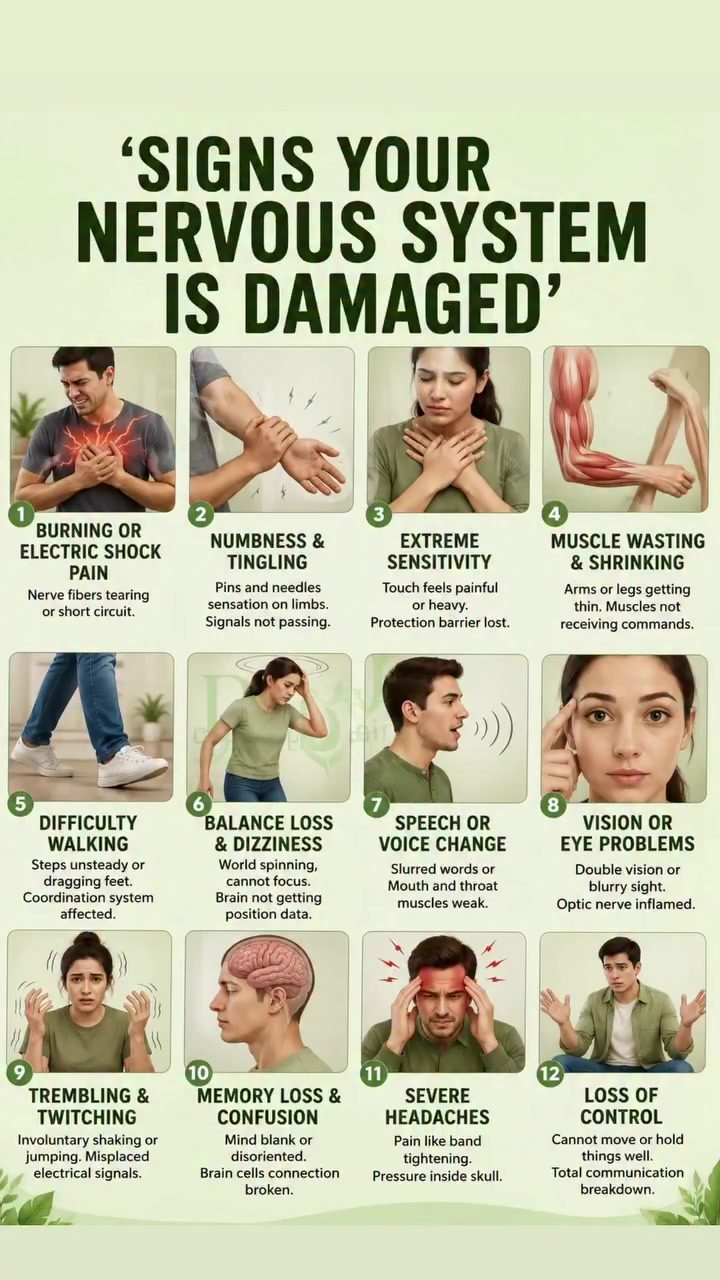
Signs of Nervous System Damage
The nervous system is a complex network that controls movement, sensation, balance, memory, and coordination. When this system is compromised, it can manifest in various symptoms. Recognizing these signs is crucial for early diagnosis and treatment, especially if symptoms are persistent or worsening. Here, we delve into the key indicators of nervous system damage and their implications.
Why This Matters
Early detection of nervous system issues can significantly improve the chances of effective management and treatment. Conditions such as peripheral neuropathy, multiple sclerosis, nerve compression, stroke, vitamin deficiencies, diabetes, and other neurological disorders can all affect the nervous system. Understanding the symptoms can help individuals seek appropriate medical evaluations and interventions.
Main Discussion
Burning or Electric Shock Pain
One of the most alarming signs of nervous system damage is a burning or electric shock-like pain. This type of pain is often described as sharp, sudden, and intense, and can occur without any apparent cause. It may be felt in the extremities, such as the hands, feet, or limbs, and can be a sign of conditions like peripheral neuropathy or nerve compression.
Numbness and Tingling Sensations
Numbness and tingling sensations in the hands, feet, or other parts of the body can also indicate nervous system issues. These sensations may come and go or be constant, and can affect one or both sides of the body. They can be caused by conditions such as nerve compression, vitamin deficiencies, or diabetes.
Extreme Sensitivity to Touch or Pain
Extreme sensitivity to touch or pain, known as allodynia, is another potential sign of nervous system damage. People experiencing this may feel intense pain from stimuli that are normally not painful, such as a light touch or mild pressure. This symptom can be associated with conditions like fibromyalgia or nerve injuries.
Muscle Weakness and Shrinking
Muscle weakness and shrinking, or atrophy, can occur when the nervous system is not functioning properly. This can lead to difficulty in performing everyday tasks, such as walking, lifting objects, or maintaining balance. Muscle wasting can be a sign of conditions like multiple sclerosis or amyotrophic lateral sclerosis (ALS).
Difficulty Walking, Balance Loss, and Dizziness
Problems with walking, balance, and dizziness can all be indicators of nervous system damage. These issues can make daily activities challenging and increase the risk of falls and injuries. Conditions such as stroke, multiple sclerosis, and Parkinson’s disease can all affect balance and coordination.
Speech or Voice Changes
Changes in speech or voice can also signal nervous system issues. Slurred speech, difficulty speaking, or changes in the quality of the voice can be signs of conditions like stroke, multiple sclerosis, or other neurological disorders. These changes can affect communication and social interactions.
Vision or Eye Problems
Vision or eye problems, including blurred vision, double vision, or loss of vision, can be signs of nervous system damage. These issues can be caused by conditions like multiple sclerosis, stroke, or glaucoma. Regular eye check-ups and prompt medical evaluations are essential for managing these symptoms.
Trembling and Twitching
Trembling and twitching, often described as involuntary movements, can indicate nervous system issues. These movements can range from mild to severe and can affect various parts of the body. They can be a sign of conditions like Parkinson’s disease, essential tremor, or multiple sclerosis.
Memory Loss and Confusion
Memory loss and confusion are concerning symptoms that can indicate nervous system problems. These issues can affect daily activities, work, and personal relationships. Conditions like Alzheimer’s disease, dementia, or traumatic brain injury can all cause memory loss and confusion.
Severe Headaches
Severe headaches, especially those that are sudden, persistent, or accompanied by other symptoms like nausea, vomiting, or sensitivity to light, can be a sign of nervous system damage. Conditions such as migraines, cluster headaches, or brain tumors can cause severe headaches.
Loss of Control
Loss of control over body movements, bladder, or bowel functions can be a critical sign of nervous system damage. This loss of control can significantly affect an individual’s quality of life and may require urgent medical attention. Conditions such as spinal cord injuries, stroke, or multiple sclerosis can cause loss of control.
Practical Tips
If you or someone you know experiences any of these symptoms, it is important to:
- Seek Medical Evaluation: Consult a healthcare provider for a thorough evaluation.
- Monitor Symptoms: Keep a record of symptoms, their frequency, and severity.
- Follow Treatment Plans: Adhere to medical advice and treatment plans.
- Maintain a Healthy Lifestyle: Regular exercise, a balanced diet, and adequate rest can support overall health and well-being.
Important Takeaways
Understanding the signs of nervous system damage can help individuals and caregivers recognize potential issues early. Early intervention can improve outcomes and quality of life. If symptoms are persistent or worsening, it is essential to seek medical attention promptly.
Conclusion
Recognizing the signs of nervous system damage is the first step toward effective management and treatment. Whether it is burning pain, muscle weakness, or changes in speech, awareness of these symptoms can lead to timely medical interventions. By being vigilant and proactive, individuals can take control of their health and well-being.
Watch the Reel
Questions readers ask
What are some common nervous system symptoms that indicate potential damage?
Common symptoms include unusual pain, numbness, tingling, and heightened sensitivity. Other signs are muscle weakness, loss of coordination, and changes in vision or speech. If you experience any of these persistently, it's important to consult a healthcare professional.
How does numbness and tingling relate to nervous system damage?
Numbness and tingling, often described as 'pins and needles,' can indicate nerve damage or compression. These sensations occur when nerves are not functioning properly, disrupting the signals sent to and from the brain. If these symptoms are recurring or worsening, it may be a sign of a more serious condition.
What should I do if I experience burning pain or electric shock sensations?
Burning pain or electric shock sensations can be indicative of nerve damage, particularly in conditions like peripheral neuropathy. These sensations often occur due to damaged or compressed nerves. If you experience these symptoms, it is crucial to seek medical attention for proper evaluation and treatment.
Can balance problems be a sign of nervous system damage?
Yes, balance problems can be a significant indicator of nervous system issues. The nervous system plays a vital role in maintaining balance and coordination. If you find yourself frequently losing balance, feeling dizzy, or having difficulty walking, it is important to discuss these symptoms with a healthcare provider.
How does memory loss relate to nervous system damage?
Memory loss can be a symptom of nervous system damage, particularly in conditions affecting the brain. The nervous system is responsible for cognitive functions, including memory. If you or a loved one experience persistent or worsening memory loss, it is essential to consult a medical professional for a thorough evaluation.
What are some muscle wasting signs that might indicate nervous system issues?
Muscle wasting, or atrophy, can be a sign of nervous system damage. This occurs when nerves that control muscles are damaged, leading to muscle weakness and loss of mass. If you notice significant muscle loss in specific areas, it is important to seek medical advice, especially if accompanied by other neurological symptoms.
Are sensory problems a reliable indicator of nervous system damage?
Yes, sensory problems such as heightened sensitivity to touch, temperature, or pain can indicate nervous system damage. These issues arise when the nerves responsible for transmitting sensory information to the brain are compromised. If you experience unusual sensory issues, it is wise to have them evaluated by a healthcare professional.
Recent articles
Fresh deep dives from the latest Reels we unpacked.




Comments
Be the first to comment.