Inside the Nephron: The Kidney's Tiny Filtration Powerhouses
The kidneys are essential organs that play a crucial role in maintaining the body's overall health. Hidden within each kidney are about one million tiny filtering units called nephrons. These microscopic structures, though small, perform one of the most vital jobs in the body—keeping the blood clean and ensuring that the body's fluids remain in perfect balance. Let's delve into the anatomy and function of the nephron to understand how it contributes to overall health.
The Anatomy of a Nephron
Understanding the Different Parts
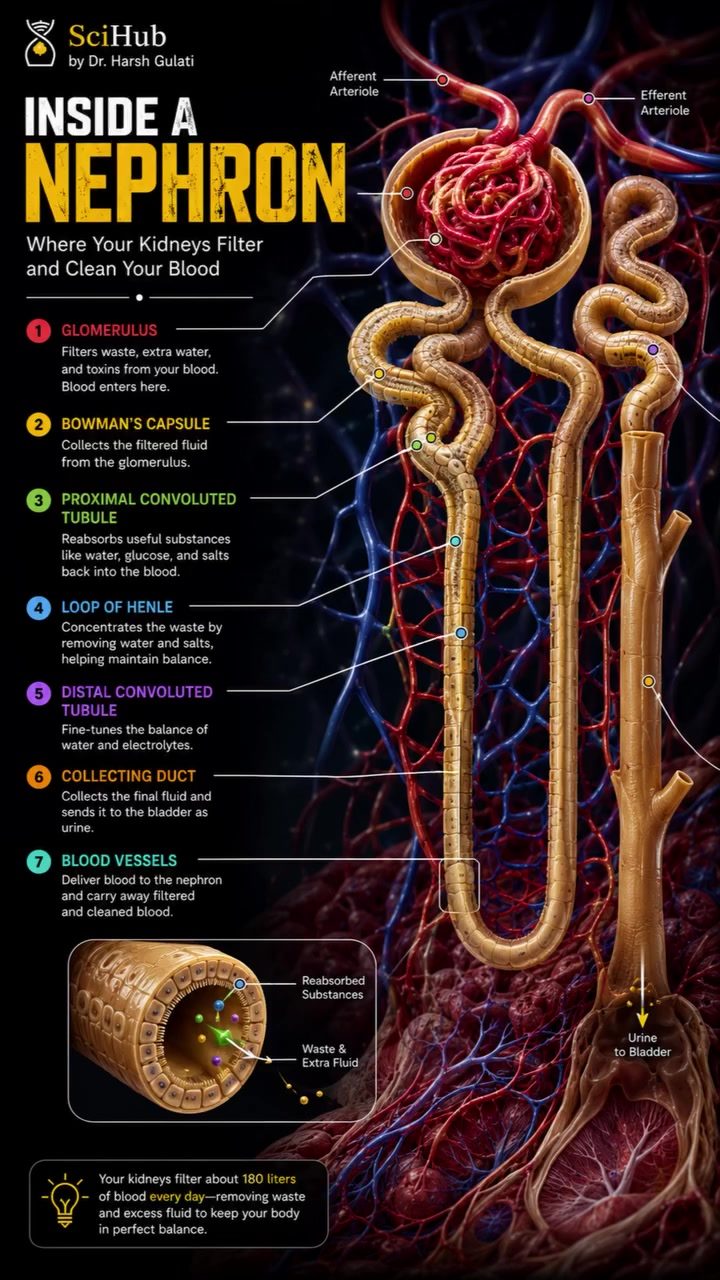
Each nephron is composed of several key structures, each with a specific function in the filtration and cleaning process. The primary components include the glomerulus, Bowman's capsule, proximal convoluted tubule, loop of Henle, distal convoluted tubule, and collecting duct.
The Role of the Glomerulus
The journey of blood filtration begins at the glomerulus. This tiny, densely packed network of capillaries acts as a filter, separating waste products, extra water, and toxins from the blood. The pressure within the glomerulus forces these substances out, leaving essential components like blood cells and large proteins behind.
Bowman's Capsule
The filtered fluid from the glomerulus then passes into Bowman's capsule. This cup-shaped structure collects the fluid and directs it into the next part of the nephron—the proximal convoluted tubule.
The Proximal Convoluted Tubule
As the filtered fluid moves through the proximal convoluted tubule, the body begins to reabsorb useful substances. This includes water, glucose, salts, and other essential nutrients, which are reabsorbed back into the bloodstream. This process ensures that the body retains the necessary components while allowing waste to continue down the nephron.
Loop of Henle
Next, the fluid enters the loop of Henle. This structure helps to concentrate the waste by removing additional water and salts. This concentration process is essential for maintaining the body's overall balance of fluids and electrolytes.
Distal Convoluted Tubule
The fluid then travels through the distal convoluted tubule, where the body fine-tunes the balance of water and electrolytes. This step ensures that the body maintains the correct levels of sodium, potassium, and other essential minerals.
Collecting Duct
Finally, the fluid reaches the collecting duct, which collects the final waste and excess fluid. This mixture is sent to the bladder as urine, ready to be excreted from the body.
Blood Vessels
Throughout this process, blood vessels deliver blood to the nephron and carry away the filtered and cleaned blood. This continuous flow ensures that the filtration process is efficient and effective.
The Filtration Process: A Closer Look
Daily Filtration Volume
The kidneys are incredibly efficient. They filter around 180 litres of blood every day. Of this volume, nearly 99% is reabsorbed, leaving only about 1–2 litres of urine to be excreted daily. This remarkable process ensures that the body retains the necessary fluids and nutrients while expelling waste and toxins.
Pressure and Balance
The filtration process relies on pressure within the nephron. This pressure forces waste products, extra water, and small molecules through the glomerulus and into Bowman's capsule. The reabsorption of useful substances and the concentration of waste help maintain the body's fluid and electrolyte balance.
Important Takeaways
Efficiency and Balance
The nephron exemplifies the body's remarkable ability to maintain homeostasis. Through a series of specialized structures and processes, the nephron ensures that the blood remains clean and the body's fluids are perfectly balanced. This delicate balance is crucial for overall health and well-being.
Health Implications
Understanding the anatomy and function of the nephron can provide valuable insights into potential health issues. Conditions that affect the nephron's ability to filter blood, such as kidney disease, can have serious implications. Recognizing the importance of the nephron can help in the early detection and management of such conditions.
Conclusion
The nephron, though microscopic, plays a monumental role in maintaining the body's health. Its intricate structure and efficient filtration process ensure that the blood remains clean and the body's fluids are perfectly balanced. By understanding the nephron's anatomy and function, readers can gain a deeper appreciation for the body's complex systems and the importance of maintaining overall health.
Watch the Reel
Questions readers ask
What is the primary function of the glomerulus within a nephron?
The glomerulus is a network of tiny blood vessels that act as a filtering system. It allows water, waste products, and certain nutrients to pass from the blood into the Bowman's capsule, while retaining larger molecules like proteins and blood cells within the bloodstream.
What role does the Bowman's capsule play in the nephron's process?
The Bowman's capsule is a cup-like structure that surrounds the glomerulus. Its primary function is to collect the filtrate produced by the glomerulus. This filtrate then moves into the nephron tubules for further processing and waste removal.
How do the tubules in a nephron contribute to urine formation?
The tubules, which include the proximal convoluted tubule, loop of Henle, and distal convoluted tubule, play a crucial role in reabsorbing essential nutrients and water back into the bloodstream. They also secrete additional waste products into the filtrate, ultimately helping to form urine.
What happens to the filtrate as it moves through the nephron tubules?
As the filtrate passes through the tubules, essential substances like glucose, amino acids, and water are reabsorbed back into the bloodstream. Simultaneously, waste products and excess ions are actively secreted into the filtrate, refining it into urine, which is eventually excreted from the body.
How does the nephron contribute to maintaining fluid balance in the body?
The nephron regulates fluid balance by controlling the amount of water reabsorbed and excreted. Specialized hormones like antidiuretic hormone (ADH) and aldosterone influence the nephron's function, ensuring that the body maintains an optimal fluid balance, which is crucial for overall health.
What is the significance of the proximal and distal convoluted tubules in the nephron?
The proximal convoluted tubule plays a pivotal role in reabsorbing the majority of the filtrate, including water, glucose, and other essential nutrients. The distal convoluted tubule, on the other hand, is responsible for fine-tuning the composition of the filtrate by reabsorbing and secreting specific ions, like sodium and potassium, under hormonal control.
What is the role of the loop of Henle in the nephron's filtration process?
The loop of Henle is a U-shaped structure that extends from the proximal convoluted tubule. It plays a key role in concentrating urine and reabsorbing water and electrolytes. This process helps maintain the body's fluid and electrolyte balance, ensuring the filtration process is efficient.
Related deep dives
Similar reads based on topic and creator.


Recent articles
Fresh deep dives from the latest Reels we unpacked.




Comments
Be the first to comment.