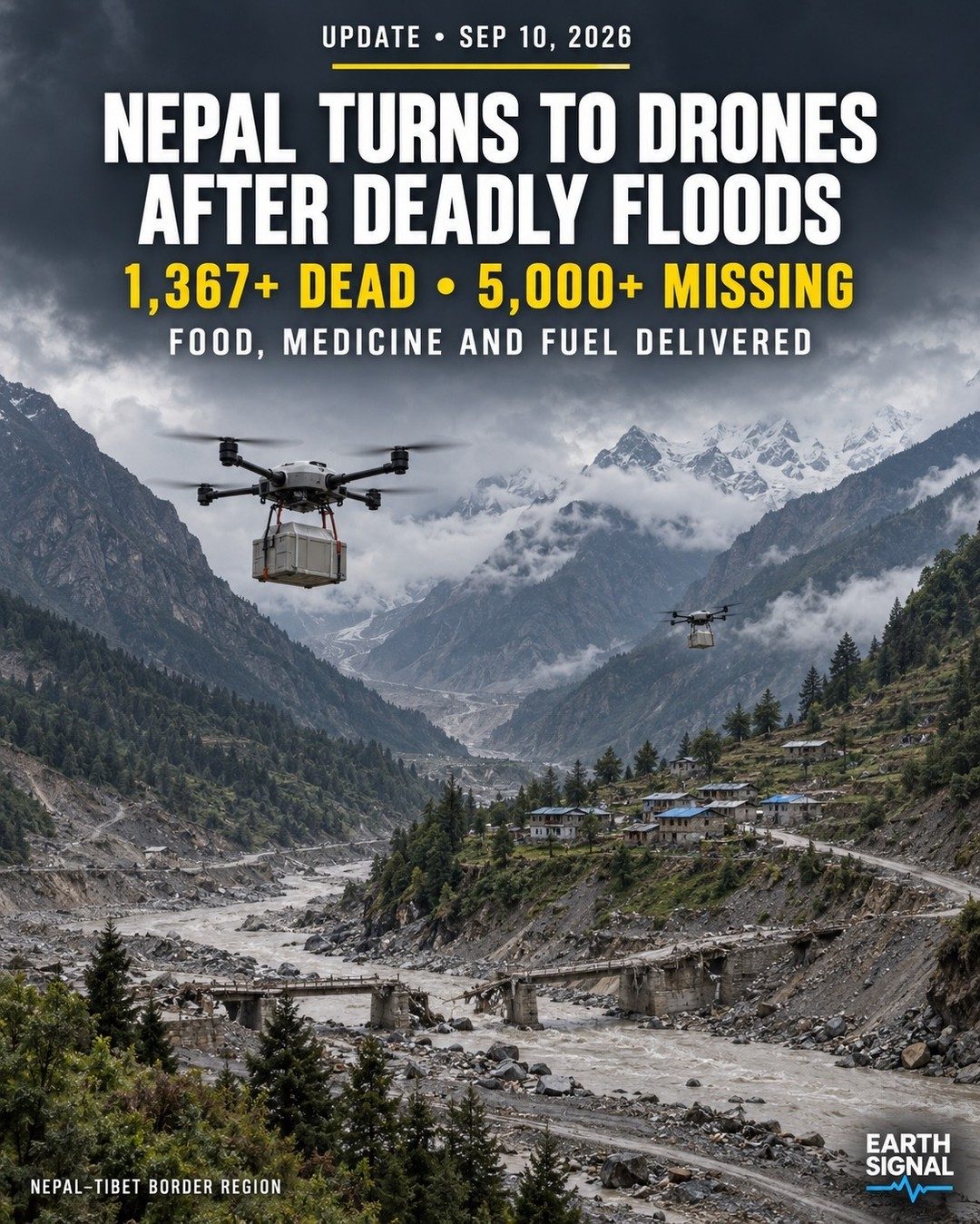
World's most fragile border, its ability to deliver
In Nepal's mountainous regions, particularly along the challenging Nepal-Tibet border, the geopolitical complexities are just one part of the equation faced by organizations working on relief efforts. This year, floods are the first and worst test of a United Nations initiative to bring aid to these fragile and remote communities. Over 1,367 people are estimated to have died, with more than 5,000 going missing. These are only numbers that can be confirmed. However, the reality is much worse, with entire communities destroyed by the disaster. The affected region is in ruins, making it difficult for ground vehicles and human rescuers to traverse the wreckage. Logistical challenges are another major challenge for humanitarian organizations. The earthquake and the resulting floods have caused significant damage to infrastructure and roads, making it difficult for aid workers to reach affected areas. This is especially true in the Nepal-Tibet border region, where transportation is difficult to begin with due to the mountainous terrain. In cases like this, ground vehicles are not the best stratagem but a last resort. Due to the difficulty of access and the need for speed, relief organizations have turned to drones for aid delivery.
The drone advantage
Drone technology is relatively new in humanitarian aid, but it is proving to be a valuable tool in Nepal's relief efforts. The key to aid delivery is speed and reachability. For aid workers and organizations in Nepal, drones have made aid delivery possible in the country's mountainous terrain. Thousands of people have been helped by the dropped-off packages. This can help get the aid to those who need it the most, without having to rely on damaged infrastructure or putting people at greater risk. The unmanned aircraft can navigate the treacherous terrain and reach areas that would be inaccessible to ground vehicles with ease. Drones can also carry essential supplies, such as food, medicine, and fuel, which are crucial for the survival of the affected population. It is essential to ensure that relief supplies are delivered to the most vulnerable and remote communities along the Nepal-Tibet border. The aid deliveries have reached the most vulnerable communities, including those in remote villages and high-altitude areas. This can help to provide immediate relief to those in need and support long-term recovery efforts.
Earth Signal — an unlikely hero
Earth Signal is an organization harnessing technology for relief efforts. Some people may think of Earth Signal as an organization that provides satellite imagery to governments and companies, but it is also an unlikely hero in the Nepal flood relief. The organization has been using satellite imagery to monitor the situation on the ground and identify areas in need of aid. When people think of Earth Signal, they may not immediately think of a relief organization. However, the company is proving to be a vital player in the effort to provide aid to those affected by the floods in Nepal. Earth Signal's expertise in satellite imagery and remote sensing has been invaluable in identifying affected areas and coordinating relief efforts. The unmanned aircraft can navigate the treacherous terrain and reach areas that would be inaccessible to ground vehicles.
Watch the Reel
Related deep dives
Similar reads based on topic and creator.
Recent articles
Fresh deep dives from the latest Reels we unpacked.



Comments
Be the first to comment.