Nature's Designs in Aerospace Engineering
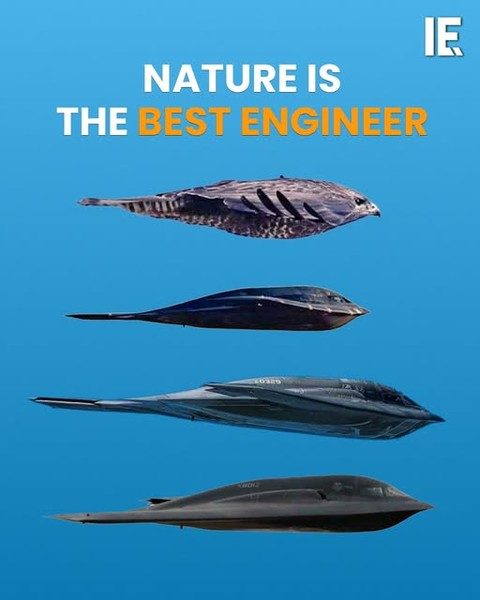
Nature has long been a source of inspiration for engineers, particularly in the realm of aerospace. The shapes and functions of many animals have influenced the design of aircraft, leading to some of the most advanced innovations in the field. One of the most striking examples is the B-2 Spirit stealth bomber, a marvel of modern engineering that owes its aerodynamic design more to biology than to conventional engineering principles.
Why This Matters
Biomimicry, the practice of imitating natural designs and processes, is a growing field that aims to solve complex engineering problems by studying and replicating nature's time-tested solutions. In aerospace, this approach has led to significant advancements in efficiency, stealth, and performance. By understanding how nature has optimized its designs over millions of years, engineers can create more effective and sustainable solutions for modern challenges.
Main Discussion
The B-2 Spirit Bomber: A Masterclass in Stealth
The B-2 Spirit, also known as the Stealth Bomber, is a testament to the power of biomimicry. Its distinctive shape, characterized by a smooth, sweeping profile, is not merely a product of human ingenuity but is deeply inspired by the natural world. Specifically, the design of the B-2 Spirit is modeled after the shape of a fish. This is not a coincidence; fish have evolved over millions of years to move through water with minimal resistance, and their streamlined bodies are a marvel of aerodynamic efficiency. By mimicking this design, the B-2 Spirit is able to reduce its radar cross-section, making it nearly invisible to radar detection.
The B-2 Spirit’s design has several key features that make it an effective stealth aircraft:
- Low Observable Technology: The aircraft's shape and materials are designed to absorb and deflect radar signals, making it incredibly difficult to detect.
- Aerodynamic Efficiency: The streamlined design of the B-2 Spirit allows it to glide smoothly through the air, reducing drag and increasing fuel efficiency.
- Versatility: The B-2 Spirit can carry a wide range of payloads, making it a versatile tool for both conventional and unconventional warfare.
The Role of Nature as an Engineer
Nature's designs are not just aesthetically pleasing; they are highly efficient and effective. The B-2 Spirit bomber's design is a prime example of how nature's principles can be applied to engineering. By studying the shapes and functions of animals, engineers can create more efficient and effective solutions. This approach is particularly valuable in aerospace, where efficiency and performance are crucial.
Nature has solved many problems that engineers face today. For example, the B-2 Spirit's design is inspired by the shape of a fish, which has evolved to move through water with minimal resistance. This same principle can be applied to aircraft design, allowing for smoother and more efficient flight.
Practical Tips
For those interested in biomimicry, here are some practical tips to get started:
- Study Nature: Look for natural solutions to engineering problems by studying the shapes and functions of animals and plants. For example, the design of a bird's wing can inspire more efficient aircraft wings.
- Collaborate with Biologists: Work with biologists and other scientists to gain a deeper understanding of how nature solves problems. This can lead to innovative solutions that might not be immediately apparent to engineers.
- Apply Biomechanics: Use the principles of biomechanics to design more efficient and effective solutions. For example, the study of bird flight can lead to more efficient aircraft designs.
- Test and Iterate: Use prototyping and testing to refine your designs based on natural principles. This iterative process can lead to significant improvements in performance and efficiency.
- Adopt a Holistic Approach: Consider the entire lifecycle of a product, from design to disposal. Nature's designs are often sustainable and efficient, and adopting a similar approach can lead to more environmentally friendly solutions.
Important Takeaways
Biomimicry is a powerful tool for engineers, offering innovative solutions to complex problems. By studying nature's designs, engineers can create more efficient, effective, and sustainable solutions. The B-2 Spirit bomber is a prime example of how biomimicry can be applied to aerospace engineering, leading to significant advancements in stealth and performance.
Conclusion
Innovation in aerospace engineering is deeply rooted in the natural world. Biomimicry, the practice of imitating natural designs and processes, has led to some of the most advanced innovations in the field. The B-2 Spirit bomber, with its design inspired by the shape of a fish, is a testament to the power of nature's principles in engineering. By studying and replicating nature's time-tested solutions, engineers can create more efficient, effective, and sustainable solutions for modern challenges. This approach not only leads to technical advancements but also fosters a deeper understanding of the natural world, bridging the gap between engineering and the environment.
Watch the Reel
Questions readers ask
How did the design of the B-2 Spirit bomber incorporate elements from nature?
The B-2 Spirit bomber's design is inspired by the streamlined shape of fish. This biomimicry allows the aircraft to reduce radar detection and improve maneuverability, making it a stealthy and efficient aircraft.
What is biomimicry and how is it used in aerospace engineering?
Biomimicry is the practice of drawing inspiration from nature to solve complex engineering problems. In aerospace, this involves studying natural forms and functions to enhance aircraft performance, efficiency, and stealth. For instance, the B-2 Spirit bomber's design mimics the fish shape to improve aerodynamic efficiency and reduce radar detection.
How does the B-2 Spirit bomber's fish-like shape contribute to its stealth capabilities?
The B-2 Spirit bomber's unique shape, inspired by a fish shape, contributes to its stealth capabilities by reducing its radar cross-section. The smooth, curved design helps scatter radar waves, making the aircraft less detectable by radar systems.
What are some other examples of nature-inspired innovations in aerospace engineering?
Besides the B-2 Spirit bomber, other nature-inspired innovations in aerospace include wing designs inspired by birds for better lift and efficiency, and materials that mimic the structure of spider webs for increased strength and flexibility.
How does the B-2 Spirit bomber's design make it more aerodynamic?
The B-2 Spirit bomber's design mimics the streamlined shape of a fish, which reduces drag and turbulence. This design allows the aircraft to move more efficiently through the air, improving its overall aerodynamic performance.
What are the key features of the B-2 Spirit bomber that make it a stealth aircraft?
The B-2 Spirit bomber's key stealth features include its unique shape, which reduces radar detection, radar-absorbing materials, and the ability to fly at high altitudes and low speeds. These features make it difficult to detect and track, enhancing its stealth capabilities.
How does biomimicry benefit the aerospace industry beyond the design of the B-2 Spirit bomber?
Biomimicry benefits the aerospace industry by offering innovative solutions to complex problems. Studying natural forms and functions can lead to breakthroughs in efficiency, durability, and sustainability, which are crucial for the advancement of aerospace technology.
Related deep dives
Similar reads based on topic and creator.

Recent articles
Fresh deep dives from the latest Reels we unpacked.




Comments
Be the first to comment.