Defense Spending Increase Among NATO Countries in 2025
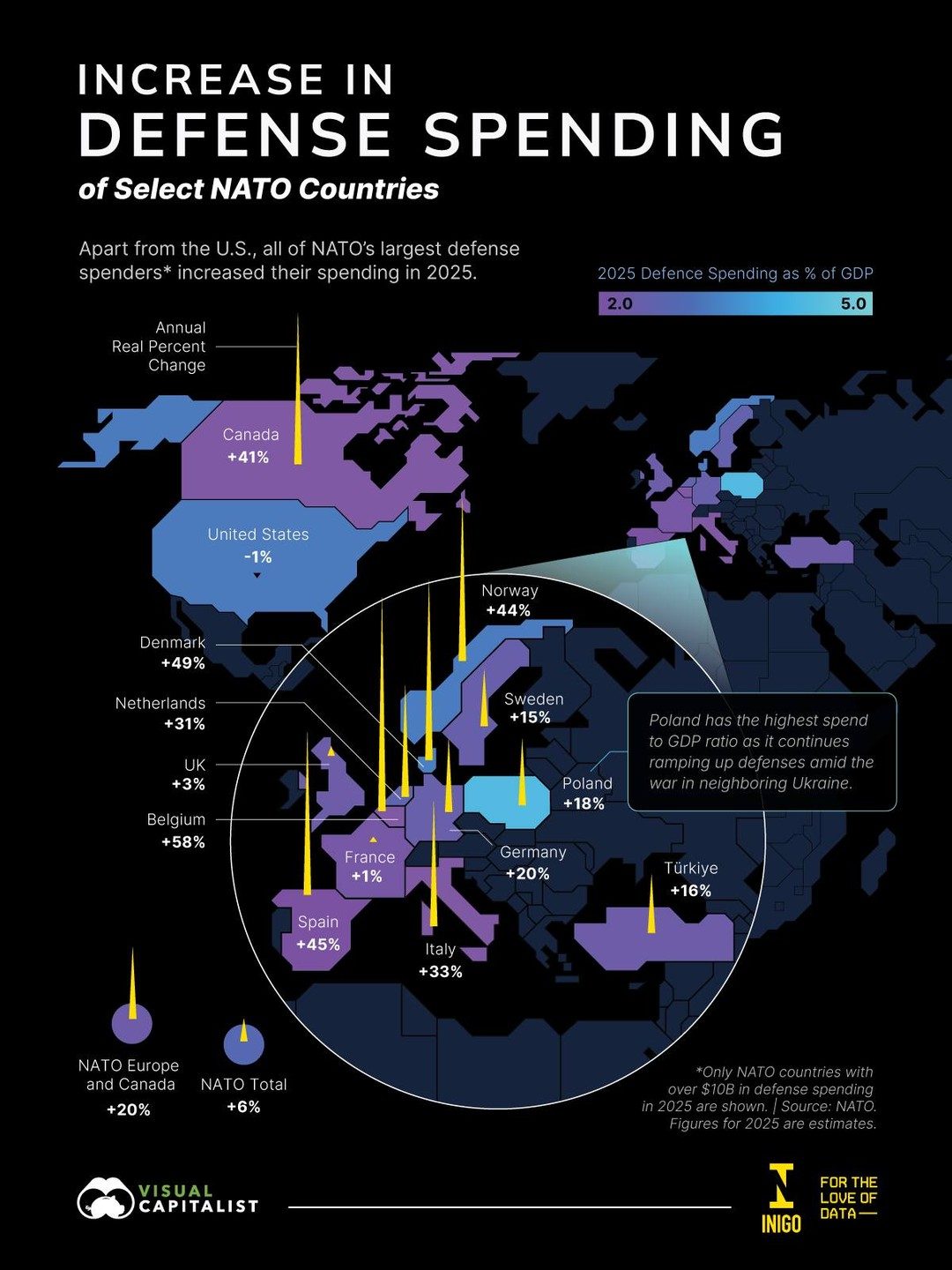
In 2025, NATO's European members and Canada significantly increased their defense spending, marking the group's most substantial military buildup in over a decade. This surge in expenditure is driven by various geopolitical factors, with each country adjusting its defense budget to reflect current security needs and strategic priorities. The infographic highlights changes in defense spending as a percentage of GDP for select NATO countries, providing a clear picture of how each nation is investing in its military capabilities.
Context / Why This Matters
The increase in defense spending among NATO countries is a response to evolving global security challenges. As geopolitical tensions rise, particularly in Europe with the ongoing conflict in neighboring Ukraine, nations are prioritizing their military readiness. This financial commitment not only bolsters national defense capabilities but also strengthens the collective security of the NATO alliance. Understanding the specifics of how each country is adjusting its defense expenditure helps in evaluating the broader implications for global security and military strategy.
Main Discussion
Overall Trends in NATO Defense Spending
NATO's European members and Canada collectively increased their defense spending by 20% in 2025, indicating a concerted effort to enhance military capabilities. This significant rise in expenditure is the largest in over a decade, reflecting the heightened sense of urgency and strategic importance placed on defense in the current geopolitical climate. The increase is driven by both large and small NATO countries, with notable changes seen in nations like Canada, Denmark, and Belgium.
Country-Specific Changes in Defense Spending
Canada
Canada saw a remarkable 41% increase in defense spending, making it one of the most significant contributors to the overall NATO buildup. This substantial investment is likely aimed at modernizing the Canadian Armed Forces and enhancing their readiness for potential threats. Canada's strategic location and role in North American defense make this increase particularly noteworthy.
United States
In contrast, the United States, traditionally the largest defense spender within NATO, saw a slight decrease of 1% in its defense spending. This minor reduction may be influenced by budgetary constraints or a strategic shift in defense priorities. However, it is important to note that the U.S. still maintains the highest overall defense expenditure, indicating its continued commitment to defense spending.
European Nations
Several European nations made significant strides in increasing their defense budgets. Countries like Denmark (+49%), Belgium (+58%), and Spain (+45%) increased their defense spending by notable percentages. These increases reflect a proactive approach to enhancing military capabilities in the face of regional security challenges. Poland, in particular, stands out with the highest spend-to-GDP ratio, driven by its need to bolster defenses amid the ongoing conflict in neighboring Ukraine. Poland's strategic position and direct involvement in regional conflicts make this increase crucial for its national security and the broader NATO alliance.
NATO's Strategic Implications
The collective increase in defense spending by NATO members signals a unified effort to address contemporary security threats. This coordinated approach ensures that the alliance remains robust and capable of responding to a range of potential challenges. The increase in spending is not just about military hardware; it also encompasses investments in technology, cybersecurity, and strategic planning.
Practical Tips
For those interested in understanding the implications of increased defense spending, here are some practical tips for analyzing the data:
-
Understand the Context: Defense spending trends should be viewed in the context of current geopolitical events and long-term strategic goals. For example, Poland's increased spending is directly linked to its defense needs in light of the conflict in Ukraine.
-
Compare GDP Ratios: The percentage of GDP allocated to defense spending provides a more accurate comparison across countries. This metric accounts for economic disparities and offers a clearer picture of each nation's defense priorities.
-
Look at Historical Trends: Analyzing historical data can provide insights into how defense spending has evolved over time. This helps in understanding whether the current increase is part of a broader trend or a response to immediate threats.
-
Assess Military Capabilities: Increased spending often translates into enhanced military capabilities, but the specific investments (e.g., technological advancements, military personnel training, infrastructure) are crucial to consider.
Important Takeaways
The 2025 increase in defense spending among NATO countries marks a pivotal moment in global security. Key takeaways include:
- NATO's European members and Canada collectively increased defense spending by 20%, reflecting a significant military buildup.
- Canada, Denmark, and Belgium saw some of the most substantial increases, indicating a proactive approach to defense.
- Poland's high spend-to-GDP ratio underscores its strategic importance in the current geopolitical landscape.
- Despite a slight decrease, the United States remains the largest contributor to NATO's defense expenditure.
- The increase in spending is driven by both immediate threats and long-term strategic goals, strengthening the alliance's overall capabilities.
Conclusion
The surge in defense spending among NATO countries in 2025 is a critical development in global security. It reflects a unified effort to address contemporary threats and enhance military readiness. Understanding the specific changes in defense spending across different NATO nations provides valuable insights into their strategic priorities and the broader implications for international security. As geopolitical dynamics continue to evolve, monitoring these trends will remain essential for assessing global defense strategies and capabilities.
Watch the Reel
Questions readers ask
Why did NATO countries increase their defense spending by 20% in 2025?
The 20% increase in defense spending by NATO countries and Canada in 2025 was primarily driven by escalating geopolitical tensions. This significant boost in military expenditure is a response to heightened security challenges and a collective effort to reinforce the alliance's overall military prowess. Each nation within the NATO alliance adjusted its defense budget to better address current strategic and security needs.
Which NATO countries saw the most significant increase in defense spending in 2025?
While exact percentages for each country aren't listed, the increases varied across NATO countries, reflecting each nation's unique security priorities. Poland, for example, has been highlighted for its notable increase in defense spending, but other members also showed significant growth in their military budgets. The infographic provided in the article offers a detailed comparison of defense spending as a percentage of GDP for select NATO countries.
How does the 2025 NATO defense spending increase compare to previous years?
The 2025 increase in defense spending by NATO countries marks the most substantial surge in over a decade, indicating a renewed focus on military preparedness. This significant boost in expenditure reflects a collective commitment to enhancing the alliance's capabilities in response to escalating global security challenges. The last time a similar increase was seen, it would have been before 2015.
How does NATO defense spending in 2025 compare to other countries, such as the United States?
The article focuses on the significant increase in defense spending among NATO's European members and Canada, but it does not provide a direct comparison with non-NATO countries like the United States. However, the 20% surge in spending highlights a concerted effort within the NATO alliance to bolster its military capabilities, which can be seen as a response to global security dynamics.
What are the strategic priorities driving the NATO defense spending surge in 2025?
The strategic priorities driving the NATO defense spending surge in 2025 include addressing regional security threats, enhancing military readiness, and investing in advanced defense technologies. Each country within the alliance is tailoring its defense budget to better respond to specific security challenges, ensuring that the collective military capabilities of NATO remain robust and effective.
What impact does the increased defense spending have on NATO's overall military capabilities?
The increased defense spending is expected to significantly bolster NATO's overall military capabilities. With a 20% surge in expenditure, the alliance is better positioned to invest in advanced weaponry, training, and infrastructure. This enhanced preparedness helps to deter potential threats and ensures that NATO can effectively respond to any security challenges that arise.
How does the 2025 NATO budget increase reflect on the alliance's commitment to collective security?
The 2025 NATO budget increase underscores the alliance's unwavering commitment to collective security. By significantly boosting defense spending, NATO countries are demonstrating a unified resolve to address the evolving security landscape. This collective effort not only strengthens individual nations' defense capabilities but also reinforces the alliance's ability to safeguard its members and maintain peace and stability in the region.
Recent articles
Fresh deep dives from the latest Reels we unpacked.




Comments
Be the first to comment.