NATO Defense Spending
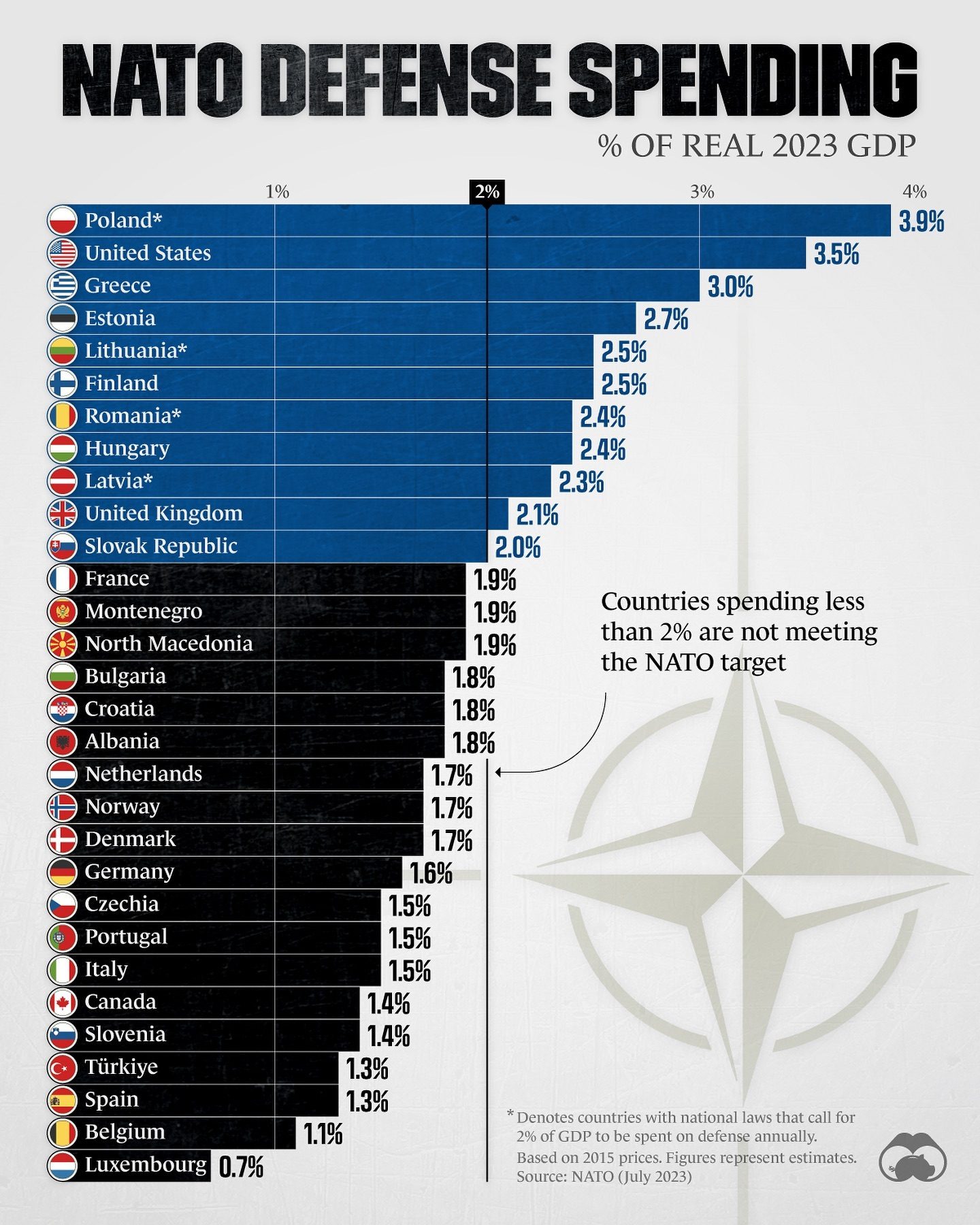
The 2006 commitment by NATO defense ministers for each member country to allocate at least 2% of its GDP to defense spending remains a pivotal policy. The latest data reveals that as of 2023, only 11 NATO member countries have met or surpassed this target.
Context / Why This Matters
Defense spending is a critical component of national security and collective defense within NATO. The 2% target was established to ensure that member countries share the financial burden of defense responsibilities equally. This commitment is essential for maintaining the alliance's military readiness and effectiveness, especially in the face of evolving global security challenges.
Main Discussion
NATO's Defense Spending Goal
The 2% target is not just a number; it represents a commitment to collective security. When NATO countries allocate at least 2% of their GDP to defense, they are investing in their own security and that of their allies. This commitment allows NATO to maintain a robust and agile defense posture, capable of responding to a wide range of threats.
The United States: Leading the Way in Total Spending
The United States has consistently been the largest contributor to NATO's defense spending. In 2023, the U.S. accounted for 68% of the total defense expenditures by NATO countries, amounting to an impressive $860 billion. However, when measured as a percentage of GDP, the U.S. lags behind Poland, which spent 3.9% of its GDP on defense, totaling $29.1 billion. This stark contrast highlights how different countries prioritize defense spending relative to their economic output.
Top Performers: Poland and the Baltic States
Several countries have exceeded the 2% target, showcasing their dedication to defense. Poland leads the pack with 3.9% of its GDP allocated to defense, followed by Greece (3.5%), Estonia (3.0%), and Lithuania (2.7%). These countries have implemented national laws that mandate defense spending at or above 2% of GDP, ensuring long-term commitment.
Other Notable Contributors
Other countries that have met or exceeded the 2% target include Finland, Romania, Latvia, the United Kingdom, and the Slovak Republic. These nations have demonstrated a strong commitment to defense spending, contributing significantly to NATO's overall military capability.
Practical Tips
For NATO member countries aiming to meet the 2% target, several strategies can be employed:
Strengthen National Defense Budgets
Increase defense spending incrementally over time to ensure sustainability. This approach allows countries to balance defense needs with other economic priorities.
Strategic Investments
Focus on high-impact investments, such as advanced military technology, cybersecurity, and training programs. These investments enhance military capabilities and readiness without requiring massive increases in total defense spending.
Collaborative Efforts
Encourage joint projects and collaborative initiatives within NATO. Sharing resources and expertise can maximize defense capabilities while spreading the financial burden more evenly across member countries.
Important Takeaways
The Significance of 2% of GDP
Meeting the 2% target is essential for maintaining NATO's collective defense capabilities. It ensures that the alliance remains a formidable force in global security.
Diversity in Defense Spending
The data highlights the diversity in defense spending among NATO countries, reflecting their unique economic circumstances and strategic priorities. Some countries, like Poland, prioritize defense highly, while others focus on economic growth.
The Role of the United States
The U.S. plays a crucial role in NATO's defense spending, contributing more than any other member. This significant investment underscores the importance of the alliance to U.S. national security.
The Path Forward
Achieving the 2% target is a long-term endeavor. It requires sustained political will, strategic planning, and effective resource allocation. The data from 2023 shows progress, but continued efforts are needed to ensure that all member countries meet their commitments.
Conclusion
The 2006 agreement to allocate 2% of GDP to defense spending remains a cornerstone of NATO's collective defense strategy. While significant progress has been made, with 11 countries meeting or exceeding the target, there is still work to be done. The U.S.'s substantial contribution, combined with the efforts of top-performing countries like Poland and the Baltic states, illustrates the commitment to collective security. As NATO continues to evolve, sustaining and increasing defense spending will be crucial for maintaining the alliance's military readiness and effectiveness in an ever-changing global landscape.
Watch the Reel
Questions readers ask
Which NATO member countries met the 2% GDP defense spending target in 2023?
As of 2023, 11 NATO member countries met or exceeded the 2% GDP defense spending target. These countries are committed to bolstering NATO's collective security and military readiness. For the specific list of countries, refer to the latest NATO defense spending data.
Why is the 2% GDP target important for NATO?
The 2% GDP target is crucial for ensuring that NATO member countries contribute equally to the alliance's defense budget. This commitment helps maintain NATO’s military readiness and effectiveness in responding to global security challenges. It also signifies a shared responsibility among member states for collective defense.
How has NATO's defense spending changed from 2006 to 2023?
In 2006, NATO defense ministers pledged to allocate at least 2% of GDP to defense spending. However, the 2023 data shows that only 11 out of 31 member countries have met or exceeded this target, indicating a mixed track record in achieving this goal over the years. The overall defense spending has fluctuated, with some countries increasing their contributions while others have fallen short.
What role does Poland play in NATO defense spending for 2023?
Poland is one of the NATO member countries that has met the 2% GDP defense spending target for 2023. By exceeding this target, Poland significantly contributes to NATO's collective security and military readiness, demonstrating a strong commitment to the alliance's defense goals.
What are the implications of not meeting the 2% GDP defense spending target for NATO member countries?
Not meeting the 2% GDP defense spending target can result in a reduced contribution to NATO's collective defense capabilities. This may lead to a less effective and prepared military alliance, potentially compromising NATO’s ability to respond to evolving global threats. Member countries that do not meet the target may also face internal and external pressures to increase their defense budgets.
How does NATO's 2023 defense spending affect its military readiness?
NATO's 2023 defense spending directly impacts its military readiness by determining the resources available for training, equipment, and operations. A higher defense budget enables NATO to maintain and upgrade its capabilities, ensuring that the alliance is prepared to address current and future security challenges. Conversely, lower spending may limit NATO's operational effectiveness and readiness.
What data is included in the NATO defense spending 2023 update?
The 2023 update on NATO defense spending includes data on the defense budgets of all 31 member countries, highlighting which nations have met or exceeded the 2% GDP target. It also provides insights into the overall defense expenditure trends within the alliance, helping to assess NATO's financial commitment to collective security and military readiness.
Recent articles
Fresh deep dives from the latest Reels we unpacked.




Comments
Be the first to comment.