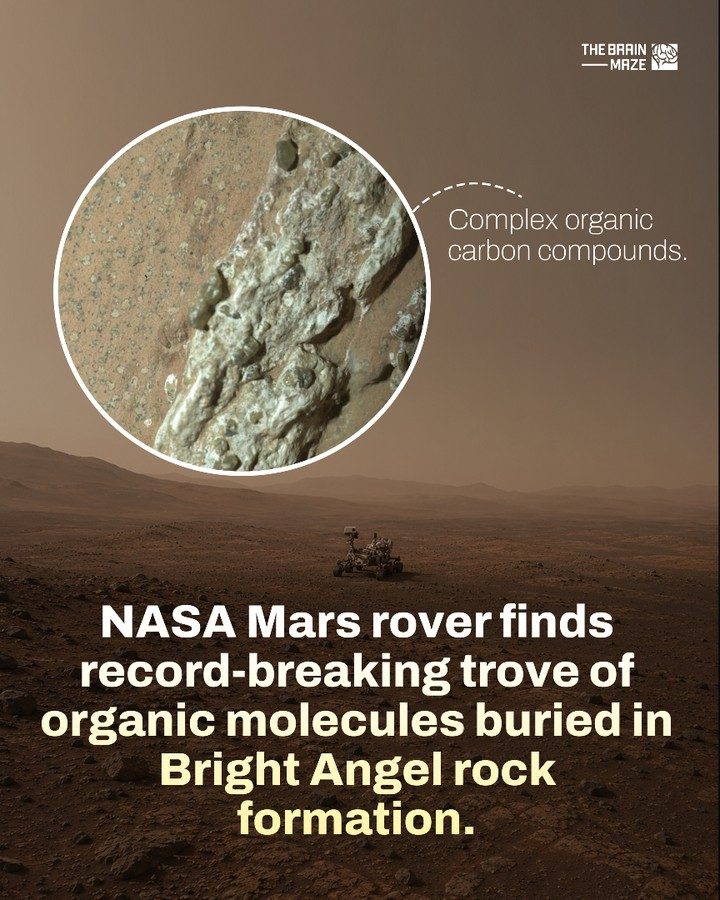
Mars Organic Molecules: A Breakthrough in Jezero Crater
In the quest to understand Mars's past, NASA's Perseverance rover has made a groundbreaking discovery. The rover detected the highest concentration of complex organic molecules ever found on Mars within the Bright Angel rock formation inside Jezero Crater. This discovery has the potential to provide insights into the ancient water activity and possible past habitability of the Red Planet, though it does not confirm the presence of life.
Context: Why This Matters
The detection of complex organic molecules on Mars is significant for several reasons. These molecules, known as "macromolecular carbon," are essential building blocks of life as we know it. Their presence suggests that the conditions necessary for life may have existed on Mars billions of years ago. However, it's crucial to understand that these molecules can form through non-biological processes as well, such as meteor impacts or chemical reactions involving water. Therefore, while this discovery is exciting, it does not constitute proof of life.
The Discovery: What We Know
NASA's Perseverance Rover
NASA's Perseverance rover, which landed on Mars in February 2021, is equipped with advanced scientific instruments designed to search for signs of ancient life. The rover's primary mission is to explore Jezero Crater, a region once believed to have been flooded with liquid water. The crater is home to the Bright Angel rock formation, where the rover made its remarkable discovery.
Bright Angel Formation
The Bright Angel rock formation is a prominent feature within Jezero Crater. It is named after a similar geological feature on Earth, and it's believed to have formed billions of years ago. The formation is of particular interest to scientists because it contains clay minerals, which are often associated with the presence of water. The detection of complex organic molecules within this formation supports the idea that Jezero Crater was once a habitable environment.
Complex Organic Molecules
The organic molecules detected by Perseverance are complex, meaning they are made up of carbon atoms bonded to other elements like hydrogen, oxygen, and nitrogen. These molecules are not evidence of life but suggest that the raw materials necessary for life may have been present on Mars. The rover's instruments, including the Scanning Habitable Environments with Raman & Luminescence for Organics & Chemicals (SHERLOC) and the Planetary Instrument for X-ray Lithochemistry (PIXL), helped to identify these molecules.
Main Discussion
The Significance of Organic Molecules
Organic molecules are essential for life as we know it. They form the basis of complex structures and biological processes. On Earth, organic molecules are produced by living organisms and through abiotic processes. The detection of these molecules on Mars can provide clues about the planet's past environment and potential habitability.
Habitability of Jezero Crater
Jezero Crater was chosen as the landing site for Perseverance because it shows clear signs of ancient water activity. The crater is believed to have once been filled with a lake, with water flowing in and out through rivers. This water would have interacted with the rocks, potentially creating the conditions necessary for life. The presence of complex organic molecules in the Bright Angel rock formation supports this hypothesis.
Potential Non-Biological Processes
While the detection of organic molecules is exciting, it is essential to consider that they can form through non-biological processes. On Mars, these processes could include meteor impacts, ultraviolet radiation, and chemical reactions involving water. Therefore, the discovery of organic molecules does not confirm the existence of past or present life on Mars.
Future Exploration
The discovery of complex organic molecules in the Bright Angel rock formation is a significant step forward in the search for life beyond Earth. However, it also underscores the need for continued exploration. Future missions, including the Mars Sample Return campaign, will collect samples from Jezero Crater and return them to Earth for detailed analysis. This will allow scientists to study the organic molecules in greater detail and determine whether they are evidence of past or present life.
Practical Tips
For those interested in following the search for life on Mars, there are several resources and activities to explore:
- NASA's Mars Exploration Program: This program provides updates on current and past missions to Mars, including Perseverance. It's a great resource for staying informed about the latest discoveries.
- Scientific Journals and Publications: Articles in journals like "Nature" and "Science" often provide in-depth analyses of Mars discoveries. These can be a great way to learn more about the scientific methods and findings related to organic molecules.
- Public Lectures and Webinars: Many universities and research institutions host public lectures and webinars on Mars exploration. These events can be an excellent way to learn from experts in the field.
Important Takeaways
The detection of complex organic molecules in the Bright Angel rock formation is a significant discovery. Here are the key points to remember:
- The presence of organic molecules suggests that the conditions necessary for life may have existed on Mars.
- The discovery was made by NASA's Perseverance rover in Jezero Crater, a region with clear signs of ancient water activity.
- Organic molecules can form through non-biological processes, so this discovery is not proof of life.
- Future missions, including the Mars Sample Return campaign, will provide more detailed analyses of the organic molecules and the potential for life on Mars.
Conclusion
The discovery of complex organic molecules in the Bright Angel rock formation is a remarkable achievement in the search for life beyond Earth. While it does not confirm the presence of life, it provides strong evidence that the conditions necessary for life may have existed on Mars. The ongoing exploration of Jezero Crater and future missions will continue to shed light on the Red Planet's past and potential for habitability. The search for life on Mars is far from over, and each new discovery brings us one step closer to understanding our cosmic neighborhood.
Watch the Reel
Questions readers ask
What did NASA's Perseverance rover find in Jezero Crater?
The Perseverance rover discovered the highest concentration of complex organic molecules ever detected on Mars within the Bright Angel rock formation in Jezero Crater. These molecules are key building blocks of life and indicate ancient water activity and potential past habitability.
Why are the organic molecules found by Perseverance significant?
The organic molecules, specifically 'macromolecular carbon,' are significant because they are essential building blocks of life. Their presence on Mars suggests that the conditions necessary for life may have existed in the past.
What is the Bright Angel rock formation and why is it important?
The Bright Angel rock formation is a specific site within Jezero Crater where Perseverance found the record concentration of organic molecules. Its importance lies in providing a unique window into Mars' ancient environment and water activity.
Does the discovery of organic molecules prove there was life on Mars?
No, the discovery of organic molecules does not prove that life existed on Mars. While these molecules are key building blocks of life, their presence alone is not enough to confirm the existence of past or present life.
What is the significance of Jezero Crater in the search for past life on Mars?
Jezero Crater is significant because it is believed to have once been flooded with liquid water, making it a prime location to search for signs of past life. The crater's geology and the presence of organic molecules make it a key area of study for Mars missions.
What other information can be gained from the discovery of organic molecules on Mars?
The discovery of organic molecules on Mars can provide insights into the planet's ancient climate, water activity, and geological history. This information can help scientists understand the broader context of Mars' past habitability.
How do the findings from Perseverance compare to previous discoveries of organic molecules on Mars?
The findings from Perseverance represent the highest concentration of organic molecules ever detected on Mars. Previous discoveries, such as those by the Curiosity rover, have also found organic molecules, but in lower concentrations, making Perseverance's discovery particularly notable.
Recent articles
Fresh deep dives from the latest Reels we unpacked.




Comments
Be the first to comment.