NASA's Voyager Probes: Pioneers of Deep Space
NASA's Voyager 1 and 2 probes, launched in 1977, hold the record as the most distant human-made objects ever created. Currently, they are over 24 billion kilometers from Earth and continue to send signals back. These probes are not just remarkable for their distance but also for their longevity and the technological marvels that keep them operational.
Why This Matters
The Voyager probes represent a significant achievement in space exploration. Their journey has provided invaluable data about the outer planets and the interstellar medium. Understanding their design, power sources, and the challenges they face offers insights into the durability and ingenuity of early space technology. As these probes approach the end of their operational life, their legacy will continue to inspire future missions.
The Voyager Probes: A Technological Marvel
Computers from the Past
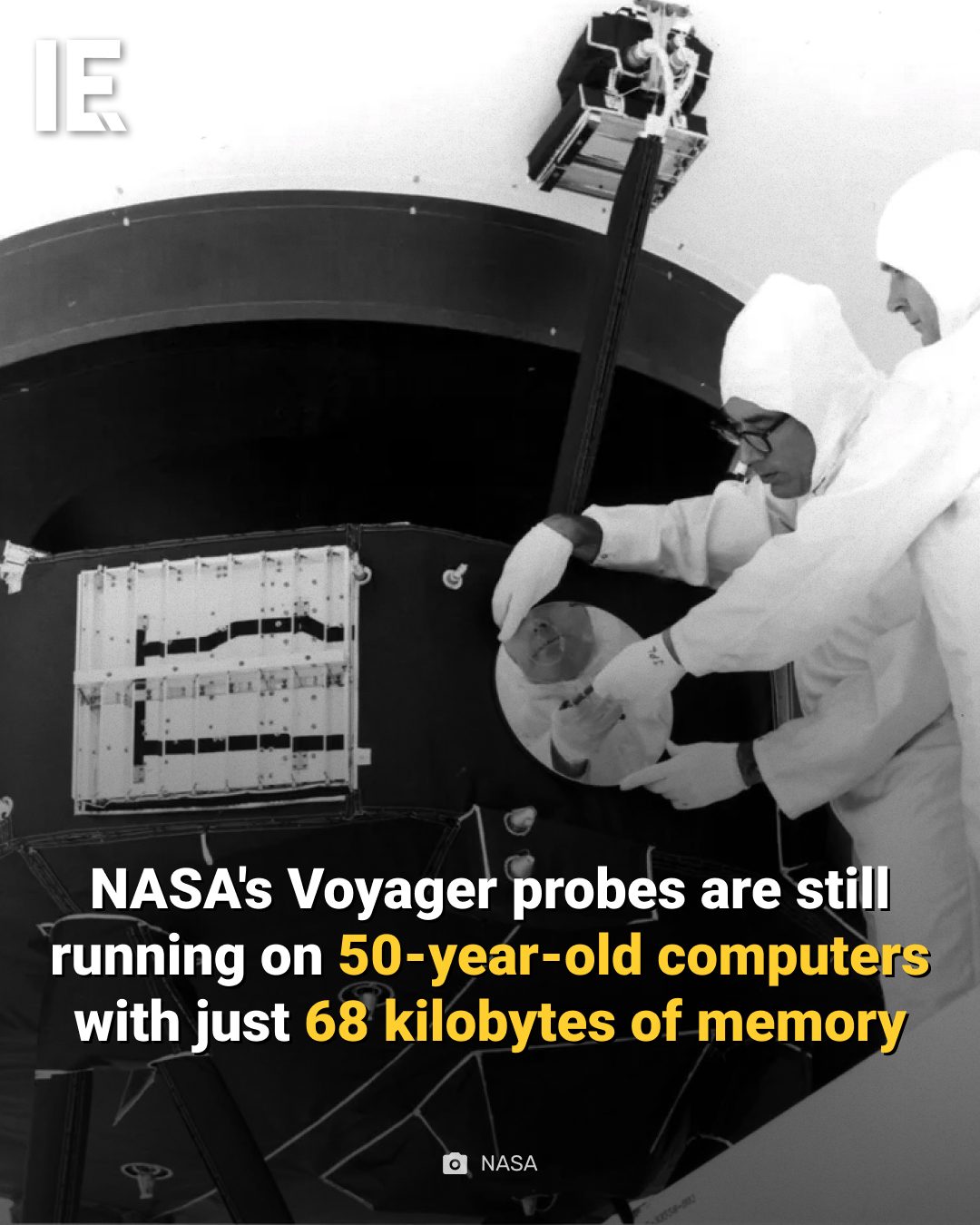
The computers aboard the Voyager probes are a testament to the technological capabilities of the 1970s. Each probe runs on six custom-built computers across three systems, all designed to NASA specifications and backed up in duplicate. These computers have a combined memory of just 68 kilobytes, a stark contrast to the modern smartphone's roughly 125,000 times more RAM. Despite their age and limited memory, these computers have kept the probes operational for over five decades.
Powering the Probes
The power source for the Voyager probes is plutonium-238 radioisotope generators. These generators have no moving parts and do not require sunlight, making them ideal for deep space missions. However, the plutonium-238 is slowly decaying, causing the power output to decrease over time. To conserve power, NASA has already begun shutting down some of the probes' instruments. The probes are expected to go dark entirely in the early 2030s, but even then, they will continue to drift through the Milky Way for billions of years.
The Golden Records
Each Voyager probe carries a Golden Record, a phonograph record containing images, music, and greetings in 55 languages. These records serve as a time capsule and a message from humanity to any extraterrestrial civilizations that might encounter the probes. The content includes a diverse selection of sounds and images from Earth, providing a snapshot of human culture and life.
Practical Tips for Understanding Deep Space Exploration
Appreciating Historical Context
To fully appreciate the Voyager probes, it helps to understand the historical context in which they were built. The 1970s were a time of rapid technological advancement, and the Voyager missions pushed the boundaries of what was possible. The probes were designed to last much longer than their initial mission parameters, and their continued operation is a testament to the foresight and engineering prowess of the time.
Learning from Design Choices
The design choices made for the Voyager probes offer valuable lessons for modern space exploration. The use of redundant systems, the choice of power sources, and the optimization for longevity are all strategies that continue to influence spacecraft design today. By studying the Voyager probes, engineers can gain insights into how to build more robust and resilient spacecraft for future missions.
Important Takeaways
- Endurance and Innovation: The Voyager probes showcase the enduring capabilities of early space technology and the innovative design choices that have kept them operational for over five decades.
- Power Challenges: The use of plutonium-238 radioisotope generators highlights the importance of reliable power sources for deep space missions and the challenges posed by their decaying output.
- Historical Significance: The Golden Records carried by the Voyager probes serve as a cultural and historical artifact, representing humanity's efforts to reach out beyond our solar system.
Conclusion
NASA's Voyager 1 and 2 probes stand as a testament to human ingenuity and the spirit of exploration. Their journey through the cosmos has provided invaluable data and inspired generations of scientists and engineers. As they approach the end of their operational life, their legacy will continue to influence future space missions and deepen our understanding of the universe. The Voyager probes' continued operation, despite their age and limited resources, serves as a reminder of the incredible achievements made possible by human creativity and perseverance.
Watch the Reel
Questions readers ask
How far away are the Voyager probes from Earth now?
As of now, the Voyager probes are over 24 billion kilometers away from Earth. Voyager 1, the farthest human-made object, is currently in interstellar space, while Voyager 2 is not far behind, also exploring the outer edges of our solar system.
What kind of technology do the Voyager probes use?
The Voyager probes were launched with limited memory computers and have only 70 kilobytes of memory. In addition to computers, they have power sources that are decaying plutonium-238. This technology is fascinating, especially when you consider that the probes continue to operate and send signals back to Earth despite being designed in the 1970s.
What scientific data have the Voyager probes sent back to Earth?
The Voyager probes have revolutionized our understanding of the outer planets. They sent back detailed images and data from Jupiter, Saturn, Uranus, and Neptune. Additionally, they have provided valuable information about the interstellar medium, offering insights into the environment beyond our solar system.
What are the Golden Records on the Voyager probes?
The Golden Records are phonograph records that were included on both Voyager probes. They contain sounds and images portraying the diversity of life and culture on Earth. The idea was to create a message in a bottle, of sorts, that could be understood by any extraterrestrial intelligence that might encounter the probes.
What challenges do the Voyager probes face as they continue their journey?
The Voyager probes face several challenges, including power management as their plutonium-238 power sources decay and the need to prioritize which systems to keep operational. Additionally, they must navigate the harsh conditions of deep space and maintain communication with Earth over vast distances.
What will happen to the Voyager probes when they can no longer operate?
When the Voyager probes can no longer operate, they will continue to drift through interstellar space. They will become silent ambassadors of human achievement, carrying the Golden Records and the story of our planet far into the cosmos. The probes will not be retrieved but will remain on their trajectory through space.
Recent articles
Fresh deep dives from the latest Reels we unpacked.




Comments
Be the first to comment.