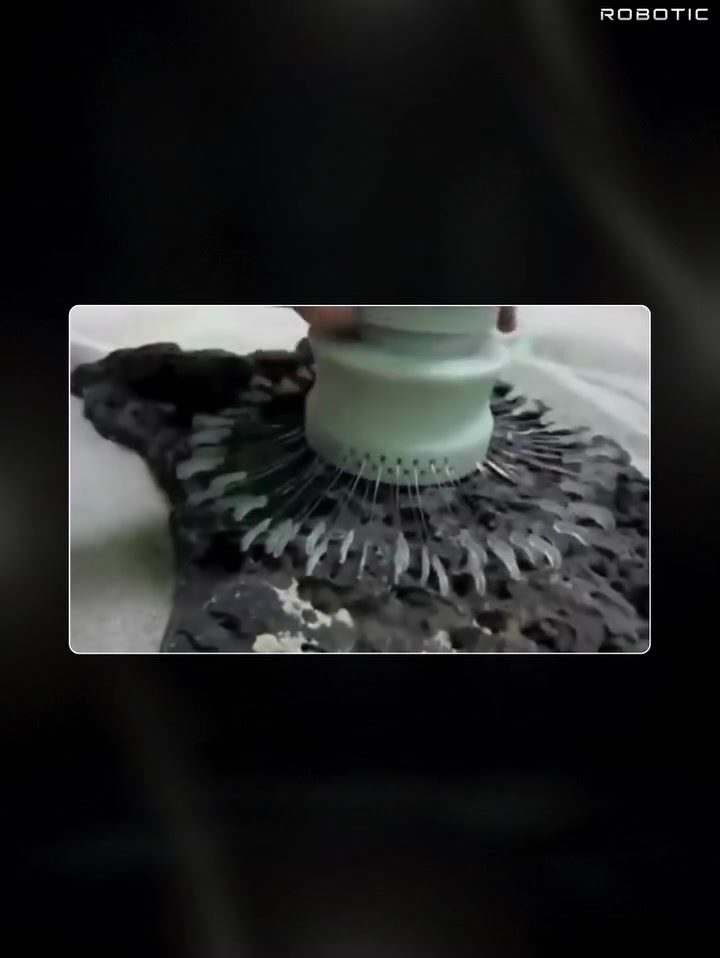
Specialized Robotic Grippers for Space Exploration
The challenges of space exploration require innovative solutions, especially when it comes to manipulating objects in a weightless environment. NASA has developed a groundbreaking robotic claw designed specifically for gripping rocks and other irregular surfaces in space. Unlike conventional grippers that rely on suction or magnets, this cutting-edge technology uses a unique approach to secure objects that traditional methods struggle with.
Context / Why This Matters
In the microgravity of space, traditional gripping mechanisms often fall short. Suction and magnets, for example, are ineffective in the vacuum of space, making it difficult for robotic arms to handle rocks and other irregular objects. This limitation hinders activities crucial for asteroid exploration, sample collection, and future robotic missions. NASA's new robotic claw addresses these issues, paving the way for more effective and versatile space operations.
Deep Dive into the Technology
The Microspine Gripper
NASA's innovative gripper utilizes hundreds of tiny steel microspines to latch onto microscopic cracks and rough surfaces. This design allows the claw to securely grip objects in a weightless environment. The microspines are engineered to take advantage of the smallest irregularities on a surface, providing a firm hold even on the smoothest rocks.
Applications in Space Exploration
The technology has significant implications for various space missions:
- Asteroid Exploration: Robotic arms equipped with this gripper can securely interact with rocky surfaces, enabling more detailed exploration of asteroids.
- Sample Collection: The gripper's precision allows for the collection of samples from rocky surfaces without damaging the material, which is crucial for scientific analysis.
- Future Missions: This technology opens new possibilities for missions involving small celestial bodies, where traditional gripping methods are ineffective.
How It Works
The robotic claw operates by deploying its microspines, which latch onto the microscopic cracks and irregularities on the surface of the object. This mechanism ensures a secure grip, even in the absence of gravity. The claw's design is versatile, making it suitable for a variety of irregular shapes and textures common in space.
Practical Tips
For those involved in developing or using similar technologies, consider the following:
- Material Science: Understand the properties of the materials your gripper will interact with. The microspines need to be compatible with the textures and surfaces commonly found in space.
- Testing in Microgravity: Conduct extensive testing in a simulated microgravity environment to ensure the gripper performs as expected in space conditions.
- Integration with Robotic Arms: Ensure that the gripper is well-integrated with the robotic arm, taking into account the weight, size, and maneuverability of the device.
Important Takeaways
- NASA's microspine gripper revolutionizes the way we interact with rocky surfaces in space.
- The technology addresses the limitations of traditional gripping methods, making it ideal for space exploration, sample collection, and future missions.
- The gripper's design, utilizing tiny steel microspines, provides a secure hold on irregular objects in a weightless environment.
- This innovation opens new avenues for exploring and working on small celestial bodies.
Conclusion
NASA's robotic claw, equipped with microspines, represents a significant advancement in space technology. It offers a reliable solution for gripping irregular objects in space, addressing a critical need for future missions. As space exploration continues to evolve, technologies like this will play a pivotal role in enabling more effective and versatile operations, paving the way for new discoveries and scientific breakthroughs.
Watch the Reel
Questions readers ask
How does NASA's robotic claw differ from traditional gripping devices used in space?
NASA's robotic claw stands out by using hundreds of tiny steel microspines to grip objects, unlike traditional devices that use suction or magnets. This design is particularly effective in the microgravity of space, where conventional methods struggle to function.
What are the primary benefits of using microspines in space exploration?
Microspines offer a versatile solution for handling irregular surfaces and objects like rocks. They work effectively in the microgravity environment, making them ideal for tasks such as asteroid exploration and other robotic missions where precise gripping is crucial.
Why are traditional gripping methods like suction and magnets ineffective in space?
Suction and magnets rely on properties that are not present in space. Suction requires air to create a vacuum, which is absent in the vacuum of space, and magnets need a ferrous material to attach to, which is not always available on irregular surfaces or rocks.
What are the potential applications of NASA's robotic claw in future space missions?
NASA's new robotic claw can be used in a variety of missions, including asteroid exploration and other robotic tasks. This technology will be instrumental in handling irregular objects and rocks, which are common in space environments and require precise, reliable gripping solutions.
How does the robotic claw enhance the capabilities of space rovers?
The robotic claw enhances the capabilities of space rovers by providing a reliable method to grip and manipulate rocks and other irregular surfaces. This is particularly useful for future missions, where robots are tasked with collecting samples and performing tasks.
Can the robotic claw be adapted for use on other planetary surfaces?
Yes, the robotic claw's design, which uses microspines, makes it adaptable for use on various planetary surfaces. Its ability to grip irregular surfaces and function in different gravitational environments makes it a versatile tool for future missions to other planets and asteroids.
What specific challenges in space exploration does the robotic claw address?
The robotic claw addresses the challenge of gripping irregular and rough surfaces in microgravity conditions. This is essential for tasks such as rock sampling, object manipulation, and handling materials in the vacuum of space, where traditional gripping methods often fail.
Related deep dives
Similar reads based on topic and creator.


Recent articles
Fresh deep dives from the latest Reels we unpacked.




Comments
Be the first to comment.