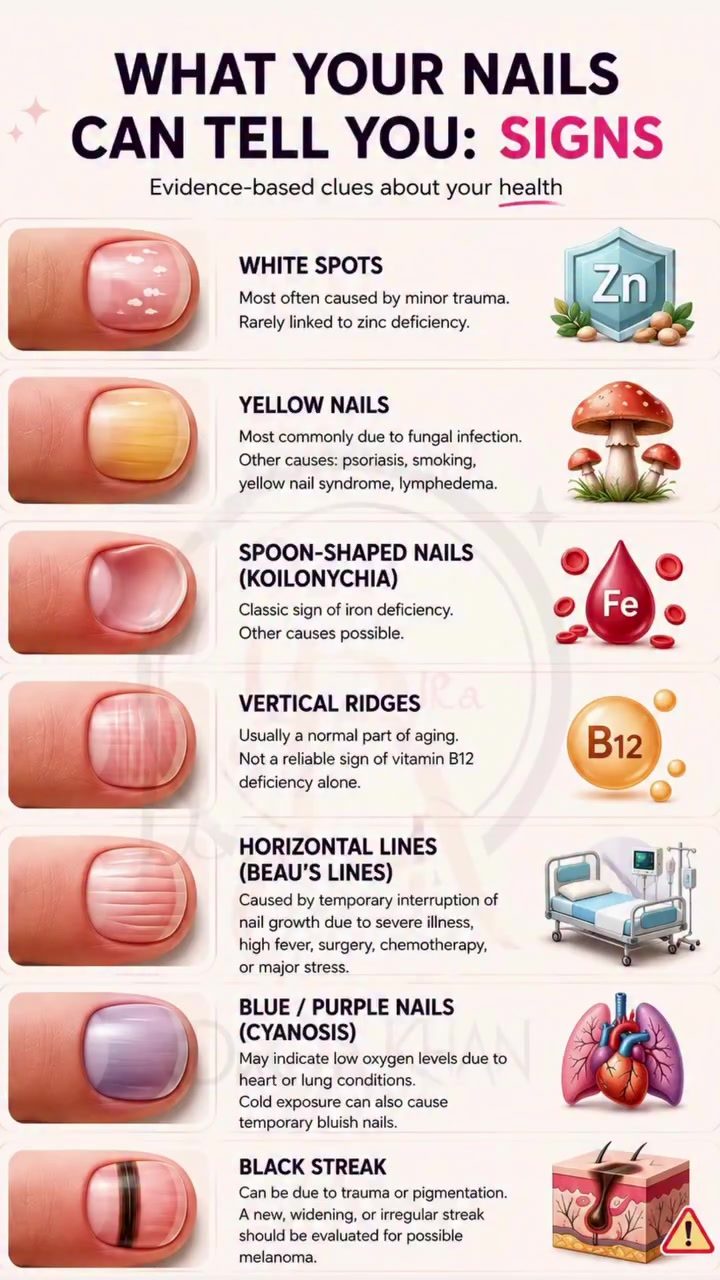
Nail Health Signs
Nails are more than just a canvas for polish or a fashion statement; they can offer insights into a person's overall health. Changes in nail appearance can sometimes indicate underlying health issues. Understanding these signs can help in maintaining good health and prompt medical attention when necessary.
Why This Matters
Nails grow slowly, and changes in their appearance can accumulate over time. Recognizing these changes early can be crucial. While a single nail change is not enough to diagnose a disease, identifying patterns and understanding their potential causes can guide further investigation and prompt timely medical intervention.
Main Discussion
White Spots
White spots on nails are often a result of minor trauma, such as a nail hitting or being bumped. These spots usually grow out as the nail grows, and they are generally nothing to worry about. However, in rare cases, persistent white spots may indicate a zinc deficiency. This condition, known as leuconychia, can be a sign of malnutrition or other underlying health issues. Monitoring these spots and considering dietary changes or supplementation might be necessary if they persist.
Yellow Nails
Yellow nails can be a sign of a fungal infection, which is the most common cause of this condition. Fungus can turn the nail bed yellow and may cause the nails to thicken and crumble over time. Other potential causes of yellow nails include psoriasis, smoking, yellow nail syndrome, or lymphedema. These conditions affect the nail and can be more challenging to manage.
Spoon-Shaped Nails
Spoon-shaped nails, or koilonychia, are often a classic sign of iron deficiency. This condition can cause the nails to become concave, resembling a spoon. While iron deficiency is the most common cause, other possible causes include anemia, hypothyroidism, or malnutrition. If you notice spoon-shaped nails, consider having your iron levels checked and consulting a healthcare professional for further evaluation.
Vertical Ridges
Vertical ridges on the nails are typically a normal part of aging. These ridges run from the base of the nail to the tip and are usually harmless. Although they are often a sign of aging, they can sometimes be associated with vitamin B12 deficiency. However, vertical ridges alone are not a reliable indicator of B12 deficiency, so consulting a healthcare professional for a comprehensive assessment is advisable.
Horizontal Lines (Beau’s Lines)
Horizontal lines, known as Beau’s lines, can appear as indentations or ridges across the nail. These lines are usually caused by a temporary interruption in nail growth due to severe illness, high fever, surgery, chemotherapy, or major stress. This disruption can affect the formation of the nail, leading to the appearance of these lines. While they are generally not a cause for concern, they can indicate a significant event in a person's health history.
Blue/Purple (Cyanosis) Nails
Blue or purple nails can indicate low oxygen levels in the body, a condition known as cyanosis. This can be caused by heart or lung conditions that impair the body's ability to circulate oxygen to the tissues. Cold exposure can also cause temporary bluish discoloration. If you notice persistent blue or purple nails, it is essential to consult a healthcare professional to rule out any underlying cardiovascular or respiratory issues.
Black Streak
A black streak on the nail can be due to trauma or pigmentation. However, a new, widening, or irregular black streak should be evaluated for possible melanoma, a type of skin cancer that can affect the nails. This condition can appear as a dark streak or spot and may be accompanied by pain or changes in the nail shape. If you notice any unusual changes in your nails, it is crucial to seek medical attention promptly for a thorough evaluation.
Practical Tips
- Regularly inspect your nails for any changes in color, shape, or texture. Early detection can lead to timely intervention.
- Keep a record of any nail changes and their progression. This information can be valuable for your healthcare provider.
- Consult a healthcare professional if you notice persistent, painful, or rapidly changing nails. They can provide a comprehensive evaluation and recommend appropriate treatment.
- Maintain good nail hygiene to prevent infections and promote overall nail health.
Important Takeaways
Nails can provide clues about potential health issues. While one nail change may not indicate a significant problem, recognizing patterns and understanding the possible causes can prompt further investigation. If you notice any persistent, painful, or rapidly changing nails, it is essential to consult a healthcare professional. Maintaining good nail hygiene and regular inspections can help in early detection and prompt treatment.
Conclusion
Nails are not just for aesthetics; they can offer valuable insights into a person's health. By being aware of the potential signs and seeking medical attention when necessary, you can take proactive steps toward maintaining good health. Understanding what your nails can tell you about your health is a vital part of overall wellness.
Watch the Reel
Questions readers ask
What do yellow nails indicate about my health?
Yellow nails can suggest a fungal infection, especially if they are also thickened or crumbling. In some cases, yellowing might also indicate respiratory conditions, such as chronic bronchitis, or more serious issues like diabetes. If you notice persistent yellowing, it's wise to consult a healthcare professional for further evaluation.
What does it mean if I have spoon-shaped nails?
Spoon-shaped nails, also known as koilonychia, are often associated with iron deficiency anemia. In this condition, nails become soft and concave, resembling a spoon. However, spoon-shaped nails can also be a sign of other health issues, such as heart disease or hypothyroidism. If you observe this change, it's important to discuss it with your doctor to determine the underlying cause.
What are the potential causes of white spots on nails?
White spots on nails are typically caused by minor trauma, such as a nail hitting or being hit by something. These spots, known as leukonychia, are usually harmless and grow out with the nail. However, in rare cases, they can be a sign of certain mineral deficiencies or conditions such as psoriasis, so it's important to monitor them.
What do vertical nail ridges indicate about my health?
Vertical nail ridges are generally a normal sign of aging and do not usually indicate any health issues. In fact, most people develop these ridges as they get older.As nails pass over the nail bed, ridges can form. However, if you notice sudden or severe changes in your nail ridges, it could be a good idea to check in with a healthcare provider, as it might indicate nutrient deficiencies or other issues.
Why are my nails turning blue or purple?
Blue or purple nails can indicate a lack of oxygen in the blood, a condition known as cyanosis. This can be caused by various factors, including lung or heart problems, or it might be a sign of a severe allergic reaction. If you notice this change, seek medical attention promptly, as it could be a sign of a serious health issue.
How can I monitor my nail health at home?
Regularly inspect your nails for any changes in color, shape, or texture. Look for signs of discoloration, such as yellowing or bluish tint, as well as changes in nail shape, like spooning or thickening. Pay attention to any new lines, ridges, or spots. Keep track of these changes and discuss any concerns with a healthcare professional.
What do vertical nail lines indicate? What about horizontal lines?
Vertical nail lines, also known as longitudinal ridges, are usually a normal part of aging and do not typically indicate any health issues. However, horizontal nail lines, known as Beau's lines, can be a sign of a temporary interruption in nail growth, which can be caused by an illness, injury, or severe stress. If you notice horizontal lines, it's a good idea to consult a healthcare provider to determine the cause.
Recent articles
Fresh deep dives from the latest Reels we unpacked.




Comments
Be the first to comment.