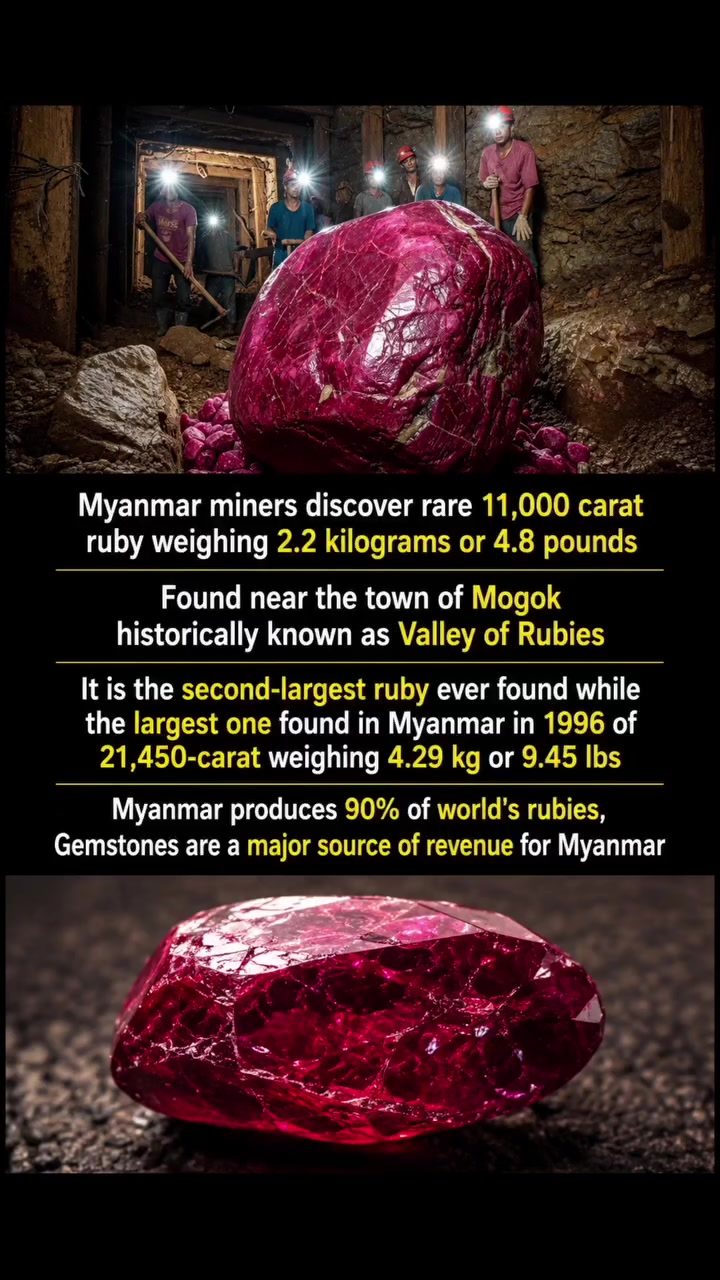
Rare 11,000-Carat Ruby Discovery in Myanmar
A rare 11,000-carat ruby, weighing approximately 2.2 kilograms (4.8 pounds), was recently discovered in Myanmar. The ruby was found near the town of Mogok, a region historically known as the “Valley of Rubies.” This discovery is significant not only because of the gemstone’s immense size but also because it is the second-largest ruby ever found in the country. The largest ruby discovered in Myanmar, found in 1996, weighed an astonishing 21,450 carats, or 4.29 kilograms (9.45 pounds).
Context: Why This Matters
Myanmar is renowned for its gemstone production, contributing to nearly 90% of the world’s rubies. This makes gemstones a major source of revenue for the country. The discovery of this rare ruby has garnered global attention, particularly in the gemstone and jewelry industry. Such findings highlight Myamnar's pivotal role in the global gemstone market and underscore the ongoing significance of gemstone mining in the region.
The Significance of Mogok
Mogok is located in the Mandalay Region of Myanmar and has been a center for gemstone mining for centuries. Known as the “Valley of Rubies,” Mogok is famous for producing some of the finest rubies in the world. The region’s unique geological conditions have made it a treasure trove for miners and gemstone enthusiasts alike. The 11,000-carat ruby's discovery in Mogok further solidifies the town's reputation as a prime location for high-quality ruby deposits.
Global Impact on the Gemstone Industry
The discovery of such a large ruby has significant implications for the global gemstone industry. It not only showcases the continued potential of Myanmar’s mining operations but also raises interest in the market for high-quality rubies. The rarity and size of this gemstone make it a highly sought-after addition to any gemstone collection, potentially driving up the demand and value of rubies worldwide.
Main Discussion
The Discovery Process
The discovery of the 11,000-carat ruby involved the hard work and dedication of local miners. These miners are well-versed in the art of gemstone extraction and have a deep understanding of the local geology. The process of mining in Mogok is labor-intensive and often involves manual excavation. Miners sift through layers of rock and soil, carefully searching for precious gemstones. The discovery of such a large ruby is a testament to their skill and perseverance.
The Geological Context
The geological conditions in Mogok are particularly favorable for ruby formation. The region's rocks contain high concentrations of chromium and iron, which are essential for the bright red color characteristic of rubies. The unique geological history of the area, including volcanic activity and metamorphism, has created ideal conditions for the growth of large, high-quality rubies. The 11,000-carat ruby’s discovery further highlights the geological richness of the Mogok region.
Economic Impact on Myanmar
Rubies are a significant economic driver for Myanmar. The country's gemstone industry generates substantial revenue, contributing to its economic growth. The discovery of the 11,000-carat ruby has the potential to boost the local economy by attracting more investment in mining operations and increasing the demand for Myanmar's gemstones. The subsequent sale of such a rare and valuable gemstone could also provide a significant financial windfall for the country.
Practical Tips
For Miners and Prospectors
For those involved in gemstone mining, the discovery of the 11,000-carat ruby serves as a reminder of the potential that still lies beneath the surface in places like Mogok. It underscores the importance of thorough exploration and meticulous mining techniques. Prospective miners should invest in the right equipment and ensure they have a deep understanding of the local geology. Working with experienced local miners can also provide valuable insights and increase the chances of discovering high-quality gemstones.
For Gemstone Enthusiasts
For collectors and enthusiasts, the discovery of the 11,000-carat ruby is an exciting development. It highlights the ongoing allure and value of natural rubies. While such large rubies are rare, smaller specimens can still be highly valuable and sought after. If you are a collector, consider investing in high-quality rubies from reputable sources. The expertise of gemological laboratories can also help authenticate the quality and value of your acquisitions.
Important Takeaways
- Geological Richness: Mogok, Myanmar, remains a geological treasure trove for high-quality rubies due to its unique geological conditions.
- Economic Significance: The gemstone industry, particularly ruby mining, is a major economic driver for Myanmar.
- Global Attention: The discovery of the 11,000-carat ruby has drawn global attention, highlighting the continued importance of Myanmar in the gemstone market.
- Investment Opportunities: The discovery underscores the potential for further investment in Myanmar’s mining operations and the global demand for high-quality rubies.
Conclusion
The discovery of an 11,000-carat ruby in Myanmar’s Mogok region is a significant event in the world of gemstones. Not only does it highlight the region's geological richness and the skill of local miners, but it also underscores the economic importance of the gemstone industry in Myanmar. For miners and gemstone enthusiasts, this discovery serves as a reminder of the ongoing allure and value of natural rubies. As the gemstone and jewelry industry continues to evolve, such discoveries will likely drive further interest and investment in high-quality gemstones.
Watch the Reel
Questions readers ask
Why is the discovery of the 11,000-carat ruby significant?
The discovery is significant due to the ruby's enormous size, making it the second-largest ruby ever found in Myanmar. This find is also notable because it contributes to Myanmar's reputation as a leading producer of high-quality rubies, which is a major source of revenue for the country.
Where was the 11,000-carat ruby discovered in Myanmar?
The 11,000-carat ruby was discovered near the town of Mogok, a region historically renowned for its gemstone production and known as the “Valley of Rubies.”
How does Myanmar's ruby production impact the global market?
Myanmar is one of the world's leading ruby producers, contributing to nearly 90% of the global ruby market. This substantial contribution makes the country a key player in the global gemstone industry.
What is the largest ruby ever found in Myanmar?
The largest ruby ever found in Myanmar was discovered in 1996 and weighed an astonishing 21,450 carats, or 4.29 kilograms (9.45 pounds). This ruby surpasses the recently found 11,000-carat ruby in size.
What makes Mogok a significant location for ruby mining in Myanmar?
Mogok is significant for ruby mining due to its historical reputation as the “Valley of Rubies.” The region has been a prolific source of high-quality rubies, making it a prime location for gemstone discovery and extraction in Myanmar.
How does the size of the 11,000-carat ruby compare to other notable rubies?
The 11,000-carat ruby weighs approximately 2.2 kilograms (4.8 pounds), making it an exceptionally large gemstone. While it is the second-largest ruby found in Myanmar, it pales in comparison to the largest ruby ever found in the country, which weighed 21,450 carats.
What is the significance of ruby mining to Myanmar's economy?
Ruby mining is a crucial industry for Myanmar, as the country is a leading producer of rubies, contributing to nearly 90% of the global market. This makes gemstones a major source of revenue for the country, supporting its economy through both local and international trade.
Recent articles
Fresh deep dives from the latest Reels we unpacked.




Comments
Be the first to comment.