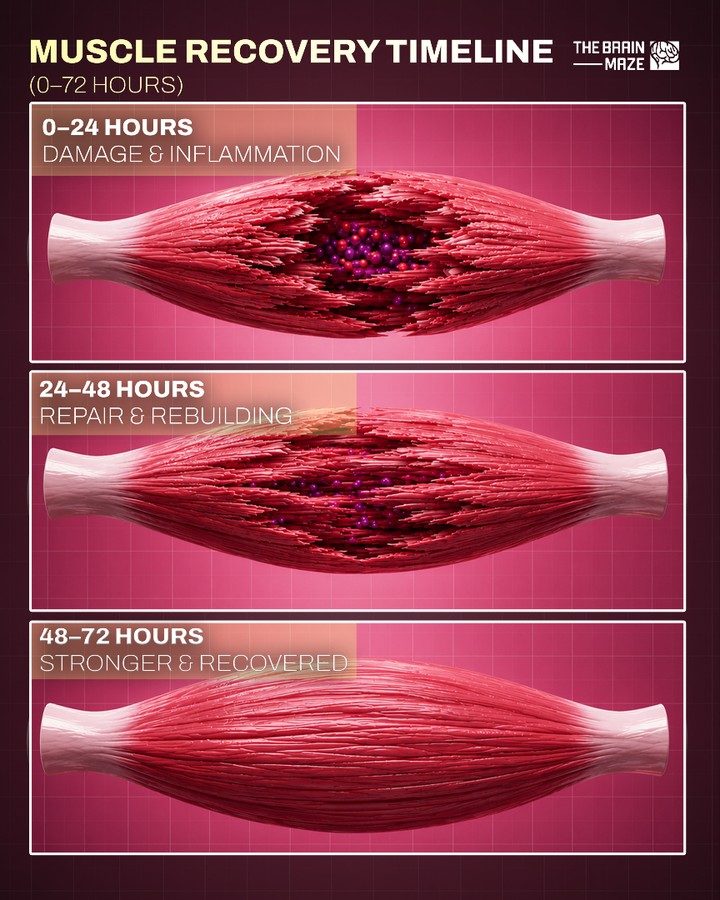
Muscle Recovery Timeline: The Three-Day Process
Understanding your muscles' natural healing timeline provides a roadmap for managing post-workout recovery.
Why this matters
Post-workout recovery is vital for several reasons. Effective recovery allows muscles to adapt and grow stronger, enhances overall athletic performance, and reduces the risk of injury. Understanding the muscle recovery timeline helps you make informed decisions about your workout routines, nutrition, and rest. This knowledge can guide you in optimizing your training schedule and ensuring that your body has adequate time to repair and rebuild.
Muscle Recovery: The Three-Day Process
The process of muscle recovery unfolds over approximately 72 hours. Let's break down this timeline into three critical stages.
0-24 Hours: Damage and Inflammation
Immediately after an intense workout, your muscle fibers undergo microscopic damage. This damage triggers the body's natural response, which includes inflammation. During this phase, the body works to clear away damaged tissue and debris, preparing the muscle for the repair process.
Key points about the first 24 hours:
- Microscopic Damage: Intense workouts cause tiny tears in muscle fibers.
- Inflammation: The body responds with inflammation to start the healing process.
- Clearing Debris: The immune system works to remove damaged tissue.
24-48 Hours: Repair and Rebuilding
As you move into the second day, your body shifts from the cleanup phase to the repair phase. Specialized cells, known as satellite cells, begin to rebuild and repair the damaged muscle fibers. This stage is crucial for muscle growth and strengthening, as the repaired tissue becomes more robust than before.
Key points about the 24-48 hour window:
- Cellular Repair: Satellite cells actively rebuild damaged muscle fibers.
- Strengthening Tissues: The repaired tissue becomes stronger and more resilient.
- Nutrition and Rest: Proper nutrition and rest are essential to support this rebuilding phase.
48-72 Hours: Stronger and Recovered
By the third day, the muscle recovery process is largely complete. The repaired tissue is now better prepared to handle future physical stress and exercise. Your muscles are stronger and more resilient, ready to face the next workout.
Key points about the 48-72 hour mark:
- Full Recovery: Most of the repair and rebuilding process is complete.
- Increased Resilience: The repaired tissue is stronger and more resilient.
- Prepared for Exercise: Your muscles are ready to handle future physical demands.
Practical Tips for Maximizing Recovery
To optimize your muscle recovery, consider the following practical tips:
Hydration
Drinking plenty of water helps flush out toxins and supports the body's natural healing processes. Aim to drink at least 8-10 glasses of water daily, especially after workouts.
Nutrition
Proper nutrition is essential for muscle recovery. Consuming a balanced diet rich in proteins, carbohydrates, and healthy fats provides the necessary nutrients for muscle repair and growth. Focus on lean proteins, complex carbs, and healthy fats to support your recovery.
Rest
Adequate rest is crucial for muscle recovery. Ensure you get enough sleep, as this is when your body undergoes most of its repair and rebuilding processes. Aim for 7-9 hours of quality sleep per night.
Active Recovery
Engage in light activities such as walking, yoga, or stretching to promote blood flow and aid in muscle recovery. Active recovery can help reduce muscle soreness and improve overall flexibility.
Foam Rolling and Stretching
Foam rolling and stretching can help release tension, reduce muscle soreness, and improve range of motion. Incorporate these techniques into your post-workout routine to support muscle recovery.
Important Takeaways
- Muscle recovery is a natural, three-day process that involves initial damage and inflammation, followed by repair and rebuilding, and finally, full recovery.
- Proper nutrition, hydration, and rest are essential for optimizing muscle recovery.
- Engage in active recovery techniques such as light exercise, foam rolling, and stretching to support muscle healing.
By understanding and implementing these takeaways, you can enhance your muscle recovery, improve athletic performance, and reduce the risk of injury.
Conclusion
Muscle recovery is a natural process that involves three key stages: damage and inflammation, repair and rebuilding, and full recovery. By following practical tips such as staying hydrated, eating a balanced diet, getting enough rest, and engaging in active recovery techniques, you can optimize your muscle recovery and overall fitness.
Watch the Reel
Questions readers ask
What happens to my muscles during the first 24 hours after a workout?
During the first 24 hours post-workout, your muscles experience initial damage and inflammation. This phase is crucial for initiating the repair process. It's important to give your body adequate rest and hydration to support this stage of muscle recovery.
Why is the 24-48 hour window important for muscle recovery?
The 24-48 hour window is when your body shifts from the inflammation phase to the repair phase. This is when your muscles start to rebuild and adapt, becoming stronger than before. Proper nutrition, particularly protein intake, plays a significant role in supporting this repair process.
What should I do during the final 24 hours of the 72-hour muscle recovery process?
During the final 24 hours, your muscles are in the rebuilding and strengthening phase. Light activities, such as walking or gentle stretching, can promote blood flow and aid in recovery. Maintaining good nutrition and hydration also supports the completion of this phase.
How does the 72-hour muscle recovery process help in boosting my performance?
Understanding and respecting the 72-hour muscle recovery process allows your muscles to fully repair and strengthen. This adaptation is key to improving your overall athletic performance and reducing the risk of injury, making your future workouts more effective.
What are the signs that my muscles are not recovering properly within the 72 hours?
If you experience prolonged soreness, swelling, or weakness beyond 72 hours, it could indicate that your muscles are not recovering properly. In such cases, consider reviewing your workout intensity, nutrition, and rest schedule, and consult a healthcare professional if symptoms persist.
Can I speed up the 72-hour muscle recovery process?
While the 72-hour muscle recovery process is largely dictated by your body's natural healing timeline, certain factors can support it. Adequate hydration, proper nutrition, especially protein intake, and sufficient rest can optimize the process, but rushing it may lead to inadequate muscle repair and increased injury risk.
How does muscle inflammation after a workout fit into the 72-hour recovery process?
Muscle inflammation is a normal part of the initial phase of muscle recovery, occurring within the first 24 hours. It triggers the body's repair mechanisms. Managing inflammation through rest, gentle movements, and proper nutrition can help facilitate a smooth transition into the repair and rebuilding phases.
Recent articles
Fresh deep dives from the latest Reels we unpacked.




Comments
Be the first to comment.