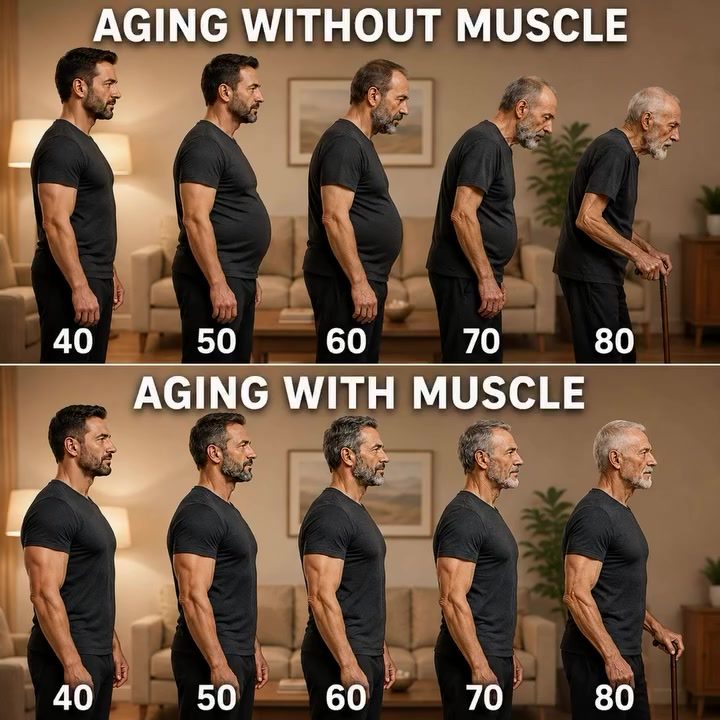
Aging and Muscle
The importance of maintaining muscle mass cannot be overstated, especially as we age. After the age of 30, our bodies naturally begin to lose muscle mass if we don't actively challenge them. This loss of muscle contributes to a decline in posture and mobility, increasing the risk of falls and injuries. Strength training and adequate protein intake are key factors in preserving muscle, improving posture, and maintaining overall health.
Context / Why This Matters
Muscle mass plays a crucial role in maintaining posture, mobility, and bone health as we age. The visual comparison of aging with and without muscle demonstrates that those who maintain muscle mass experience fewer postural changes and greater overall health. Maintaining muscle mass can help preserve posture and mobility, which are essential for maintaining independence and reducing the risk of falls and injuries as we age. Regular exercise and strength training are important for healthy aging. The best investment you can make is in your health.
Main discussion
The Aging Process with Muscle
Maintaining muscle mass through regular strength training and proper nutrition can significantly impact the aging process. By consistently challenging your muscles, you can preserve muscle mass, improve posture, and support bone health. This proactive approach helps maintain independence and reduces the risk of falls and injuries as you age. In addition, muscle maintenance means you can stay active and engaged in daily activities, enhancing overall quality of life.
The Aging Process Without Muscle
Without regular exercise and muscle maintenance, the aging process can lead to significant postural changes. As we age, a lack of muscle mass contributes to a decline in posture, increased stooping, and a higher risk of falls and injuries. Loss of muscle mass can also lead to weaker bones and reduced mobility, making it more challenging to maintain independence and perform daily activities.
Practical Tips
-
Make strength training a regular part of your fitness routine. This can include weightlifting, bodyweight exercises, or resistance training. Consistency is key, so aim for at least two to three days a week.
-
Prioritize protein intake in your diet. Protein is essential for muscle repair and growth. Include lean protein sources like chicken, fish, eggs, and plant-based options such as lentils and tofu in your meals.
-
Get enough quality sleep. Sleep is crucial for muscle recovery and overall health. Aim for 7-9 hours of sleep per night.
-
Stay active throughout the day. Incorporate physical activity into your daily routine, such as walking, cycling, or engaging in hobbies that keep you moving.
Important Takeaways
-
Maintaining muscle mass through strength training and adequate protein intake is essential for healthy aging. This helps preserve posture, support bone health, and maintain independence.
-
Regular exercise and an active lifestyle can significantly impact the aging process, reducing the risk of falls and injuries.
-
Consistency is key in strength training. You don't have to become a bodybuilder—just stay consistent and make it a regular part of your fitness routine.
Conclusion
Your future body is being built by the choices you make today. Whether you're in your 30s, 50s, or 70s, the decisions you make regarding your health and fitness will have a significant impact on your quality of life as you age. By focusing on muscle maintenance, proper nutrition, and an active lifestyle, you can ensure a healthier, more independent future.
Watch the Reel
Questions readers ask
Why does muscle mass start to decline at age 30?
After age 30, our bodies naturally begin to lose muscle mass if we don't actively challenge them. This is due to a decrease in muscle protein synthesis and an increase in muscle protein breakdown. Regular strength training and adequate protein intake can help mitigate this natural decline.
How does muscle mass affect posture and mobility as we age?
Maintaining muscle mass is crucial for supporting the spine and keeping the body upright, which helps maintain good posture. Strong muscles also improve mobility, making daily activities easier and reducing the risk of falls and injuries, which are significant concerns for aging individuals.
What are some effective ways to prevent muscle loss as we age?
Regular strength training helps maintain and even build muscle mass, which is vital for preventing muscle loss. Additionally, adequate protein intake provides the necessary building blocks for muscle repair and growth. Aim for a balanced diet and incorporate exercises like weightlifting, bodyweight exercises, or resistance band workouts into your routine.
How can strength training improve overall health in seniors?
Strength training not only helps maintain muscle mass but also improves bone density, which reduces the risk of osteoporosis and fractures. It enhances balance and coordination, leading to better overall mobility and a decreased risk of falls, which is vital for preserving independence in daily activities.
What role does protein play in maintaining muscle health?
Protein is essential for muscle repair and growth. As we age, our bodies become less efficient at utilizing protein, so it's important to consume adequate amounts through a balanced diet. Good sources of protein include lean meats, fish, eggs, dairy, legumes, and plant-based proteins like tofu and tempeh.
Can improving muscle mass help reduce the risk of falls in the elderly?
Yes, improving muscle mass can significantly reduce the risk of falls in the elderly. Stronger muscles enhance balance and coordination, making it easier to maintain stability and react quickly to changes in balance. Additionally, better posture and mobility contribute to a lower risk of trips and falls, promoting overall safety and independence.
What are some exercises that can help improve posture and muscle strength for seniors?
Exercises like wall push-ups, chair squats, seated rows, and seated leg extensions are effective in improving posture and muscle strength for seniors. These exercises can be performed with minimal equipment, making them accessible and easy to incorporate into a daily routine. Always consult with a healthcare provider before starting any new exercise program.
Related deep dives
Similar reads based on topic and creator.




Recent articles
Fresh deep dives from the latest Reels we unpacked.




Comments
Be the first to comment.