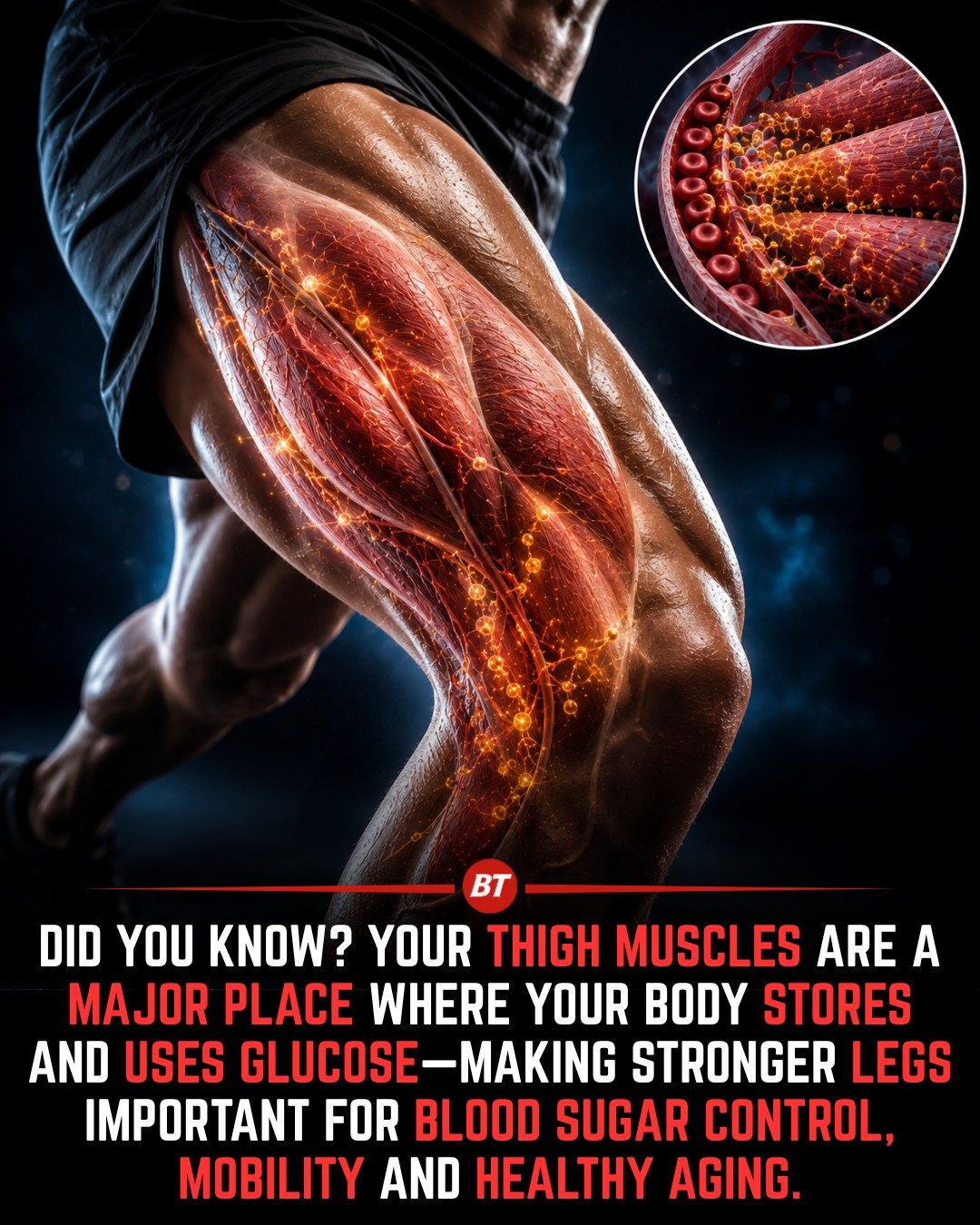
Muscle Glucose Storage
Thigh muscles play a crucial role in storing and utilizing glucose, making them vital for maintaining healthy blood sugar levels and overall mobility. Understanding how these muscles function can provide insights into better health management as we age.
Context / Why This Matters
Strong legs are not just about walking; they are essential for blood sugar control and mobility. As we age, maintaining muscle mass becomes increasingly important for managing glucose levels and preventing age-related decline. Thigh muscles, particularly the quadriceps and hamstrings, are among the body's largest glucose-hungry tissues. Every time these muscles are used, they pull glucose out of the bloodstream to produce energy, making them a key player in blood sugar regulation.
Main Discussion
The Role of Thigh Muscles in Glucose Metabolism
Thigh muscles are a major storage and utilization site for glucose, contributing significantly to blood sugar control. After consuming food, glucose enters the bloodstream, and insulin helps move it into cells for energy or storage. However, muscle contractions can also increase glucose uptake without relying entirely on insulin. This is why physical activity has such a profound effect on blood sugar levels.
The Impact of Aging on Muscle Glucose Storage
With age, muscle mass can decrease due to sarcopenia, leading to less tissue available for storing and using glucose. Research published in Diabetes Care, The Journal of Clinical Investigation, and Medicine & Science in Sports & Exercise highlights that maintaining muscle mass through regular resistance exercise improves insulin sensitivity and glucose disposal. This helps preserve metabolic health and supports healthy aging.
Benefits of Stronger Thighs
The benefits of stronger thighs go beyond blood sugar control. Stronger thigh muscles help with various daily activities, such as climbing stairs, rising from a chair, maintaining balance, and walking confidently. This not only supports mobility but also reduces the risk of losing independence.
Practical Tips
Incorporating Leg Strength Training
To maintain strong thigh muscles, incorporate leg strength training into your routine. Aim for 2–3 sessions per week, focusing on exercises like squats, step-ups, lunges, leg presses, or chair sit-to-stands. Consistent resistance training can help maintain muscle strength, activity, and metabolic utility without the need for heavy weights.
Everyday Activities to Boost Leg Strength
In addition to formal exercise, everyday activities can contribute to leg strength. Activities like walking, climbing stairs, and carrying grocery bags can all help maintain muscle mass and improve glucose metabolism. Incorporating these activities into your daily routine can support overall health and mobility.
Nutrition for Muscle Health
Nutrition plays a crucial role in maintaining muscle mass. Consuming a balanced diet rich in proteins, vitamins, and minerals can support muscle health and glucose metabolism. Foods rich in lean proteins, whole grains, and healthy fats can provide the necessary nutrients for muscle growth and repair.
Important Takeaways
- Muscle Glucose Storage: Thigh muscles are a major storage site for glucose, making them crucial for blood sugar control.
- Aging and Muscle Health: Maintaining muscle mass through regular exercise is essential for managing glucose levels as we age.
- Benefits of Strong Thighs: Stronger thigh muscles improve mobility, balance, and overall health, reducing the risk of age-related decline.
- Exercise and Nutrition: Incorporating leg strength training and a balanced diet can support muscle health and glucose metabolism.
Conclusion
Understanding the role of thigh muscles in glucose metabolism can provide valuable insights into maintaining overall health and mobility. By incorporating regular leg strength training and a balanced diet, you can support muscle health, improve blood sugar control, and enhance your quality of life as you age.
Watch the Reel
Questions readers ask
Why are thigh muscles important for glucose regulation?
Thigh muscles, especially the quadriceps and hamstrings, are significant for glucose regulation because they store and utilize glucose for energy during physical activity. This process helps to maintain healthy blood sugar levels by pulling glucose out of the bloodstream.
How does maintaining leg muscle mass help with aging?
As we age, preserving leg muscle mass is vital for managing glucose levels and preventing age-related muscle decline. Strong leg muscles enhance mobility and support overall health, making daily activities easier and reducing the risk of falls.
What role does insulin play in muscle glucose storage?
Insulin assists thigh muscles in storing and utilizing glucose. It facilitates the uptake of glucose from the bloodstream into the muscle cells, where it can be converted into energy or stored for later use. This process is essential for maintaining balanced blood sugar levels.
Can improving thigh muscle strength enhance blood sugar control?
Yes, improving thigh muscle strength can enhance blood sugar control. Stronger muscles have more capacity to store and utilize glucose, leading to better glucose uptake. Regular exercise and strength training can help maintain or increase leg muscle mass, thus improving this process.
What are the consequences of age-related muscle loss on glucose management?
Age-related muscle loss can negatively impact glucose management by reducing the body's ability to take up and store glucose. This can lead to higher blood sugar levels and an increased risk of conditions like type 2 diabetes. Regular physical activity can help mitigate this decline by preserving muscle mass.
How does muscle glucose storage impact overall health?
Muscle glucose storage is crucial for overall health as it helps regulate blood sugar levels. By maintaining healthy glucose levels, the body can reduce the risk of developing chronic conditions and support better mobility, which is essential for daily activities and quality of life.
Related deep dives
Similar reads based on topic and creator.




Recent articles
Fresh deep dives from the latest Reels we unpacked.




Comments
Be the first to comment.