Understanding Global Drug Usage Trends
Psychoactive drug use is widespread around the world, with various substances dominating different regions and demographics. Cannabis leads the list as the most commonly used psychoactive drug, followed by opioids and amphetamine-type stimulants. These trends offer a snapshot of global substance use patterns and their implications.
Context / Why this matters
Understanding global drug usage trends is crucial for public health policy, law enforcement, and societal awareness. The numbers and patterns of drug use can inform strategies to address related issues, such as addiction, health care needs, and criminal justice responses.
Main discussion
Cannabis: The most widely used drug
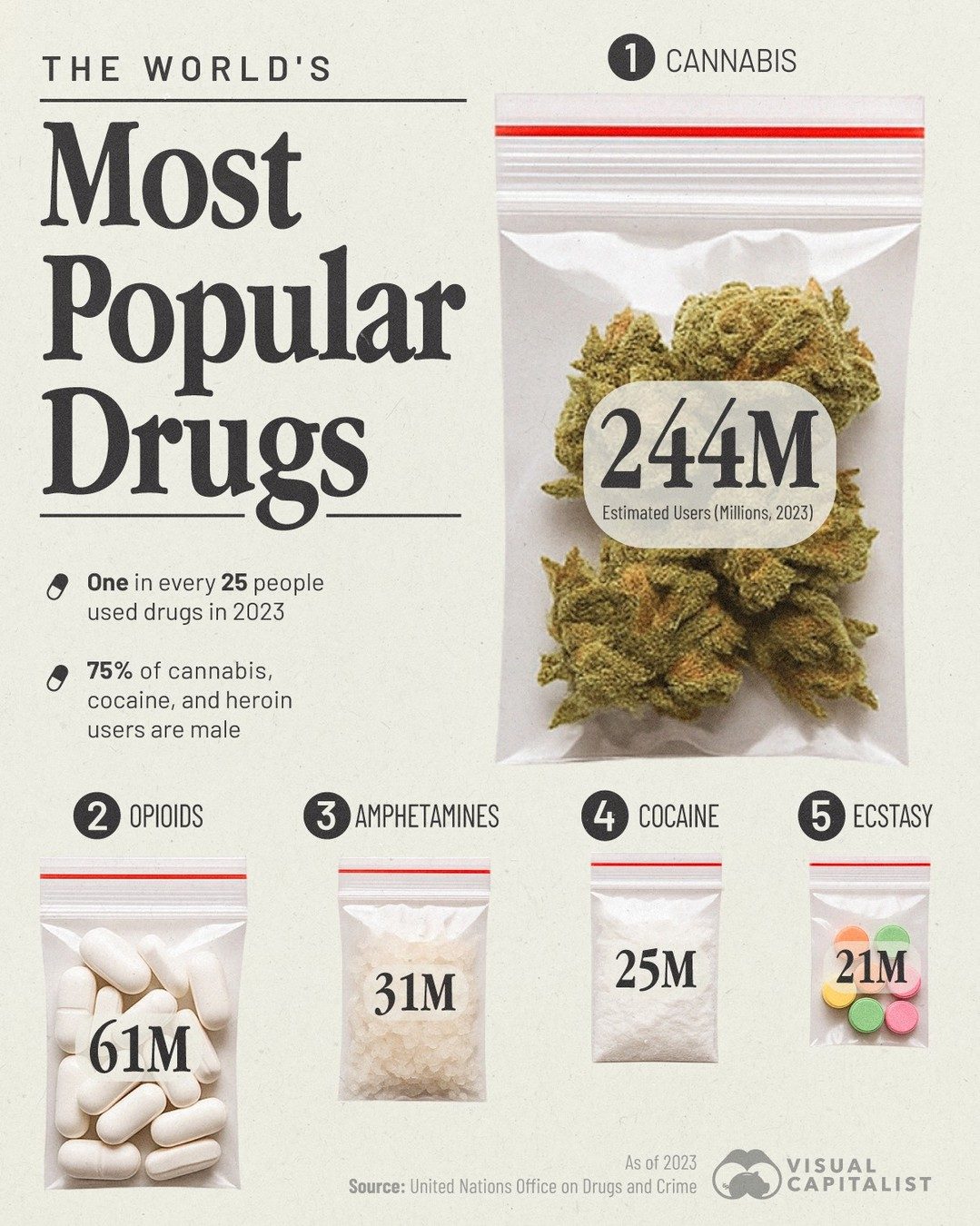
Cannabis tops the list with an estimated 244 million users worldwide in 2023. This makes it the most widely used psychoactive drug globally. The prevalence of cannabis use is notable for several reasons:
- Widespread Availability: Cannabis is cultivated and distributed in various forms, making it accessible in many regions.
- Legalization Efforts: Many countries have legalized or decriminalized cannabis for medical or recreational use, contributing to its widespread use.
- Demographic Patterns: About 75% of cannabis users are male, indicating a notable gender disparity in usage.
Opioids: Significant but less prevalent
Opioids account for 61 million users, making it the second most widely used drug category. Opioids, including prescription painkillers and illicit substances like heroin, have significant implications for health care systems:
- Pain Management: Opioids are commonly prescribed for pain management, which contributes to their widespread use.
- Addiction and Overdose: Opioid addiction and overdose rates are a major public health concern, leading to extensive efforts in prevention and treatment.
Amphetamine-Type Stimulants: A growing concern
Amphetamine-type stimulants, including methamphetamine and prescription stimulants like Adderall, have an estimated 31 million users. These substances are used for various reasons, including:
- Performance Enhancement: Some users turn to stimulants to boost energy, focus, and productivity.
- Recreational Use: Amphetamines are also used recreationally for their euphoric effects.
- Health Risks: Long-term use can lead to severe health issues, including addiction, cardiovascular problems, and psychiatric disorders.
Cocaine and Ecstasy: Substantial user bases
Cocaine and ecstasy have significant user bases, with 25 million and 21 million users, respectively. These drugs are often associated with:
- Recreational Use: Both cocaine and ecstasy are commonly used in social settings and at parties.
- Health Risks: Use of these substances can lead to serious health issues, including cardiovascular problems, seizures, and mental health disorders.
Practical tips
If you or someone you know is struggling with substance use, there are several steps you can take to seek help:
- Seek Professional Help: Consult healthcare professionals, therapists, or counselors who specialize in addiction treatment.
- Support Groups: Join support groups like Narcotics Anonymous or other community-based organizations.
- Hotlines and Resources: Use helplines and online resources for immediate support and information.
Recognizing the Signs of Substance Use Disorder
Early recognition of substance use disorder can lead to more effective interventions. Some common signs include:
- Changes in Behavior: Mood swings, irritability, and social withdrawal.
- Physical Symptoms: Changes in appearance, such as weight loss or gain, bloodshot eyes, or poor hygiene.
- Performance Issues: Declines in work or school performance, and frequent absences.
Important takeaways
- Cannabis is the most widely used psychoactive drug, with 244 million users in 2023.
- Opioids, amphetamine-type stimulants, cocaine, and ecstasy each have substantial user bases, with opioids being the second most widely used drug.
- Understanding global drug usage trends is essential for developing effective public health policies and interventions.
- Recognizing the signs of substance use disorder and seeking professional help can lead to better outcomes.
Conclusion
The global landscape of drug use is complex and multifaceted, with cannabis, opioids, and amphetamine-type stimulants leading the list of most widely used substances. Understanding these trends and their implications is crucial for developing effective strategies to address substance use and its associated challenges. By recognizing the signs of substance use disorder and seeking appropriate help, individuals and communities can work towards healthier outcomes.
Watch the Reel
Questions readers ask
Which drug is most commonly used worldwide?
As of recent data, cannabis is the most commonly used psychoactive drug globally. It surpasses opioids and amphetamine-type stimulants in terms of widespread use.
What are the top three most used drugs around the world?
The top three most commonly used drugs globally are cannabis, opioids, and amphetamine-type stimulants. These substances lead in usage trends across different regions and demographics.
How does opioid use compare to other drugs globally?
Opioids are the second most commonly used drugs worldwide, following cannabis. Opioid use is a significant concern due to its association with addiction and overdose risks, particularly in regions like North America.
What are amphetamine-type stimulants, and where are they commonly used?
Amphetamine-type stimulants include drugs like methamphetamine and MDMA (ecstasy). They are the third most commonly used drugs globally and are prevalent in various regions, including East and Southeast Asia, as well as North America.
What are the most popular drugs used globally besides cannabis, opioids, and amphetamines?
Cocaine is another popular drug that has substantial usage around the world, particularly in North and South America. Ecstasy is another drug that is used globally, although to a lesser extent than cannabis, opioids, and amphetamines.
Why is it important to track global drug usage trends?
Tracking global drug usage trends is essential for informing public health policies, law enforcement strategies, and societal awareness. It helps identify areas where intervention and support are most needed to address issues related to substance use.
Are there significant regional differences in drug use patterns?
Yes, drug use patterns vary significantly by region. For example, amphetamine-type stimulants are particularly prevalent in East and Southeast Asia, while opioid use is a major concern in North America. Understanding these regional differences is crucial for tailored responses to drug-related challenges.
Related deep dives
Similar reads based on topic and creator.


Recent articles
Fresh deep dives from the latest Reels we unpacked.




Comments
Be the first to comment.