Most Common Financial Crimes in America
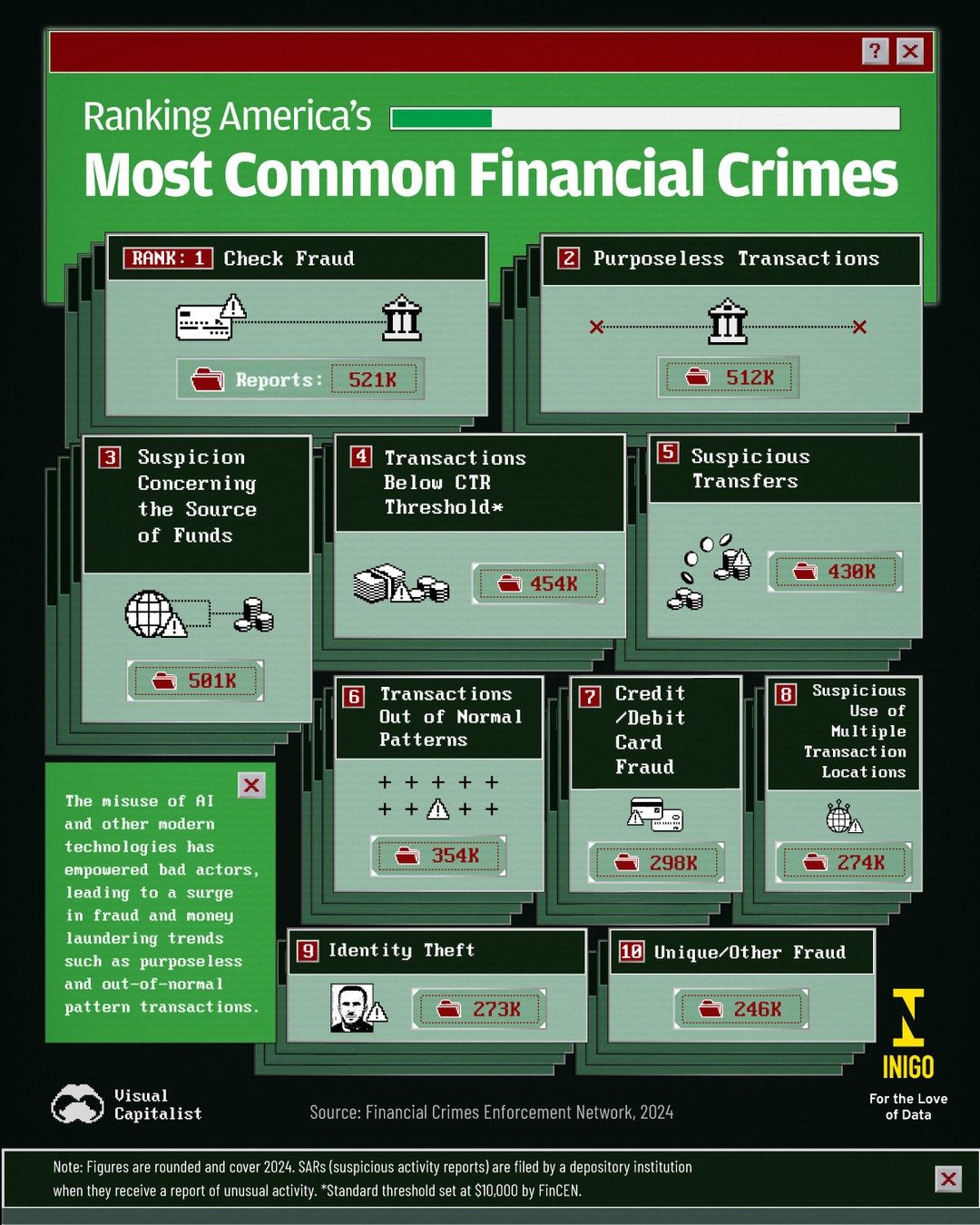
Financial crime, especially on the radar of the Financial Crimes Enforcement Network (FinCEN), has been on the rise in America. While the misuse of AI and other modern technologies has empowered bad actors, leading to a surge in fraud and money laundering, it is crucial to understand the most frequently reported financial crimes.
Why This Matters
Tracking and understanding reported financial crimes provides essential insights into the evolving tactics used by criminals. This data empowers financial institutions, law enforcement, and regulatory bodies to develop more effective prevention and detection strategies. By examining the most common types of financial crimes, individuals and organizations can better protect themselves and their assets.
Main Discussion
Ranking the Crimes
Check Fraud
Topping the list is check fraud, with a staggering 521,000 reports. Check fraud includes various schemes, such as counterfeiting checks, altering check amounts, and using stolen checks to withdraw funds. This crime remains prevalent despite the shift towards digital payments, highlighting the need for ongoing vigilance.
PurposeLess Transactions
Closely following check fraud are "PurposeLess Transactions," with 512,000 reports. These transactions, often characterized by their lack of clear economic purpose, are frequently associated with money laundering. Criminals use these transactions to obscure the origins of illicit funds, making it difficult for authorities to trace the money.
Suspicion Concerning the Source of Funds
Coming in third is a category that reflects an important aspect of financial crime detection: "Suspicion Concerning the Source of Funds," with 501,000 reports. Financial institutions are required to report transactions where the source of funds is unclear or suspect. This category underscores the importance of due diligence in financial transactions.
Transactions Below Threshold
Reported 454,000 times, "Transactions Below Threshold" refers to transactions that fall below the reporting threshold set by regulatory authorities. Criminals often exploit this loophole to evade detection. By breaking down larger sums into smaller, less noticeable transactions, they can move significant amounts of money undetected.
Other Notable Crimes
Suspicious Transfers
With 430,000 reports, "Suspicious Transfers" involve transactions that raise red flags due to unusual patterns or behaviors. These can include frequent transfers to high-risk jurisdictions, rapid movement of funds, and transactions that do not align with the known profile of the account holder.
Transactions Out of Normal
Reported 354,000 times, "Transactions Out of Normal" refers to transactions that deviate from a customer's typical activity. These anomalies can indicate fraudulent behavior, prompting further investigation by financial institutions.
Credit/Debit Card Fraud
Credit and debit card fraud, with 298,000 reports, continues to be a significant concern. This category includes unauthorized use of cards, counterfeit cards, and card-not-present fraud, where criminals use stolen card information to make online purchases.
Suspicious Use of Multiple Transaction Locations
Reported 274,000 times, this category involves the use of multiple transaction locations to obscure the trail of illicit funds. Criminals may use various locations to make it harder for authorities to track the movement of money.
Identity Theft
Identity theft, with 273,000 reports, remains a major financial crime. Criminals steal personal information to open fraudulent accounts, make unauthorized purchases, and commit other financial frauds.
Unique/Other Fraud
This catch-all category, with 246,000 reports, includes a variety of less common but still significant financial crimes. These can range from investment scams to complex money laundering schemes. Understanding these unique frauds helps in developing broader strategies to combat financial crime.
Practical Tips
For Individuals
-
Monitor Your Accounts: Regularly check your bank and credit card statements for any unauthorized transactions. Report any suspicious activity immediately to your financial institution.
-
Protect Personal Information: Be cautious about sharing personal information online and offline. Avoid giving out sensitive details to unverified sources.
-
Use Strong Passwords: Ensure that your online accounts are protected with strong, unique passwords. Consider using a password manager to keep track of them.
-
Enable Alerts: Set up alerts for your financial accounts to notify you of any unusual activity or large transactions.
For Businesses
-
Implement Robust Security Measures: Use advanced security software and protocols to protect your financial systems from cyber threats.
-
Train Employees: Educate your staff on recognizing and reporting suspicious activities. Regular training can help prevent internal fraud and identify external threats.
-
Conduct Regular Audits: Perform regular audits of your financial transactions to identify any irregularities. This proactive approach can help detect and prevent fraud early.
-
Comply with Regulations: Ensure that your business complies with all relevant financial regulations and reporting requirements. This includes understanding and adhering to thresholds for reporting transactions.
Important Takeaways
Financial crime is a complex and evolving challenge. Understanding the most frequently reported financial crimes provides a roadmap for individuals and organizations to protect themselves. By implementing practical tips and staying informed, it is possible to mitigate the risks associated with financial crime.
Conclusion
The increasing sophistication of financial crimes requires a multifaceted approach to prevention and detection. By examining the most common types of financial crimes, as reported by FinCEN, we gain valuable insights into the tactics used by criminals. This knowledge empowers individuals and organizations to take proactive measures to safeguard their financial well-being. Through vigilance, education, and compliance, we can collectively tackle the challenge of financial crime.
Watch the Reel
Questions readers ask
What are the most common financial crimes in America as of 2024?
As of 2024, the most common financial crimes in America include check fraud, identity theft, credit card fraud, and money laundering. These crimes are frequently reported and have seen an increase due to advancements in technology that enable fraudulent activities.
Why is it important to track financial crime reports?
Tracking financial crime reports helps identify trends and patterns, which are crucial for developing effective prevention and detection strategies. This information empowers financial institutions, law enforcement, and regulatory bodies to stay ahead of evolving criminal tactics.
What is the significance of the Financial Crimes Enforcement Network (FinCEN) in combating financial crimes?
FinCEN plays a pivotal role in combating financial crimes by gathering and analyzing data from financial institutions to detect and prevent illicit activities. This network helps identify trends, track suspicious transactions, and enforce regulations to safeguard the financial system.
How can individuals protect themselves from identity theft and fraud?
To protect against identity theft and fraud, individuals should monitor their financial statements regularly, use strong and unique passwords, be cautious of phishing attempts, and consider using identity theft protection services. Keeping personal information secure and being vigilant online are also crucial steps.
What are 'purposeless transactions' and why are they a concern in 2024?
Purposeless transactions refer to financial activities that lack a clear economic purpose and are often used to launder money. In 2024, these transactions are a concern due to their increasing use by criminals to disguise the origins of illicit funds, making it harder for authorities to detect and trace criminal activities.
What is the role of AI and modern technology in financial crimes?
AI and modern technology have enabled criminals to develop more sophisticated fraud and money laundering schemes. These tools can automate and disguise fraudulent activities, making it harder for traditional detection methods to identify them. Understanding how these technologies are used can help in developing countermeasures to protect against such crimes.
How do financial institutions contribute to the prevention of financial crimes?
Financial institutions contribute to preventing financial crimes by implementing robust fraud detection systems, conducting thorough know-your-customer (KYC) procedures, and complying with regulatory requirements. They also play a key role in reporting suspicious activities to authorities, which aids in the broader effort to combat financial criminality.
Related deep dives
Similar reads based on topic and creator.


Recent articles
Fresh deep dives from the latest Reels we unpacked.




Comments
Be the first to comment.