The Moon's Synchronous Rotation: Why We Only See One Side
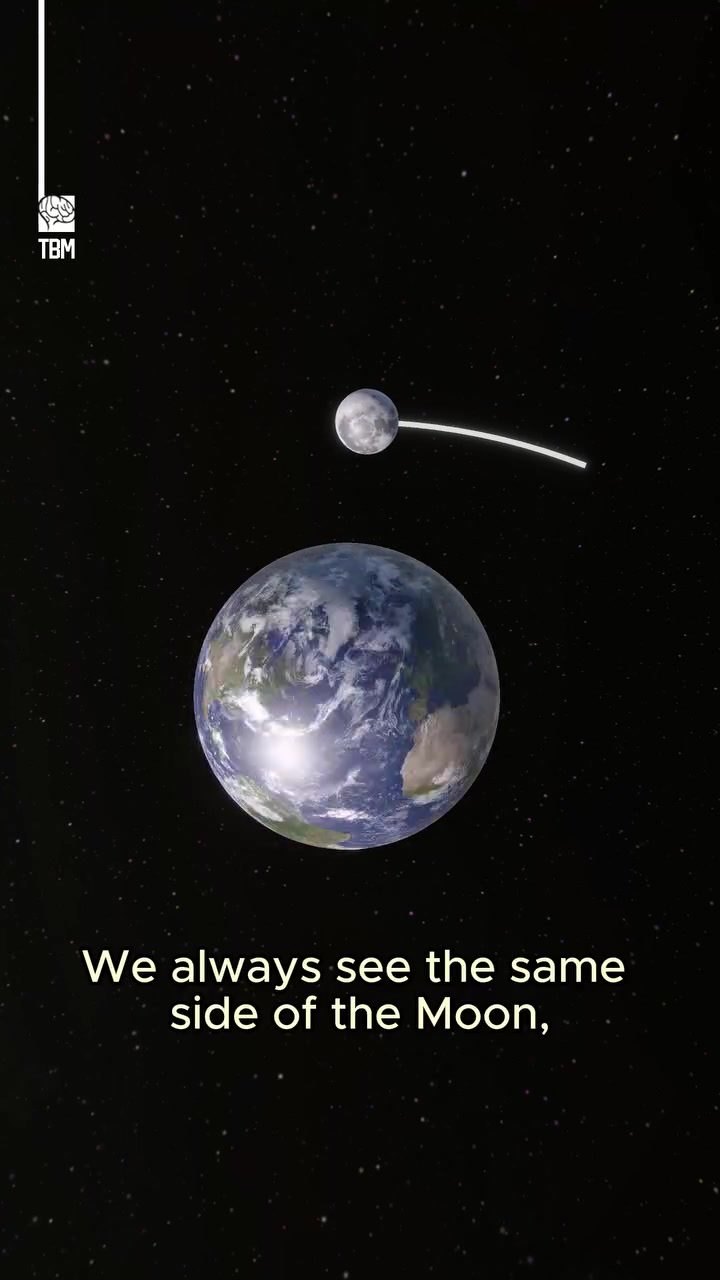
The Moon is a constant presence in our night sky, always showing the same face to Earth. This phenomenon, known as synchronous rotation or tidal locking, is a result of the Moon's rotation period matching its orbital period. The Moon takes about 27.3 days to complete one rotation on its axis and also takes about 27.3 days to orbit Earth. This synchronization means that one hemisphere of the Moon is perpetually facing Earth while the other remains hidden.
Context: The Significance of the Moon's Orientation
Understanding why we only see one side of the Moon offers insights into the complex gravitational dance between Earth and its natural satellite. This phenomenon is not unique to the Moon; many other moons in the solar system, including some of Jupiter's and Saturn's moons, are also tidally locked to their respective planets. However, the Moon's tidal locking is particularly significant because it directly influences our view of the lunar surface and has implications for lunar exploration and habitation.
The Mechanics of Tidal Locking
Tidal locking occurs when the gravitational forces between two celestial bodies cause one body to rotate at the same rate as it orbits the other. In the case of the Moon and Earth, this process happened over billions of years. Initially, the Moon rotated much faster, but Earth's gravitational pull gradually slowed the Moon's spin until it matched its orbital period. This gradual slowdown can be attributed to the tidal bulge—the deformation of the Moon caused by Earth's gravity.
The tidal bulge creates a slight gravitational attraction, which, over time, has aligned the Moon's rotation with its orbit. As a result, the same side of the Moon consistently faces Earth, while the far side remains perpetually hidden. This configuration is not a coincidence but a long-term outcome of gravitational physics.
Visualizing the Moon's Rotation
The animation of the Earth and Moon illustrates this phenomenon clearly. One hemisphere of the Moon is shown in a whitish tone, representing the familiar side visible from Earth. The opposite hemisphere, shown in a reddish tone, represents the region forever turned away from Earth. The Moon still rotates on its axis, but it completes one rotation in the same time it takes to circle Earth, approximately 27.3 days. This synchronization keeps one hemisphere permanently facing us.
The Far Side of the Moon
The far side of the Moon, often mistakenly called the "dark side," is not dark at all; it receives just as much sunlight as the near side. It is simply the side that we never see from Earth. The far side has a different terrain compared to the near side, with more craters and fewer lunar maria (large, dark basaltic plains). This difference is thought to be due to the thicker crust on the far side, which makes it less susceptible to volcanic activity.
Key Takeaways
Synchronous rotation is a fascinating aspect of the Moon's interaction with Earth. This phenomenon highlights the intricate relationship between celestial bodies and the long-term effects of gravitational forces. The Moon's tidal locking has shaped our view of the lunar surface and has implications for future lunar missions and potential habitation.
Practical Tips
For those interested in observing the Moon, here are a few tips:
-
Use a Telescope or Binoculars: While the Moon is visible to the naked eye, using a telescope or a pair of binoculars can enhance your view and allow you to see details on the lunar surface, such as craters and maria.
-
Observe During Different Phases: The Moon's appearance changes throughout its phases, from new moon to full moon. Observing during different phases can provide a better understanding of the Moon's rotation and the dynamics of its orbit.
-
Explore Online Resources: There are many online resources, including simulations and interactive maps, that can help you visualize the Moon's rotation and understand its topography.
-
Participate in Lunar Observation Events: Many astronomy clubs and observatories host lunar observation events where you can learn from experts and use high-powered telescopes to get a closer look at the Moon.
Important Takeaways
The Moon's synchronous rotation is a result of long-term gravitational forces that have shaped its stable orientation. This phenomenon allows us to see only one side of the Moon from Earth. Understanding tidal locking provides valuable insights into the dynamics of celestial bodies and has implications for lunar exploration and habitation. By observing the Moon during different phases and using appropriate tools, we can gain a deeper appreciation for this fascinating natural satellite.
Conclusion
The Moon's synchronous rotation is a testament to the intricate interplay of gravitational forces between celestial bodies. By understanding this phenomenon, we can appreciate the Moon's unique orientation and its significance in our night sky. Whether you're a casual observer or an avid astronomer, exploring the Moon's rotation offers a deeper connection to the cosmos and a greater understanding of the natural world.
Watch the Reel
Questions readers ask
What does it mean when the Moon is described as 'tidally locked'?
'Tidally locked' refers to a situation where an astronomical body's rotation on its axis takes the same amount of time as its orbit around another body. This is why the Moon shows only one side to Earth, as its rotation period matches its orbital period, both approximately 27.3 days.
Can we ever see the far side of the Moon from Earth?
No, we cannot see the far side of the Moon from Earth due to the Moon's synchronous rotation. However, the far side is not the same as the 'dark side,' as it does receive sunlight. The far side has been photographed and explored by spacecraft, revealing a surface that differs significantly from the near side.
How does the Moon's synchronous rotation affect lunar exploration?
The Moon's synchronous rotation affects lunar exploration by making one side of the Moon perpetually visible from Earth, and the other side always hidden. Therefore, landing sites for missions have been primarily on the visible side, with the far side being less accessible and explored.
Why does the Moon take the same amount of time to rotate and orbit Earth?
The Moon's rotation and orbital periods are the same due to a process called tidal locking. Earth's gravity has slowed the Moon's rotation over billions of years, synchronizing it with its orbital period. This results in the Moon's rotation period and orbital period both being approximately 27.3 days.
Are there other examples of tidal locking besides the Moon?
Yes, tidal locking is not unique to the Moon. Many moons in our solar system are tidally locked with their parent planets, including most notably, Jupiter's moon Io, and one of Saturn's satellites, Titan. Furthermore, Pluto and its moon Charon are also tidally locked to each other.
What would happen if the Moon weren't tidally locked?
If the Moon were not tidally locked, we would see different portions of its surface at different times. This would mean that over the course of a lunar month, there would be a full cycle of lunar phases that would show us all sides of the Moon. Additionally, the Moon's rotation wouldn't match its orbit, leading to a more dynamic relationship between Earth and the Moon.
Related deep dives
Similar reads based on topic and creator.

Recent articles
Fresh deep dives from the latest Reels we unpacked.




Comments
Be the first to comment.