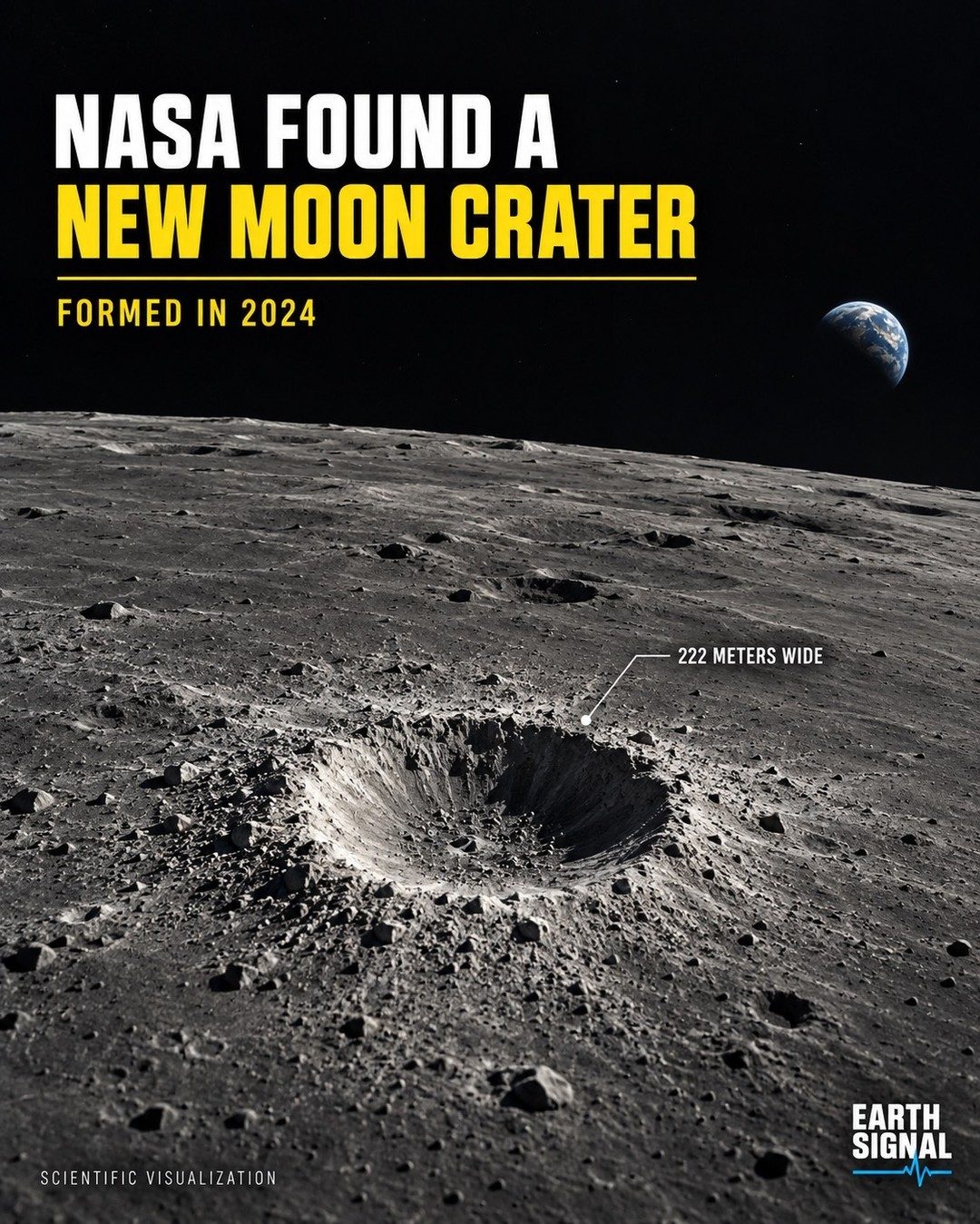
A New Scar on the Moon
NASA’s Lunar Reconnaissance Orbiter (LRO) has identified a new lunar crater, named McGetchin. The crater’s appearance between April and May 2024 was a surprise. It is 222 meters wide. What is peculiar about this crater is its formation timeframe — a very recent event in geologic terms. Unlike other craters that are millions of years old, McGetchin's youthful age allows scientists to examine the process of lunar erosion directly. The crater’s dimensions are also notable. It is 222 meters wide. Measurements from the orbiter suggest depths of up to 43 meters. This gives scientists a fresh perspective on the deep structure of lunar soil. The crater’s size isn’t the only remarkable aspect. Its depth provides insights into the Moon’s regolith layer. This layer consists of rocks and soil that have eroded from the Moon's surface. The crater's youth and visibility are also due to its location. Many older craters have been eroded or covered over time. The Lunar Reconnaissance Orbiter’s precise imaging allowed for the discovery of this fresh crater. Such craters are rare opportunities for planetary scientists. The new crater will be a key area of study for those research lunar geology.
Scientists- eye on craters
For planetary geologists, craters provide invaluable data. Recent craters like McGettchin are particularly valuable. Newer craters provide a clearer look at the Moon’s surface. The Moon’s surface has no driving wind. There’s no liquid water and barely any atmosphere. This makes craters an ideal place to study erosion processes. Lunar craters have little erosion. This is due to the lack of wind and water. Even the thickness of the ejecta layer is exactly like the Moon’s other craters. The size of crater ejecta varies. The size of ejecta can help scientists simulate lunar impacts. At McGettchin, scientists can now look at how newer impacts might form. McGettchin’s crater ejecta blanket is another feature of the crater. The crater’s ejecta extends 1.5 kilometers from the crater’s wall. It is approximately 200 meters below the surrounding surface. This helps geologists study density changes. It also helps to look at regolith composition.
Studying McGetchin
The discovery of the McGetchin crater demonstrates the value of sustained lunar observation. The Lunar Reconnaissance Orbiter has been orbiting the Moon since 2009. The data it captures are fed into a vast repository. It provides a comprehensive picture of the lunar surface. Earth Signal uses this data to create visualizations. Through these visualizations, the public and researchers can study the Moon’s surface. By returning to an area, it is possible to compare changes over time. The Lunar Orbiter’s re-visits have highlighted regional changes. This helps scientists better understand the processes at work on the Moon. The crater’s youth and size make it an ideal candidate for further exploration. It may even be investigated by future landers. The scientific collaboration that led to the discovery of the McGettchin crater is noteworthy. This collaboration highlights the importance of data sharing. It underscores how collaboration can enhance our understanding of the lunar surface. The Lunar Reconnaissance Orbiter has benefited from auditing much of the Moon. Each time it returns, it provides new data to researchers. The result is a continuous stream. And each re-visit offers new insights into the lunar surface.
Watch the Reel
Related deep dives
Similar reads based on topic and creator.



Recent articles
Fresh deep dives from the latest Reels we unpacked.




Comments
Be the first to comment.