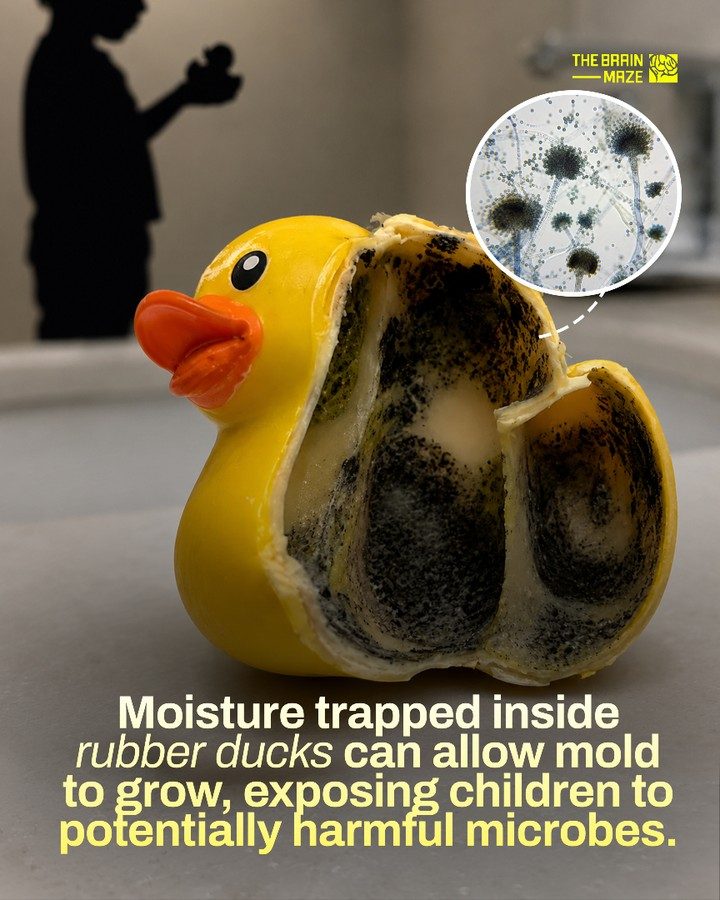
Mold in Rubber Ducks
Rubber ducks are a staple in many bathrooms, beloved for their cheerful designs and playful nature. However, these seemingly innocuous toys can harbor a hidden danger: mold and bacteria growth. When moisture becomes trapped inside a rubber duck, it creates an ideal environment for mold and bacteria to thrive. This poses a potential health risk, especially for children who frequently interact with these toys during bath time.
Why This Matters
Children are particularly susceptible to the health risks associated with mold and bacteria in rubber ducks. When a child squeezes water from the toy, they may be exposed to harmful microbes. In sensitive individuals, this exposure can lead to irritation, respiratory symptoms, and other health issues. Understanding the risks and taking proactive steps to mitigate them can help ensure a safer playtime experience.
Main Discussion
The Science Behind Mold Growth
Mold thrives in damp, enclosed spaces, making the interior of a rubber duck an ideal breeding ground. The dark, wet environment provides the perfect conditions for mold spores to germinate and multiply. This is particularly problematic for rubber ducks that are not designed with proper drainage, allowing water to become trapped inside.
When a child squeezes the rubber duck during play, water and microbes are expelled, potentially exposing the child to harmful bacteria and mold spores. This can lead to a variety of health issues, including skin irritation, allergies, and respiratory problems, especially in children with sensitive immune systems.
Common Symptoms and Health Risks
Exposure to mold and bacteria from rubber ducks can manifest in various ways:
- Skin Irritation: Direct contact with contaminated water can cause skin rashes, itching, and redness.
- Respiratory Symptoms: Inhaling mold spores or bacteria can lead to coughing, wheezing, and shortness of breath, particularly in children with asthma or allergies.
- Allergic Reactions: Some children may experience allergic reactions, including sneezing, runny nose, and itchy eyes, when exposed to mold and bacteria from the toys.
Factors Contributing to Mold Growth
Several factors contribute to the growth of mold and bacteria in rubber ducks:
- Lack of Drainage: Rubber ducks without proper drainage holes allow water to remain trapped inside, creating a moist environment.
- Improper Cleaning: Infrequent or inadequate cleaning of the toys can lead to the accumulation of bacteria and mold.
- Usage Frequency: The more frequently a rubber duck is used, the higher the risk of mold and bacteria growth, as more water becomes trapped inside over time.
Practical Tips
To minimize the risk of mold and bacteria growth in rubber ducks, follow these practical tips:
Choose Toys with Proper Drainage
When purchasing a rubber duck, look for models that have drain holes. These holes allow water to escape, preventing moisture from becoming trapped inside. If drain holes are not present, consider poking small holes in the bottom of the duck using a sharp object, such as a needle or a pin.
Regular Cleaning
Clean your rubber ducks regularly to prevent the buildup of mold and bacteria. Here are some effective cleaning methods:
- Handwashing: Wash the duck with warm, soapy water, ensuring that all surfaces are thoroughly cleaned.
- Dishwasher: If the toy is dishwasher-safe, run it through a cycle with hot water and a mild detergent to kill any bacteria or mold.
- Vinegar Soak: Soak the duck in a solution of equal parts water and white vinegar for 10-15 minutes, then rinse thoroughly and allow it to air dry completely.
Inspect and Replace Damaged Toys
Inspect your rubber ducks for any signs of damage, such as cracks or tears, which can create additional spaces for water to accumulate. If a toy is damaged, replace it immediately to prevent mold and bacteria growth.
Store Properly
When not in use, store rubber ducks in a dry, well-ventilated area to prevent moisture from accumulating. Avoid storing them in sealed containers or drawers, as this can trap moisture and promote mold growth.
Important Takeaways
- Moisture Trapping: Moisture trapped inside rubber ducks creates an ideal environment for mold and bacteria to grow.
- Health Risks: Children exposed to these microbes can experience skin irritation, respiratory symptoms, and allergic reactions.
- Proper Drainage: Choose rubber ducks with drain holes or create your own to prevent water from getting trapped.
- Regular Cleaning: Clean toys regularly using warm soapy water, a dishwasher, or a vinegar solution.
- Inspection: Regularly inspect toys for damage and replace them if necessary.
- Proper Storage: Store toys in a dry, well-ventilated area to prevent moisture buildup.
Conclusion
While rubber ducks can provide hours of fun and entertainment for children, it is crucial to be aware of the potential health risks associated with mold and bacteria growth. By choosing toys with proper drainage, cleaning them regularly, and storing them correctly, you can significantly reduce the risk of exposure to harmful microbes. Taking these proactive steps ensures a safer and more enjoyable playtime experience for your children.
Watch the Reel
Questions readers ask
How does mold grow in children's rubber ducks?
Mold grows in rubber ducks when moisture becomes trapped inside the toy, creating a damp environment where mold spores can thrive and multiply. This is more likely to occur if the toy is not thoroughly dried after each use.
What are the health risks of mold in children's bath toys?
Mold in children's bath toys can lead to health issues like irritation, respiratory symptoms, and allergic reactions. Kids often put bath toys in their mouths, and this can increase the chances of accidentally ingesting harmful microbes.
How can I prevent mold growth in my child's rubber duck?
To prevent mold growth, ensure the rubber duck is completely dry before storing it. Squeeze out any trapped water and allow the toy to air dry in a well-ventilated area. Regularly inspect the toy for signs of mold and replace it if necessary.
Are there any specific bath toys that are less likely to harbor mold?
Toys that are solid and do not have hollow spaces where water can get trapped are less likely to harbor mold. Opt for bath toys made of materials that dry quickly, and avoid those with complicated designs that can trap water.
How should I clean my child's rubber duck to keep it safe?
To clean a rubber duck, first squeeze out any water and then wash it with warm, soapy water. Use a mild detergent and a soft brush to scrub the toy inside and out. After cleaning, rinse thoroughly and allow the toy to air dry completely before your child uses it again.
What signs indicate that a rubber duck has mold?
Look for visible signs of mold, such as discoloration, a musty smell, or a slimy texture. If you notice any of these signs, it's best to discard the toy immediately to prevent potential health risks to your child.
Recent articles
Fresh deep dives from the latest Reels we unpacked.




Comments
Be the first to comment.