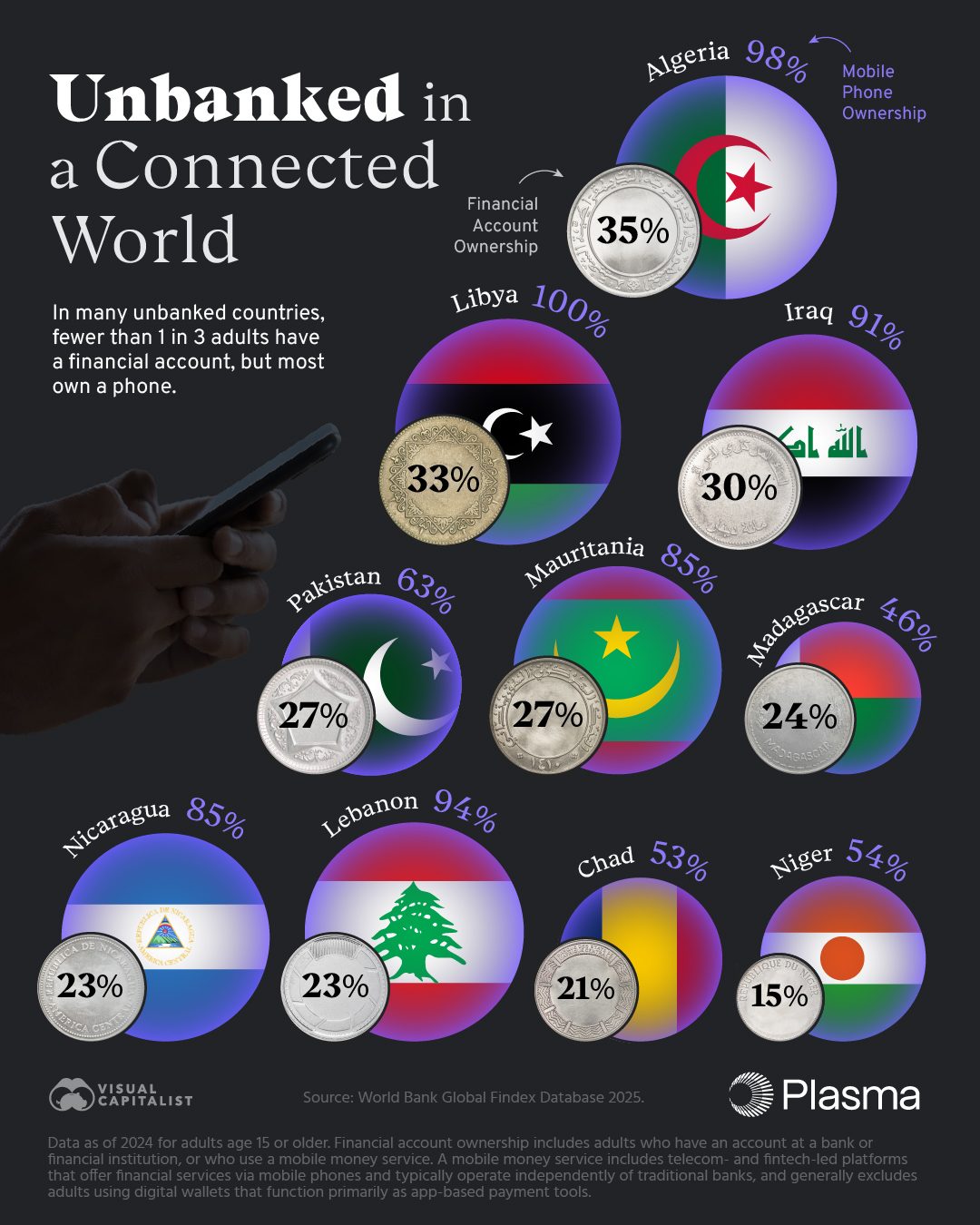
Financial Inclusion: Mobile Phones vs. Financial Accounts
Financial inclusion is a critical aspect of economic development, particularly in unbanked countries where access to financial services is limited. In many of these regions, fewer than one in three adults possess a financial account. However, mobile phone ownership is widespread, presenting a unique opportunity to leverage technology for financial inclusion.
Context / Why This Matters
Financial inclusion refers to the availability and equality of opportunities for individuals and businesses to access financial services. These services encompass a range of offerings, from basic savings and checking accounts to more complex financial products like loans and insurance. The absence of financial inclusion can severely hinder economic growth, as it limits individuals' ability to save, invest, and manage their finances effectively.
Mobile phone ownership, on the other hand, offers a potential solution. With the proliferation of mobile technology, many unbanked individuals now have access to devices that can facilitate financial transactions. Mobile money services, which operate independently of traditional banks, have emerged as a viable alternative for providing financial services to the unbanked.
Main Discussion
The Global Landscape
The disparity in financial account ownership and mobile phone ownership is stark. According to data from the World Bank Global Findex Database 2025, financial inclusion varies significantly across countries. For instance, in Algeria, 98% of adults have mobile phones, but only 35% have a financial account. Similarly, in Iraq, 91% own mobile phones, while 33% have financial accounts. This trend is consistent across various countries, including Pakistan, Libya, Mauritania, Madagascar, Nicaragua, Lebanon, Chad, and Niger.
Mobile Money Services
Mobile money services have become increasingly popular in regions where traditional banking infrastructure is limited. These services allow users to perform financial transactions using their mobile phones, such as sending and receiving money, paying bills, and even accessing credit. In many unbanked countries, mobile money services are provided by telecom and fintech companies, offering a range of financial services typically excluded from traditional banking.
Understanding the Data
The data from the World Bank Global Findex Database 2025 highlights several key points. Financial account ownership includes adults who have an account at a bank or financial institution or use a mobile money service. This encompasses a broad range of financial services, from basic savings accounts to more complex financial products.
Practical Tips
For those looking to leverage mobile technology for financial inclusion, several practical steps can be taken:
-
Promote Mobile Money Services: Encourage the adoption of mobile money services by making them more accessible and user-friendly. This can be achieved through partnerships with telecom and fintech companies, as well as by providing financial literacy programs.
-
Invest in Mobile Technology: Invest in the development and distribution of affordable mobile devices. This can help increase mobile phone ownership, making mobile money services more accessible to a broader population.
-
Collaborate with Financial Institutions: Collaborate with traditional financial institutions to integrate mobile money services into their existing infrastructure. This can help expand the reach of financial services and promote financial inclusion.
Important Takeaways
Financial inclusion is a critical component of economic development, and mobile technology offers a promising solution. By leveraging mobile money services, unbanked individuals can gain access to essential financial services, enabling them to save, invest, and manage their finances more effectively.
Conclusion
The widespread ownership of mobile phones in unbanked countries presents a significant opportunity for promoting financial inclusion. By integrating mobile money services and investing in mobile technology, we can bridge the gap between financial account ownership and mobile phone ownership, ultimately fostering economic development and improving the lives of millions.
Watch the Reel
Questions readers ask
What is financial inclusion and why is it important?
Financial inclusion refers to the accessibility and fairness of opportunities for individuals and businesses to use financial services. This includes basic banking services and more advanced financial products. It is important because it promotes economic growth, reduces poverty, and enhances overall financial stability, especially in regions where traditional banking is limited.
How do mobile phones help in bridging the financial inclusion gap?
Mobile phones are crucial in bridging the financial inclusion gap by providing an accessible and convenient way for unbanked individuals to access financial services. With mobile money services, users can perform various transactions, such as sending and receiving money, paying bills, and saving, all from their mobile devices.
Why is mobile phone ownership more prevalent than financial account ownership in some countries?
In many developing regions, the infrastructure and resources required for traditional banking are scarce, making it difficult for people to access and maintain financial accounts. However, mobile phones are more affordable and widespread, allowing people to use mobile money services as a practical alternative to traditional banking.
What are some examples of mobile money services?
Mobile money services allow users to store, send, and receive money using their mobile devices. Examples include M-Pesa in Kenya, which enables users to deposit, withdraw, transfer money, and pay for goods and services; and GCash in the Philippines, which offers similar services along with bill payments and mobile reloading.
Can mobile financial inclusion benefit small businesses?
Yes, mobile financial inclusion can significantly benefit small businesses by providing a secure and efficient way to manage finances. Small business owners can use mobile money services to receive payments, pay suppliers, and save money, which can help them grow and thrive. Additionally, access to mobile credit and loans can provide the necessary capital for expansion.
How has the World Bank addressed the issue of unbanked adults?
The World Bank has recognized the importance of addressing the issue of unbanked adults and has emphasized the role of mobile financial services in promoting financial inclusion. The organization has supported various initiatives and policies to encourage the adoption of mobile money services, including regulatory frameworks and partnerships with mobile network operators.
Related deep dives
Similar reads based on topic and creator.


Recent articles
Fresh deep dives from the latest Reels we unpacked.




Comments
Be the first to comment.