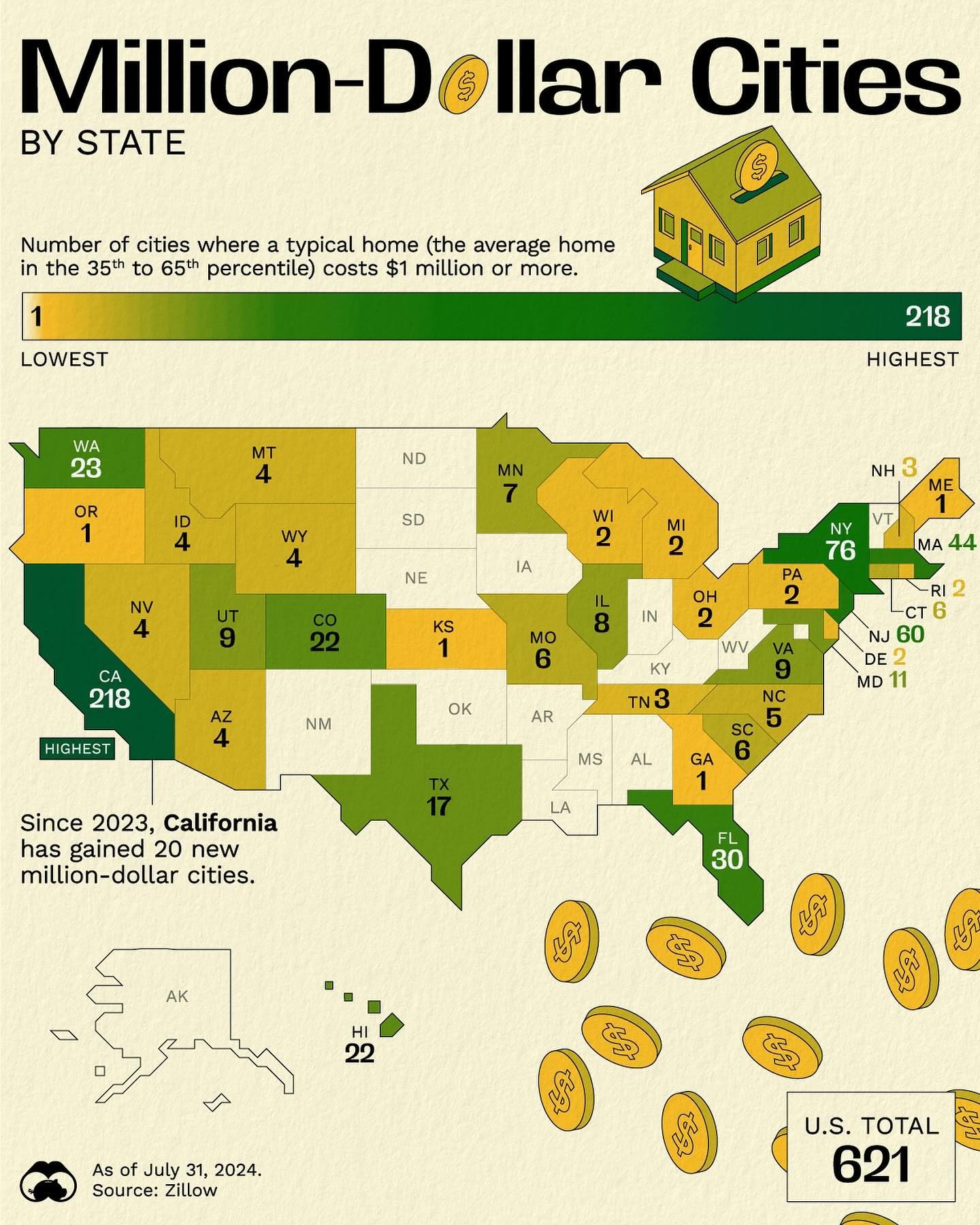
Million-Dollar Cities in the U.S.: A State-by-State Breakdown
With a total of 621 cities in the United States where the average home costs $1 million or more, the housing market has seen a significant shift. This marks a notable increase from 491 such cities in 2023. In contrast, 15 states remain without any million-dollar cities, primarily clustered in the Midwest and South. This data, sourced from Zillow, provides a fascinating snapshot of the current housing landscape.
Why This Matters
Understanding the distribution of million-dollar cities across the U.S. offers valuable insights into regional economic trends, housing affordability, and market dynamics. For homebuyers, investors, and policymakers, this information is crucial for making informed decisions about where to buy, invest, and implement policies that promote balanced housing markets. The data underscores the stark differences in housing prices across various states.
Key Insights into Million-Dollar Cities
The West Coast Dominance
The West Coast, particularly California, stands out with an impressive 218 million-dollar cities. This region's high cost of living and strong job market, driven by tech and entertainment industries, contribute to its sky-high home prices. Other states in the region also show significant numbers, such as Nevada with four and Utah with four.
The Northeast's Pricey Markets
The Northeast is another area with a high concentration of expensive cities. Connecticut, New Hampshire, and New Jersey each have multiple cities where the average home exceeds $1 million. New Hampshire, for instance, has three such cities, reflecting the area's appeal for its natural beauty, outdoor activities, and its growing tech industry.
The South and Midwest: Relatively Affordable
In contrast, many states in the South and Midwest have fewer million-dollar cities. For instance, Missouri, Arkansas, and Kentucky each have only one. This trend highlights the generally lower cost of living in these regions, which can be attributed to factors like lower wages, less industrial development, and lower population density. These areas offer more affordable housing options for those looking to settle in a less expensive part of the country.
Mid-Atlantic and Florida: A Mixed Bag
States like Florida and Maryland show a mixed picture. Florida has 30 million-dollar cities, reflecting its popularity as a retirement destination and tourist hotspot. In contrast, Mid-Atlantic states like West Virginia and Pennsylvania show a blend of affordability and higher-priced areas, with West Virginia having nine million-dollar cities and Pennsylvania having a lower count.
Practical Tips for Navigating the Housing Market
For Homebuyers
When searching for a home, it’s essential to consider the cost of living in your desired area. Researching local property trends and understanding the market’s affordability can help you make a more informed decision. Cities with high numbers of million-dollar homes often have robust job markets and strong local economies, but they also come with higher living expenses.
For Investors
Investors looking to buy properties in high-priced areas should focus on understanding the local market trends. Areas with a high concentration of million-dollar homes can offer lucrative investment opportunities, but they also come with higher risks. It's crucial to do thorough research and consider factors like rental yields, property taxes, and potential appreciation.
For Policymakers
For policymakers, addressing the housing affordability crisis in high-priced areas is a pressing concern. Implementing policies that promote affordable housing, such as zoning reforms and tax incentives, can help mitigate the impact of rising home prices on local communities. Encouraging diverse housing options and investing in infrastructure can also make housing more accessible for a broader range of residents.
Important Takeaways
- Regional Trends: West Coast and Northeast regions have the highest concentration of million-dollar cities, while the South and Midwest generally offer more affordable housing options.
- Economic Factors: High home prices often correlate with strong job markets and high living costs.
- Investment Opportunities: High-priced areas can offer lucrative investment opportunities but come with higher risks.
- Policy Considerations: Policymakers need to address housing affordability through zoning reforms, tax incentives, and infrastructure investments.
Conclusion
The distribution of million-dollar cities across the U.S. highlights the vast disparities in housing affordability and market dynamics between different regions. For homebuyers, investors, and policymakers, understanding these trends is crucial for making informed decisions. As the housing market continues to evolve, staying informed about regional trends and economic factors can help navigate the complexities of the real estate landscape.
Watch the Reel
Questions readers ask
Which states have the most million-dollar cities?
The states with the highest concentration of million-dollar cities are primarily located on the West Coast and in the Northeast. These regions have seen a significant rise in property values, contributing to the overall increase in the number of such cities.
How much has the number of million-dollar cities increased from 2023?
The number of cities with an average home value of $1 million or more has increased by 130 cities since 2023. This rise indicates a substantial shift in the housing market.
Which regions have the fewest million-dollar cities?
The Midwest and South regions have the fewest million-dollar cities, with 15 states in these areas having no cities where the average home value exceeds $1 million. This reflects the relatively lower cost of living in these regions.
What are the implications of this data for homebuyers and investors?
For homebuyers and investors, knowing which cities have million-dollar homes can guide purchasing decisions, as it indicates areas with high demand and potentially strong long-term investment opportunities. It also highlights regions that may offer more affordable options.
What is the source of this data?
The data on million-dollar cities is sourced from Zillow, a leading real estate marketplace. Zillow provides valuable insights into home values and market trends, making it a reliable source for understanding the current housing landscape.
Which states do NOT have any million-dollar cities?
Fifteen states, primarily in the Midwest and South, do not have any cities with an average home value of $1 million or more. These states include regions like Kansas, Missouri, and many others in the southern United States.
How does the current housing market data compare to the previous year?
The current data from July 2024 shows a significant increase in million-dollar cities, indicating a strong upward trend in home prices. This trend is particularly notable in the West Coast and Northeast regions, while the Midwest and South remain relatively stable.
Recent articles
Fresh deep dives from the latest Reels we unpacked.




Comments
Be the first to comment.