American Wealth Trends: Understanding the Growth Among Millennials
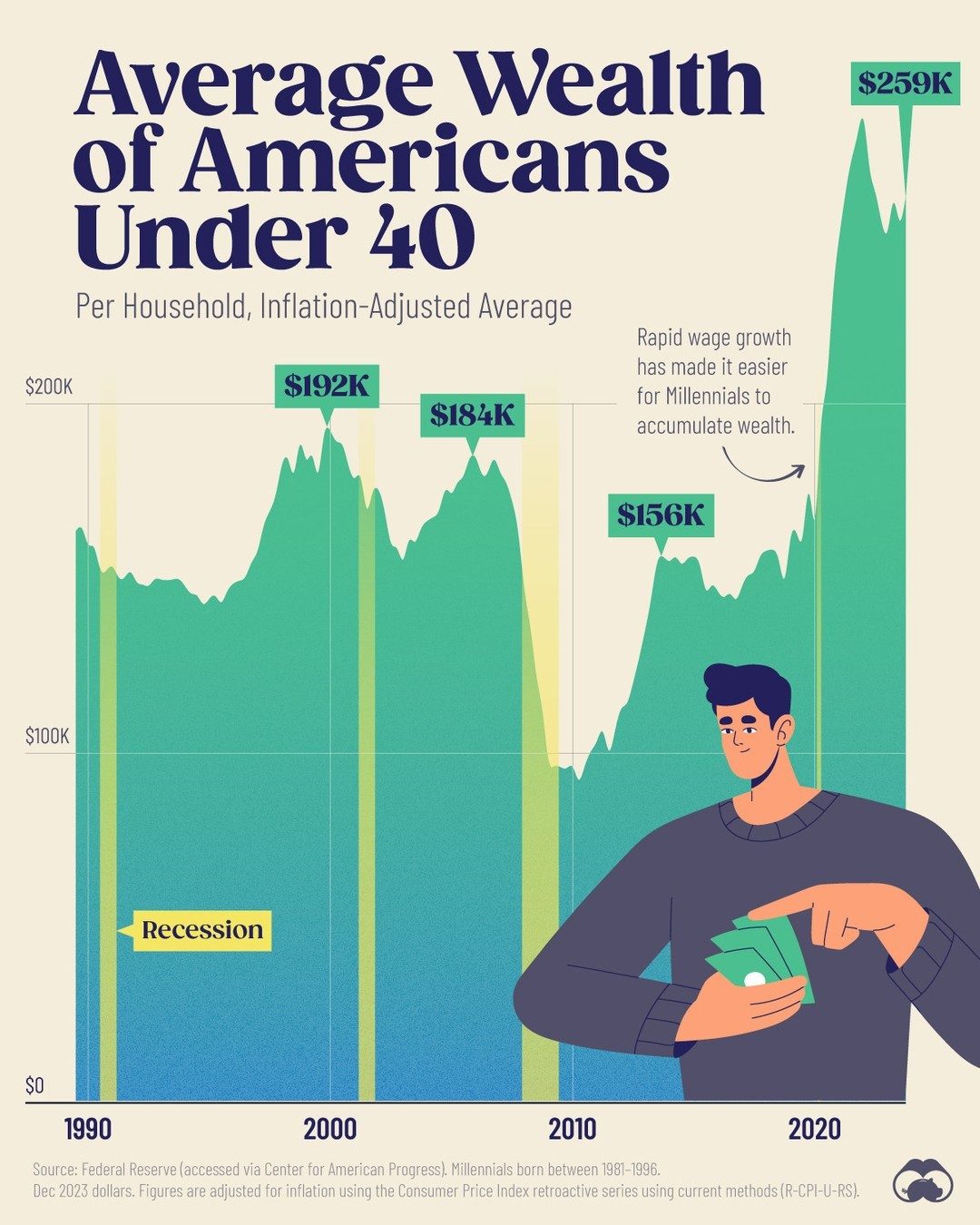
Millennials in the United States have reached an unprecedented milestone, with an average wealth of $259,000 per household in the fourth quarter of 2023. This significant growth in wealth is a result of the post-pandemic economic boom, characterized by low unemployment rates and rapid wage growth. This article delves into the trends of wealth accumulation among Americans under 40, especially millennials, from 1989 to 2023, using inflation-adjusted data from the Federal Reserve, accessed through the Center for American Progress.
Context
Understanding the trends in wealth accumulation among millennials offers insights into broader economic shifts and financial strategies. Rapid wage growth has enabled younger generations to build wealth more effectively, reshaping financial landscapes and opportunities.
The Role of Economic Factors
Post-Pandemic Economic Boom
The post-pandemic era has been a boon for younger Americans. Unemployment rates have plummeted, and wages have soared, making it easier for millennials to accumulate substantial wealth. Economic policies and stimulus packages have played a crucial role in this growth, providing a stable financial environment for wealth accumulation.
Inflation and Adjusted Wealth
Inflation significantly impacts wealth measurements. The data used in this analysis is adjusted for inflation using the Consumer Price Index (CPI) retroactive series. This adjustment, known as the R-CPI-U-RS, ensures that the wealth figures are presented in 2023 dollars, providing a clear and accurate picture of wealth trends over the decades.
Millennials and Wealth Accumulation
Millennials, defined as those born between 1981 and 1996, have been particularly fortunate. Rapid wage growth and favorable economic conditions have driven their wealth accumulation. By the end of 2023, the average wealth per household for millennials reached a record high of $259,000.
Visualizing Wealth Trends
To better understand the trends, let's break down the wealth data over specific periods.
The 1990s: Economic Growth and Stability
In the 1990s, the economic landscape was marked by growth and stability. Average household wealth for those under 40 steadily increased, reaching around $156,000 by the end of the decade. This period laid the groundwork for future wealth accumulation.
The 2000s: Economic Downturns and Recoveries
The 2000s were tumultuous, with the dot-com bubble burst and the 2008 recession significantly impacting wealth. Despite these setbacks, wealth levels rebounded, with average household wealth reaching approximately $200,000 by 2020. This period underscored the resilience and adaptability of younger Americans in the face of economic challenges.
The 2010s and Beyond: Economic Recovery
The decade following the 2008 recession saw a strong economic recovery. Wealth levels surged, with average household wealth reaching around $259,000 by 2023. This growth was driven by low unemployment, rapid wage growth, and favorable economic policies.
Practical Tips for Building Wealth
If you are looking to build wealth, consider the following practical tips:
Diversify Your Investment Portfolio
Diversification is key to managing risk and maximizing returns. Invest in a mix of stocks, bonds, real estate, and other assets to ensure your portfolio can withstand economic fluctuations.
Take Advantage of Retirement Accounts
Retirement accounts, such as 401(k)s and IRAs, offer tax advantages and can significantly boost your wealth over time. Contribute regularly to these accounts to take full advantage of compounding returns.
Live Below Your Means
Living below your means allows you to save and invest more, accelerating wealth accumulation. Create a budget and stick to it, prioritizing savings and investments over discretionary spending.
Continuous Learning and Adaptation
Stay informed about economic trends and financial strategies. Continuous learning and adaptation will help you make informed decisions and capitalize on new opportunities.
Important Takeaways
- Millennials have benefited significantly from the post-pandemic economic boom, with average wealth reaching $259,000 by 2023.
- Inflation-adjusted data provides a clear picture of wealth trends over time, highlighting the impact of economic policies and market conditions.
- Wealth accumulation among younger Americans has been driven by rapid wage growth and low unemployment rates.
Conclusion
The trends in wealth accumulation among millennials reflect a broader economic narrative of growth, resilience, and adaptability. By understanding these trends and applying practical financial strategies, young Americans can continue to build and sustain their wealth, ensuring a secure financial future.
Watch the Reel
Questions readers ask
What factors contributed to the significant increase in millennial wealth in 2023?
The substantial increase in millennial wealth can be attributed to several factors, including post-pandemic economic recovery, low unemployment rates, and rapid wage growth. These elements combined to create an environment conducive to wealth accumulation for Americans under 40.
How does the average wealth of millennial households in 2023 compare to previous years?
In 2023, the average wealth of millennial households reached $259,000, marking a significant milestone. This figure represents a notable increase from previous years, driven by broader economic shifts and financial opportunities that have benefited younger generations.
What insights can be gained from analyzing millennial wealth trends?
Examining millennial wealth trends provides valuable insights into the economic landscape and financial strategies of younger Americans. It highlights how changes in economic conditions, such as wage growth and employment rates, impact wealth accumulation and overall financial progress.
What role did the post-pandemic economic boom play in millennial wealth growth?
The post-pandemic economic boom was a crucial driver of millennial wealth growth. Low unemployment rates and rapid wage increases created favorable conditions for wealth accumulation, enabling younger Americans to build financial stability and prosperity.
How reliable is the data on millennial wealth trends?
The data on millennial wealth trends is sourced from the Federal Reserve, accessed through the Center for American Progress. This data is inflation-adjusted, providing a reliable and accurate reflection of wealth accumulation trends among Americans under 40 from 1989 to 2023.
What are some key economic shifts that have influenced millennial wealth in 2023?
Key economic shifts influencing millennial wealth in 2023 include robust post-pandemic recovery, significant wage growth, and a favorable job market. These factors have collectively contributed to the surge in wealth, particularly for those under 40.
What financial strategies have millennials employed to achieve this wealth?
Millennials have leveraged various financial strategies to achieve their wealth, including investing in the stock market, real estate, and taking advantage of low-interest rates. Additionally, many have focused on increasing their savings and reducing debt, which has contributed to their overall financial progress.
Related deep dives
Similar reads based on topic and creator.




Recent articles
Fresh deep dives from the latest Reels we unpacked.




Comments
Be the first to comment.