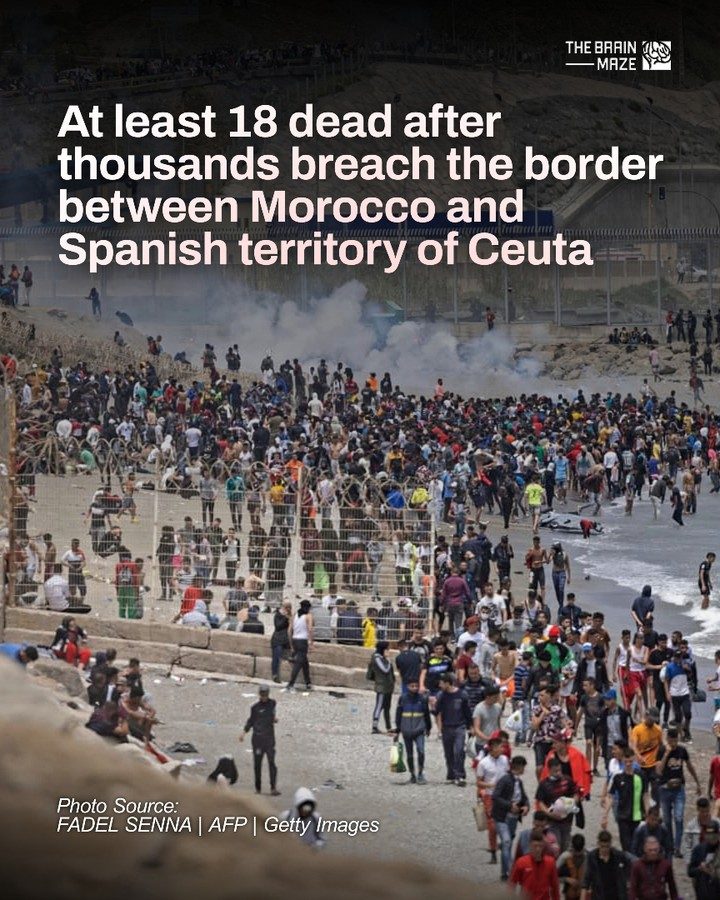
The Tragic Border Breach Between Morocco and Ceuta
The tragic border breach between Morocco and the Spanish territory of Ceuta has resulted in at least 18 confirmed deaths. This chaotic incident unfolded as thousands of migrants attempted to cross the border, with many victims succumbing to drowning or killed in a stampede near Tarajal beach. The situation has been described as a humanitarian crisis, leaving thousands stranded, including vulnerable unaccompanied children. Spanish authorities have responded by deploying additional security forces to manage the emergency, but the cause of the sudden surge in migration remains unclear.
Why This Matters
The border between Morocco and Ceuta is a significant crossing point for migrants seeking to enter Europe. Ceuta, along with Melilla, is one of Spain's two autonomous cities in North Africa, making it a strategic entry point for those hoping to reach the European Union. The events that unfolded highlight the ongoing challenges and dangers faced by migrants attempting to cross this border, as well as the complexities involved in managing such a crisis.
The Border Crossing and Its Challenges
The Geography and Geography of the Border
The border between Morocco and Ceuta is a narrow strip of land that separates the two territories. Ceuta, a Spanish enclave in North Africa, is strategically located near the Strait of Gibraltar, making it a key entry point for migrants. The border is heavily fortified, with extensive fencing and surveillance, aimed at deterring unauthorized crossings. However, despite these measures, the border remains a site of frequent attempts at illegal entry, often resulting in tragic consequences.
The Humanitarian Crisis
The recent border breach has highlighted the dire humanitarian crisis unfolding in this region. The sharp increase in migration attempts has left thousands of people stranded, many of whom are in desperate need of food, water, and medical attention. The presence of unaccompanied children among the migrants adds to the complexity of the situation, requiring immediate and specialized care.
The Response by Authorities
Spanish authorities have responded to the crisis by deploying additional security forces to the region. The immediate focus has been on managing the emergency and providing aid to those in need. The Spanish government has also called for increased cooperation from international organizations and neighboring countries to address the underlying causes of the migration surge.
Key Factors Contributing to the Crisis
Economic and Social Factors
Many migrants attempting to cross the border from Morocco to Ceuta are driven by economic and social factors. Poverty, unemployment, and lack of economic opportunities in their home countries are significant drivers of migration. The hope of a better life in Europe often outweighs the dangers associated with the journey, leading to desperate and risky attempts to cross the border.
Political and Security Factors
The political instability and insecurity in many North African countries also contribute to the migration crisis. Conflict, violence, and persecution in these regions push people to seek refuge in safer countries. The perception of Europe as a safe haven further fuels the migration attempts, despite the risks involved.
Environmental and Climate Factors
Climate change and environmental degradation in North Africa have led to severe droughts and crop failures, making it difficult for many people to sustain their livelihoods. These environmental factors have exacerbated economic hardships, driving more people to migrate in search of better opportunities.
Practical Tips for Migrants and Authorities
For Potential Migrants
-
Seek Legal Pathways: Explore legal and safe ways to migrate, such as applying for visas or seeking asylum through official channels. Legal migration can provide a safer and more secure route to your destination.
-
Stay Informed: Stay updated on the latest information about border conditions and the risks involved. Knowing the dangers can help you make informed decisions and avoid unnecessarily risky journeys.
-
Prepare for the Journey: If you must undertake the journey, make sure you are well-prepared with essential supplies such as food, water, and medical supplies. Avoid traveling alone; groups can provide support and safety in numbers.
For Authorities
-
Enhance Security Measures: Implement stronger security measures to deter illegal border crossings, while ensuring that those who do cross are treated humanely and provided with necessary aid.
-
International Cooperation: Collaborate with international organizations and neighboring countries to address the root causes of migration. Shared efforts can help create sustainable solutions to the crisis.
-
Support Humanitarian Efforts: Provide immediate and long-term support to humanitarian organizations working on the ground. This includes medical aid, food, and shelter for migrants in need.
-
Promote Sustainable Development: Encourage initiatives aimed at promoting sustainable development in North African countries. Addressing economic, social, and environmental challenges can reduce the drive to migrate.
Important Takeaways
-
Humanitarian Concerns: The situation in Ceuta highlights the urgent need for humanitarian aid and support for migrants, especially unaccompanied children.
-
Complex Causes: The migration crisis is driven by a mix of economic, social, political, and environmental factors. Addressing these underlying issues is crucial for sustainable solutions.
-
Need for Cooperation: International cooperation and shared efforts are essential in managing the migration crisis. This includes cooperation between countries and with international organizations.
-
Preparedness and Safety: For migrants, preparedness and awareness of the risks involved in border crossings can save lives. For authorities, enhanced security measures and humanitarian support are vital.
Conclusion
The recent border breach between Morocco and Ceuta serves as a stark reminder of the ongoing migration crisis and the urgent need for action. The situation highlights the complex interplay of economic, social, and environmental factors that drive migration. Authorities and international organizations must work together to address these underlying issues and provide immediate and long-term support to those in need. Through cooperation and concerted efforts, it is possible to mitigate the risks and provide a safer, more secure future for migrants.
Watch the Reel
Questions readers ask
What is the significance of the Morocco-Spain border in the context of migrant crossings?
The Morocco-Spain border, particularly in the regions of Ceuta and Melilla, is one of the most strategic and heavily fortified crossing points for migrants aiming to enter Europe. This border is a critical juncture for those attempting to reach Europe in the hopes of a better life.
What are the primary dangers faced by migrants attempting to cross the border between Morocco and Ceuta?
Migrants attempting to cross the border between Morocco and Ceuta face numerous dangers, including the risk of drowning, injuries from stampedes, and potential confrontations with security forces. These risks are especially high during chaotic events like the recent breach that resulted in 18 confirmed deaths.
Why has the recent border breach in Ceuta resulted in a humanitarian crisis?
The recent border breach in Ceuta has led to a humanitarian crisis because it has left thousands of migrants stranded in difficult conditions, including vulnerable unaccompanied children. The sudden surge in migration has overwhelmed local resources and security forces, exacerbating the chaos and danger for those involved.
What measures have Spanish authorities taken in response to the migrant crisis in Ceuta?
Spanish authorities have responded by deploying additional security forces to manage the emergency situation in Ceuta. This includes efforts to control the border and provide support to those affected by the tragic events. However, the exact cause of the sudden surge in migration remains unclear, making long-term solutions more challenging.
What impact does the border crossing chaos in Ceuta have on local communities?
The chaos at the border in Ceuta affects local communities by straining resources, disrupting daily life, and creating a sense of insecurity. The influx of migrants also raises questions about the capacity of local authorities to provide adequate support and services, particularly in the aftermath of such a tragic event.
Recent articles
Fresh deep dives from the latest Reels we unpacked.




Comments
Be the first to comment.