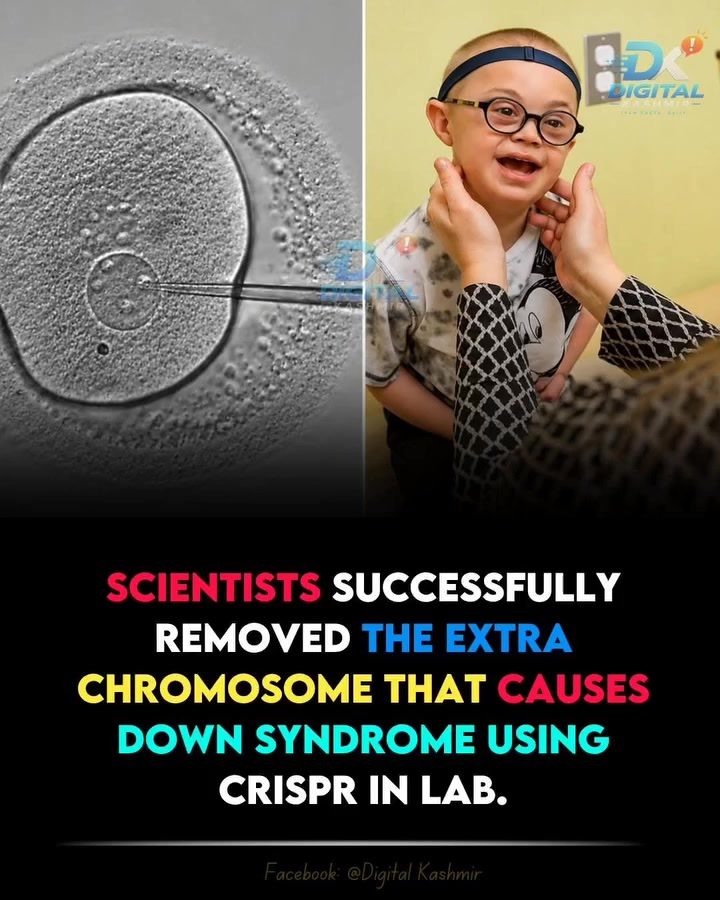
CRISPR and the Path to Down Syndrome Therapy
For decades, Down syndrome has been a condition that doctors could only manage symptomatically. Now, a groundbreaking development from Mie University in Japan offers a glimmer of hope. Researchers have successfully used CRISPR-Cas9 gene editing to remove the extra copy of chromosome 21 from lab-grown human cells. This feat, once thought impossible, opens new avenues for potential therapies.
Context: Down Syndrome and Chromosome 21
Down syndrome is a genetic disorder caused by the presence of all or part of a third copy of chromosome 21. It affects approximately 1 in 700 live births and is associated with a range of physical and cognitive challenges. Current treatments focus on managing symptoms rather than addressing the underlying genetic cause.
Chromosome 21 is one of the 23 pairs of chromosomes in human cells. In individuals with Down syndrome, there is an extra copy of this chromosome, leading to the over-expression of certain genes and resulting in the condition's characteristic features.
The CRISPR-Cas9 Breakthrough
Allele-Specific Multiple Chromosome Cleavage
The technique used by the researchers is called allele-specific multiple chromosome cleavage. This advanced method allows CRISPR-Cas9 to distinguish and target only the specific copy of chromosome 21 meant for removal. Importantly, it leaves the other two copies of chromosome 21 intact, which are essential for normal cellular function.
CRISPR-Cas9 is a powerful gene-editing tool that acts like a pair of molecular scissors, capable of cutting and modifying DNA at precise locations. In this case, it was used to excise the extra chromosome 21 without disrupting the other genetic material.
The Experiment and Its Results
The experiment was conducted in a laboratory setting using lab-grown human cells. After the extra chromosome was removed, the edited cells continued to grow normally. This observation is crucial because it shows that the removal of the extra chromosome restored regular gene activity, suggesting that the cells functioned as they would in a typical individual without Down syndrome.
Why This Matters
This research is a significant step forward because it demonstrates the potential to address the genetic root cause of Down syndrome. Until now, treatments have focused on managing symptoms rather than curing the condition. The success of this study opens the door to therapies that could potentially alter the course of the disease.
Practical Implications and Future Directions
Potential Therapies
The ability to remove the extra chromosome 21 raises the possibility of developing therapeutic interventions that could correct the genetic abnormality in individuals with Down syndrome. This could lead to the development of new drugs or treatments that target the underlying cause, rather than just mitigating symptoms.
Ethical Considerations
While the potential benefits are enormous, there are also ethical considerations to address. Gene editing, especially in humans, raises complex issues related to safety, efficacy, and long-term effects. It is crucial to conduct thorough research and ensure that any future applications are ethically sound and well-regulated.
Next Steps
The work done at Mie University is a proof of concept, conducted in a lab setting. The next steps involve further research to translate these findings into practical applications. This may include animal studies and, eventually, clinical trials to assess the safety and efficacy of this approach in humans.
Important Takeaways
- Gene Editing Potential: The research demonstrates the potential of CRISPR-Cas9 to target and remove specific genetic material, opening new avenues for treating genetic disorders.
- Down Syndrome Therapy: This breakthrough could pave the way for therapies that address the underlying cause of Down syndrome, rather than just managing symptoms.
- Ethical and Regulatory Challenges: While the potential benefits are significant, there are ethical considerations and regulatory challenges to address before any human applications.
Conclusion
The successful removal of the extra chromosome 21 using CRISPR-Cas9 gene editing marks a significant milestone in the quest to treat Down syndrome. This research offers a glimmer of hope for millions of families worldwide. While a cure is not yet on the horizon, the potential for new therapies is a step forward in addressing a condition that has long been managed symptomatically. The journey from lab research to clinical application is complex and fraught with challenges, but the promise of this breakthrough is undeniable.
Watch the Reel
Related deep dives
Similar reads based on topic and creator.



Recent articles
Fresh deep dives from the latest Reels we unpacked.




Comments
Be the first to comment.